

Skip to content
Streamline Landscape

Fire Pit or Outdoor Fireplace? How to Pick the One That Fits Your Yard

Both look great in a photo. That's exactly why the photo is a bad way to choose. The fire feature you'll still love in three years is the one that fits your yard, not the one that shoots best on a screen. So let's not start with looks. Let's start with your space, your budget, the wind, and how you really use the backyard. Read your own yard right, and the choice between a fire pit and an outdoor fireplace usually makes itself.

By Streamline LandscapePublished Jul 2026

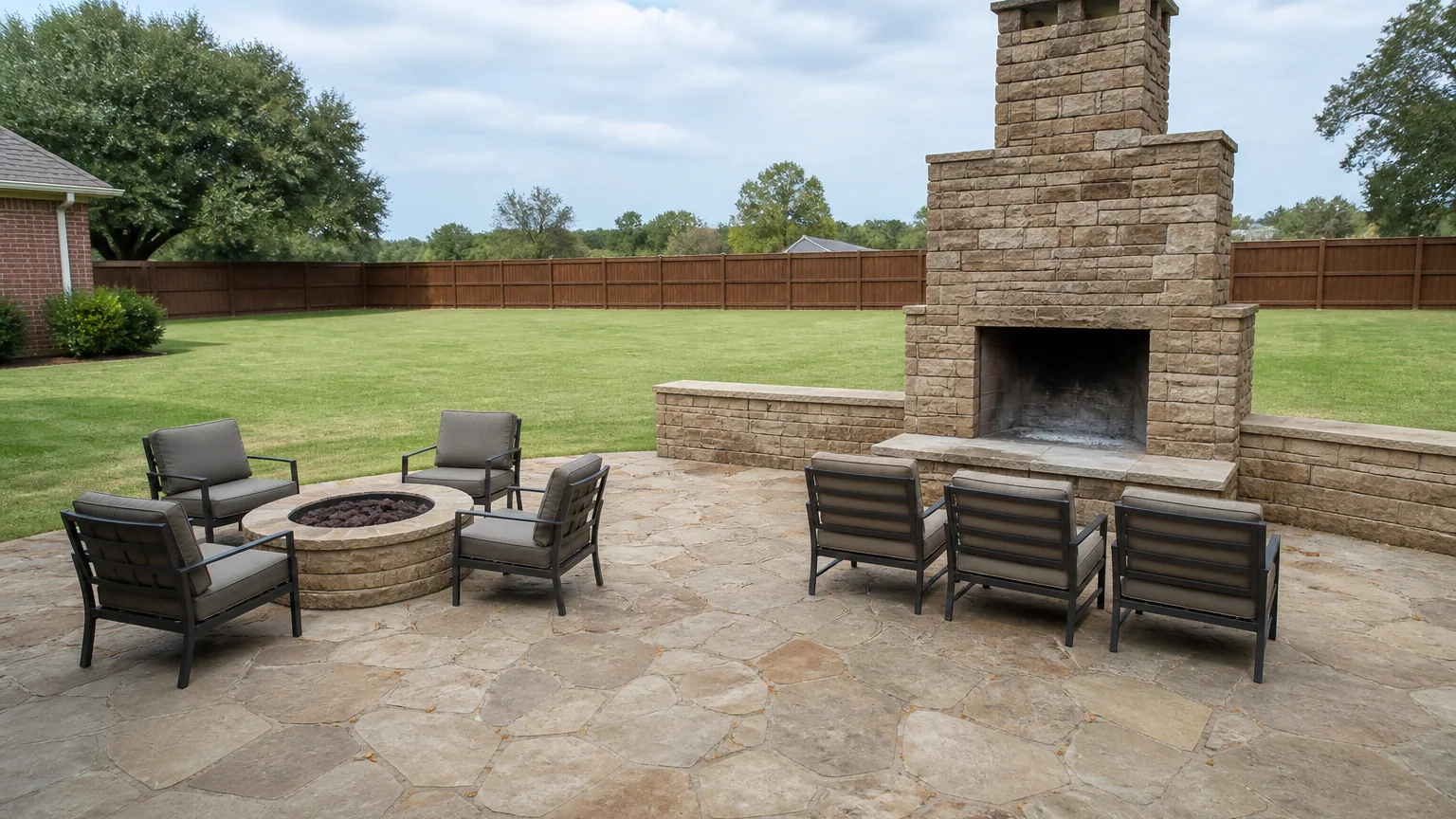
A low circular stone fire pit with chairs ringed around it on a flagstone patio, and a tall stone outdoor fireplace anchored to a low stone wall with chairs in a row facing it

What should actually decide it

Run your yard through these. By the end, one option usually pulls ahead.

  • Budget. A fire pit is the lighter spend. A basic stone pit is one of the simplest builds in the yard. A full masonry fireplace is a bigger structure with a firebox, a chimney, and far more stone, so it costs more to build. If budget is the first wall you hit, a fire pit clears it easier.
  • Space. A fire pit needs open room on every side for chairs. It suits a wider, open yard. A fireplace pushes up instead of out, so its base fits a tighter footprint, but it wants a wall or an edge to anchor against. Small patio with one good back edge? That leans fireplace. Big open lawn? That leans pit.
  • Wind and smoke. This one matters more in North Texas than people expect. A fire pit is open, so wind blows the smoke wherever it wants, often right into a face. A fireplace has a back and a chimney, so it shields the flame and carries most of the smoke up and away. If your yard catches a steady breeze, the fireplace is the calmer seat.
  • Seating and how you gather. Think about your people. A pit lets everyone face each other around the fire, good for a big, loose group. A fireplace sets up a front-row view, more like a living room aimed at the flame. One is a campfire. The other is a hearth.
  • Heat. A fireplace points its heat at the seats in front of it, so those chairs stay warm on a cold night. A pit spreads gentler heat in a full circle, so it warms more people but less hard. Want real warmth in January? Edge to the fireplace. Want a friendly glow in the fall? A pit is plenty.
  • Upkeep. A gas feature of either kind is close to no work. A wood-burning pit or fireplace means hauling logs, sweeping ash, and the cleanout that comes with it. A fireplace chimney also needs an occasional check so it keeps drawing smoke. More structure means a little more care.
  • Design fit. Look at your house and patio. A low pit keeps sight lines open and the yard feeling wide. A tall fireplace makes a bold statement and a clear focal point, but it's a permanent wall you'll see from inside too. If you've spent nights saving outdoor fire pit ideas and outdoor fireplace ideas, this is where you match the look to the home you already have.

So which one is for you?

Short on time? The fire pit vs fireplace decision, boiled down to one line each.

Lean fire pit if: your budget is tight, your yard is open, you host big casual groups, and you want to keep the space feeling wide and low.
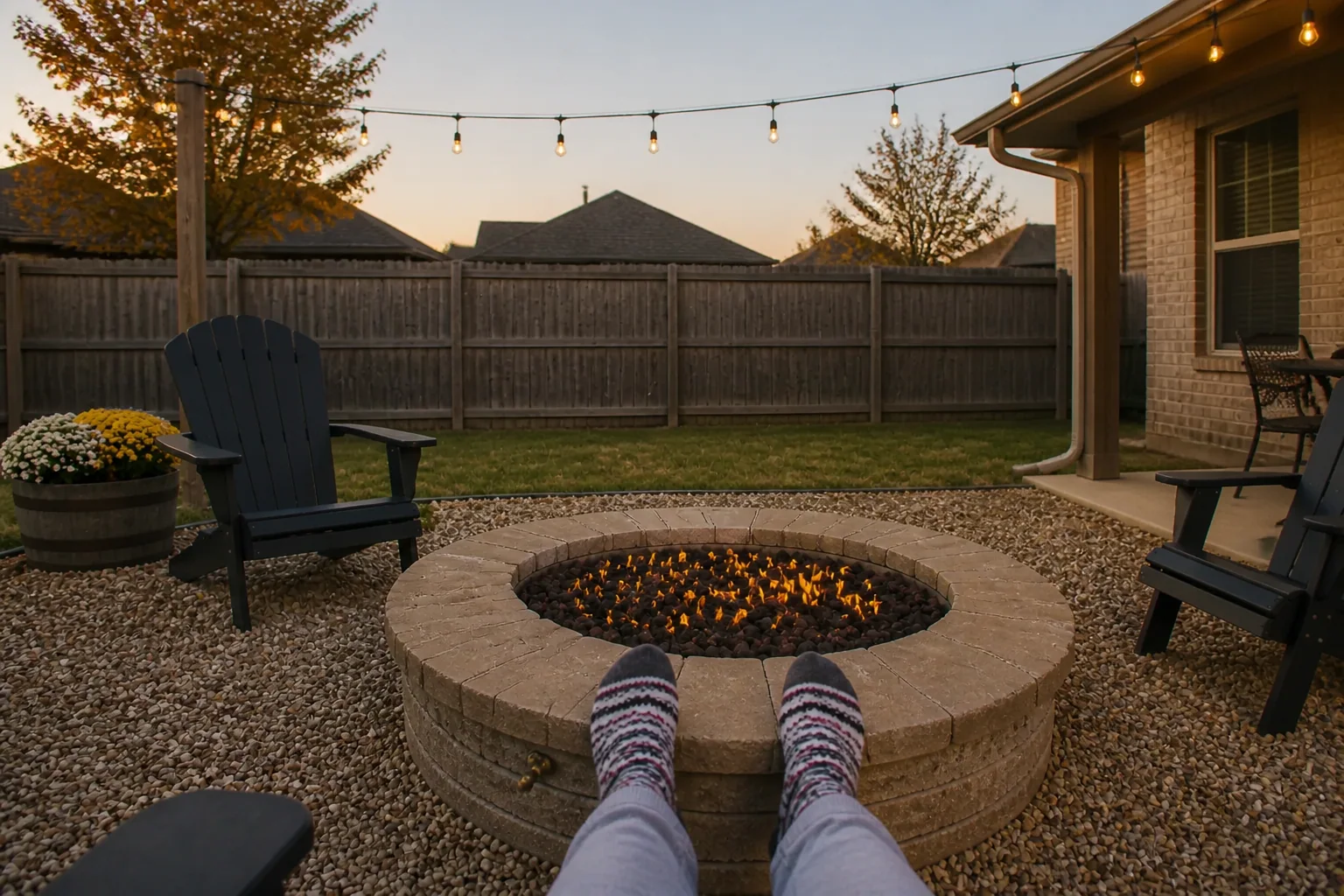
A low round stone fire pit with gas flames over lava rock, feet resting on its stone cap, ringed by Adirondack chairs on gravel in a fenced backyard with string lights above
A pit needs clear room on every side for the chairs, and staying low is what keeps the sight lines open and the yard feeling wide.

Lean outdoor fireplace if: you have room in the budget, a wall or edge to build against, a windy yard, and you want a year-round centerpiece with real heat and a clear focal point.
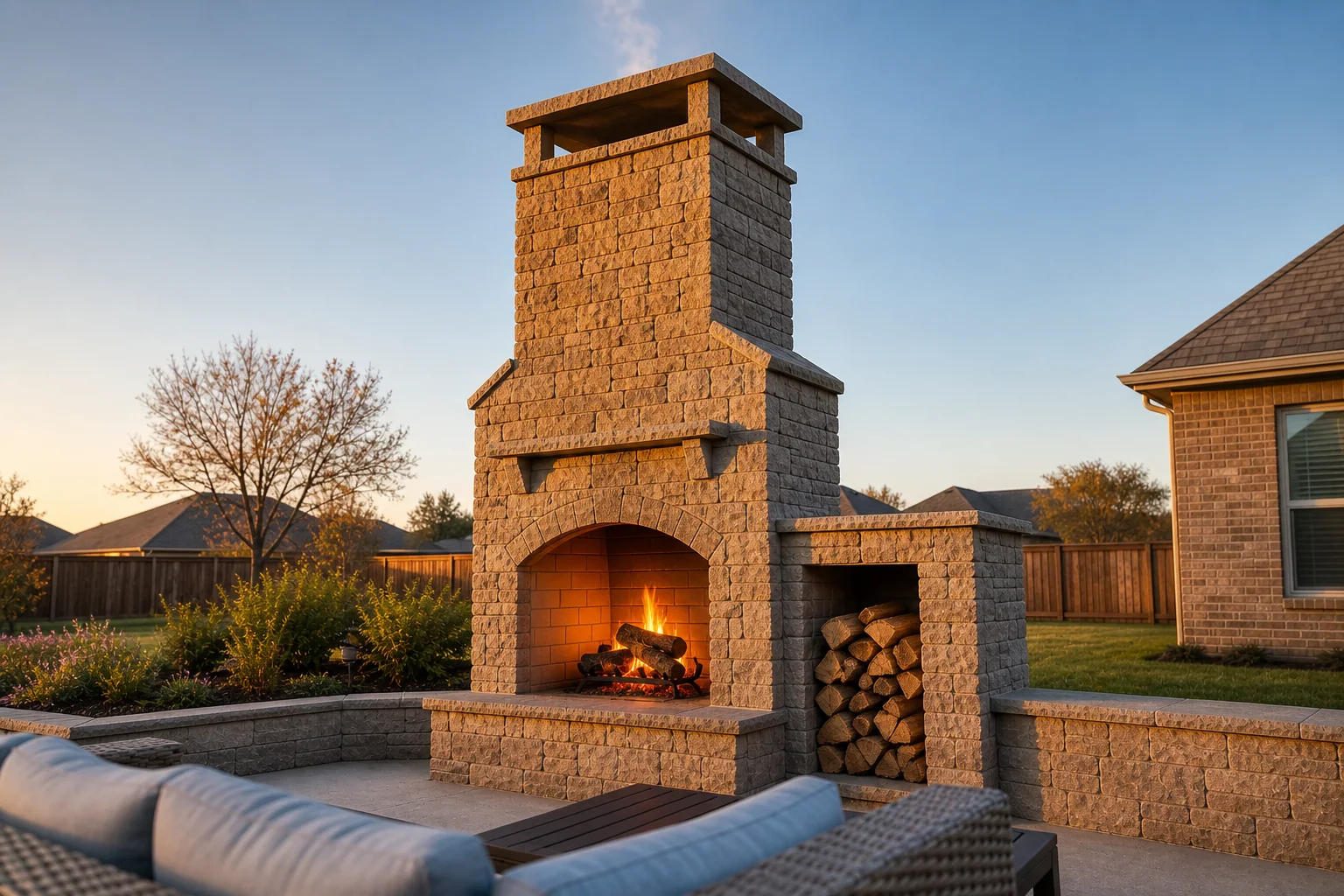
A tall stone outdoor fireplace with a wood fire burning on a grate, smoke rising from its chimney, split firewood in a built-in bay beside it, and a low seat wall wrapping around
A fireplace pushes up instead of out, so its base fits a tighter footprint — but it wants a wall or an edge to anchor against.

Still split? That's normal, and it usually means either one would work. At that point, pick the feel you want more: a circle of friends, or a hearth to face.

What North Texas adds to the choice

A few local things tip the scale here. Our wind is the big one. An open patio can get a steady breeze, and that pushes a fire pit's smoke around more than you'd like, so a sheltered fireplace earns its keep on a gusty lot. Burn bans are the other. When a county bans open burning, a contained gas feature usually stays legal, because its enclosed flame and shutoff valve fall under the same exemptions that cover grilling, while an open wood fire has to wait. So gas keeps either feature usable through a dry Texas summer. Rules do vary by county, so we check your local order before we build. And our clay soil shifts as it wets and dries, so any fire feature, pit or fireplace, has to sit on a solid footing built for that movement. A taller fireplace leans on that footing even more. None of this rules out either choice. It just means the build has to fit the ground it sits on.
Ready to build one?

We design and build both fire pits and outdoor fireplaces across Colleyville and the DFW area, in stone or brick, gas or wood.

Frequently asked questions

Get your free quote
  • A fire pit's warmth fades within a few feet of the flame, so chairs sit close in a tight ring to feel it. An outdoor fireplace pushes its heat forward in one direction, so it reaches a row of seats out in front a bit better, while the sides and back stay cool. Plan your seating around that. A pit wants a close circle; a fireplace wants chairs facing it.

  • Both add to a backyard's appeal, and buyers like a finished outdoor space. A built masonry fireplace is a larger, permanent structure, so it often reads as a bigger upgrade. A fire pit costs less and still pulls its weight. Neither one is a guaranteed return, so build the one you'll enjoy, not the one you're hoping to cash in later.

  • An outdoor fireplace. Its back wall and chimney shield the flame and pull most of the smoke up and away, so a steady breeze barely touches it. A fire pit is open on every side, so wind pushes its smoke and heat wherever it wants, often into a face. On a gusty North Texas lot, the fireplace is the calmer seat.

  • A fire pit needs open room on all sides for a ring of chairs, so plan for a wider clear area. An outdoor fireplace has a smaller base, but it's tall and wants a wall or an edge to sit against. A tight patio with one good back edge often fits a fireplace better. A big open yard suits a pit.

  • Both are safe when they're built and placed right. A fireplace contains the flame behind a back and walls, which some families with young kids prefer. A pit is open on every side, so it needs more clear space around it. Either way, your city sets clearance rules for how far a fire feature sits from the house and fence, and we build to them.

  • Yes, and on a larger property it can work well. Some yards use a fireplace as the main patio centerpiece and a fire pit in a separate corner for casual nights. If you've got the room and the budget, we can plan both so they fit the space and each other.

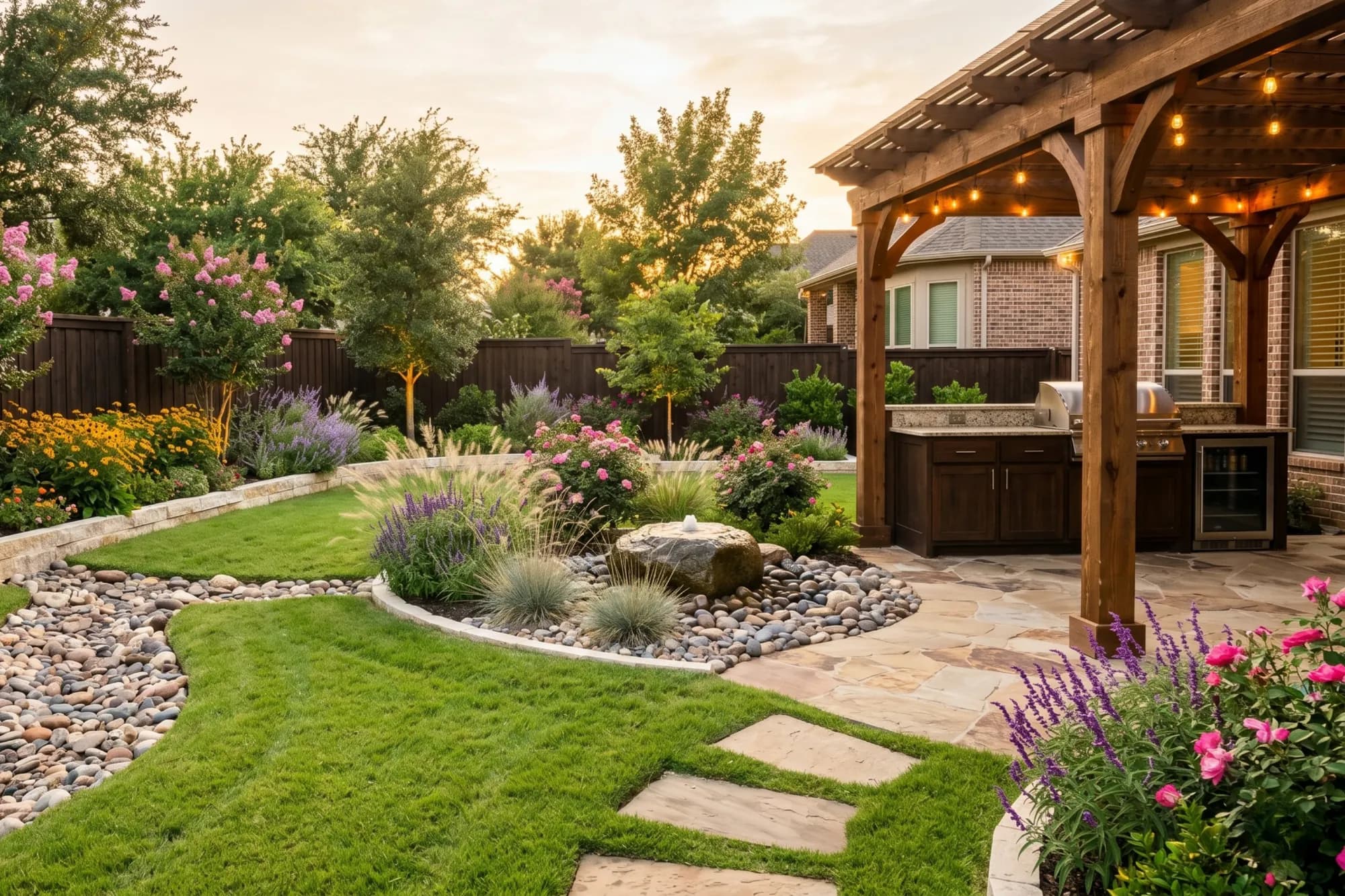
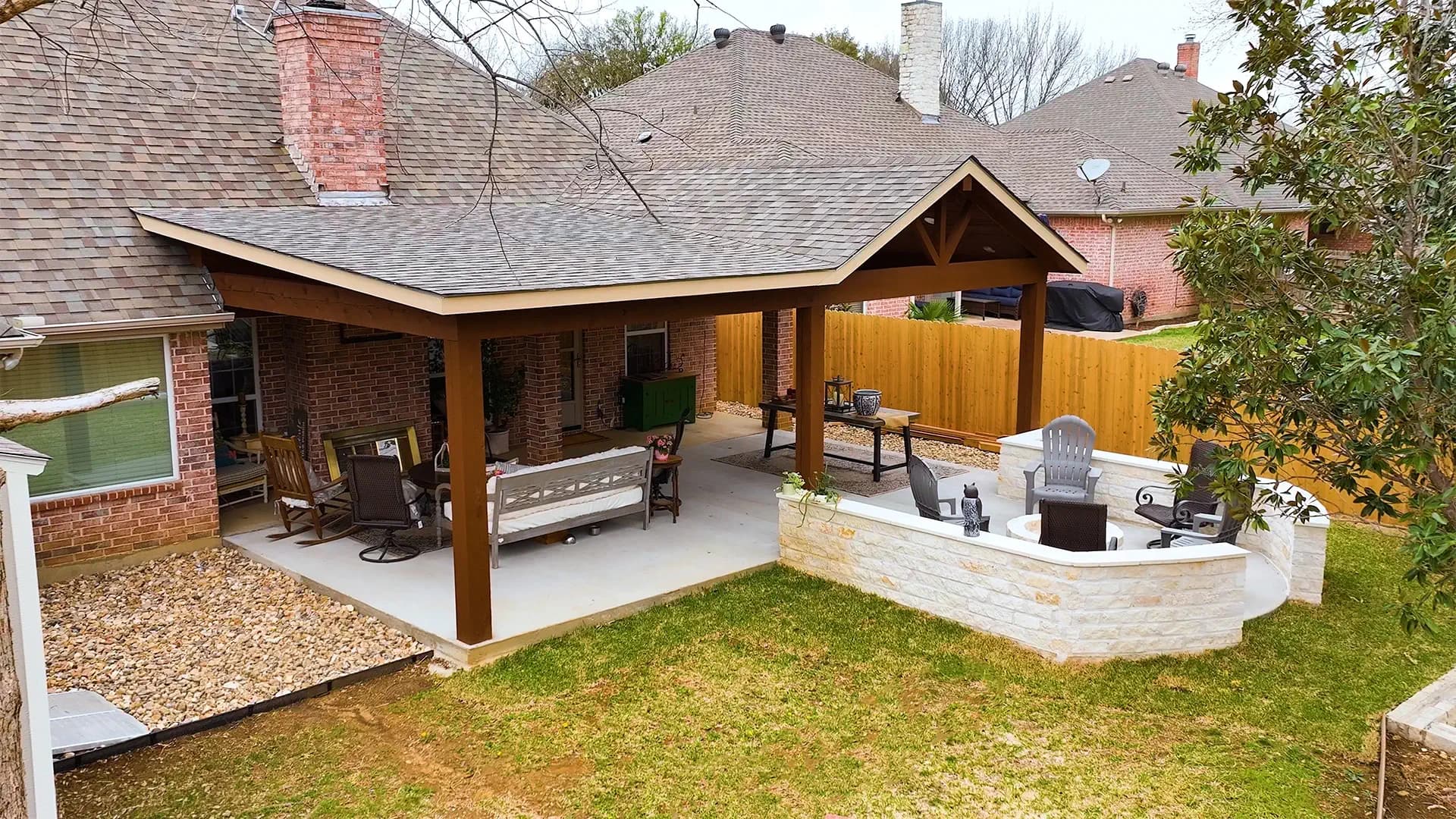
A finished covered backyard patio with a stone fire-pit seating area on a North Texas Streamline Landscape project

Still deciding between the two?

You don't have to have it figured out before you call. A free quote is also a free second opinion. We'll bring the pit-or-fireplace question to your backyard, settle it with you on the spot, then price whichever one you pick.