

Commercial Drainage Services in Colleyville, TX
Water that sits on a commercial property costs you. It's a slip risk at the entrance. It eats away at the parking lot. It works toward the foundation. We design and install commercial drainage across Colleyville and the DFW metroplex. That means parking-lot runoff, standing water, grading, catch basins, and French drains. We move the water off your site and keep it off. Licensed and insured.
Locally owned · Licensed & insured
4.8 · 93 Google reviews
Standing water on a commercial site is a liability, not a puddle
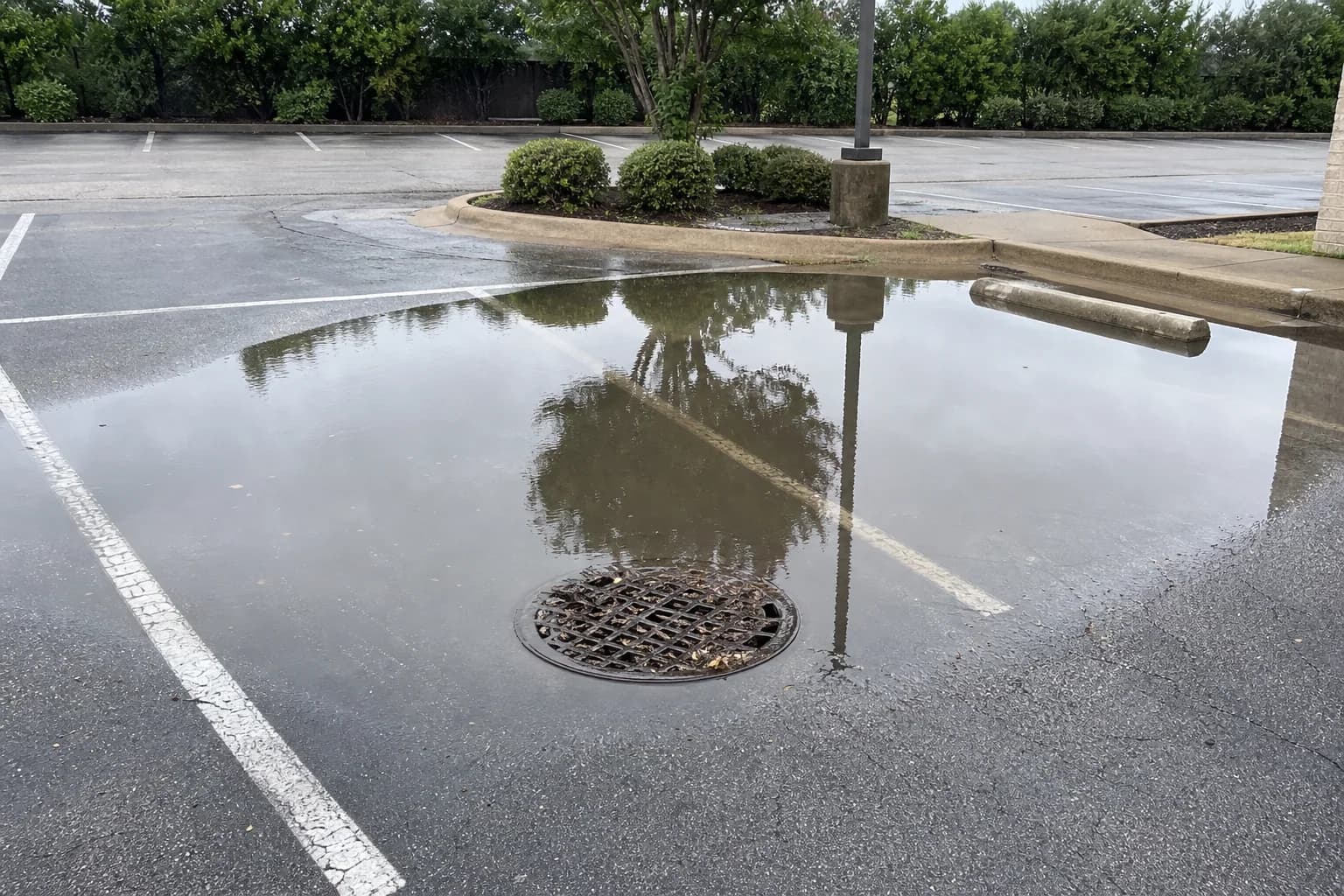
On a home, a wet low spot is an annoyance. On your property, it's a list of problems. A pooled entrance is a fall waiting to happen, and the claim that follows. Water sitting on asphalt seeps under it. The lot starts cracking and potholing from the edges in. Against the building, it works toward the slab and the foundation. And tenants and customers notice a lake at the front door every time it rains. None of that fixes itself. It gets worse and costs more each storm. The good news: it's almost always the grade and the drains. That's a fix you can plan and budget. You don't have to wait for the emergency.
What we handle
Parking lot drainage. Catch basins, area drains, and channel drains across drive lanes and lots, plus the pavement runoff that ponds or undermines the asphalt.
Standing water and grading. We regrade the low corners, parking islands, and entries that hold water, so the surface sheds instead of collecting.
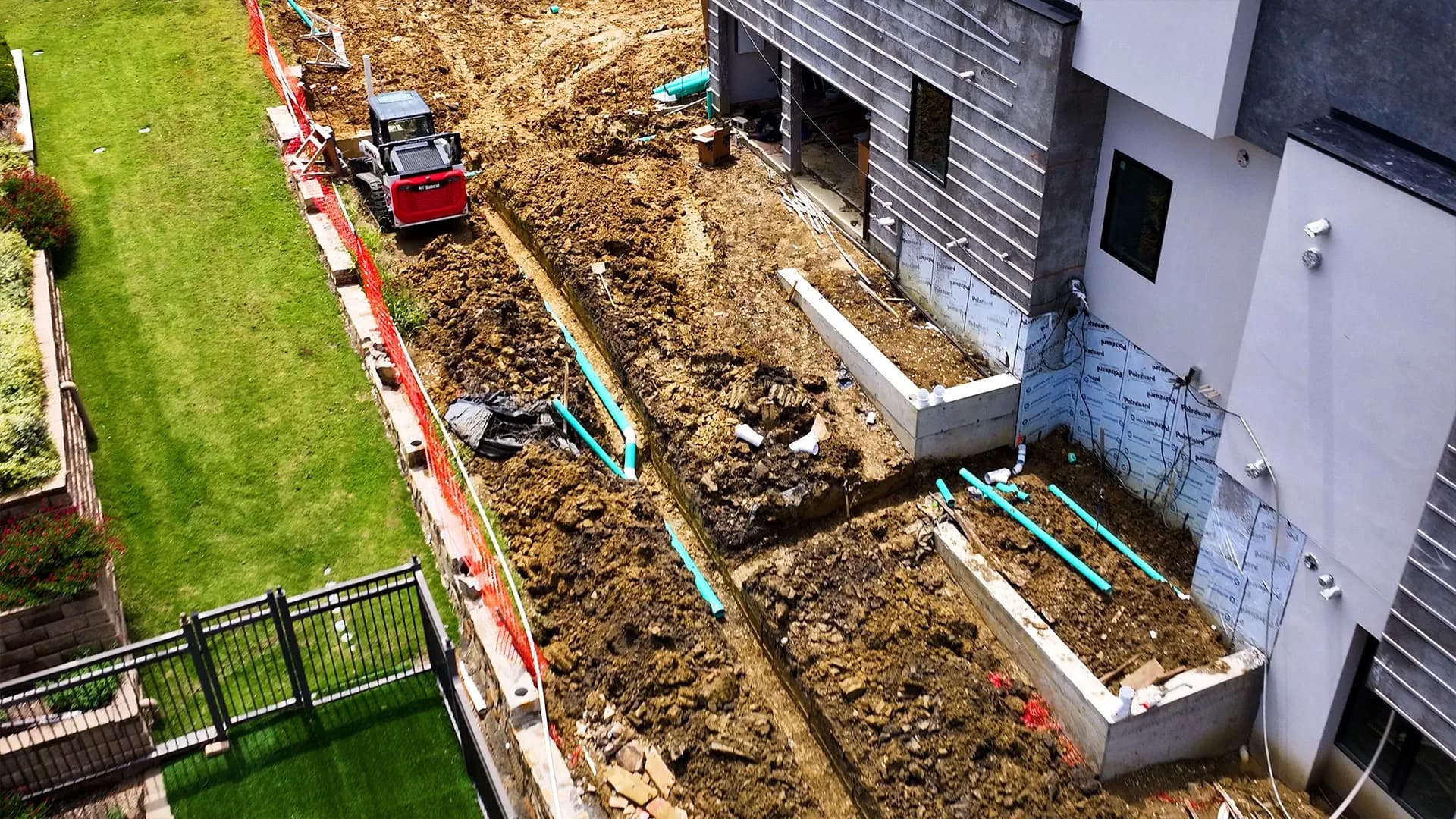
French drains and subsurface lines. Buried, gravel-bedded lines that pull groundwater and seepage away from foundations, walkways, and landscaped areas.
Foundation-protection drainage. Keeping water off the slab and footings, which matters more here because our clay moves as it wets and dries.
Paved-lot catch basins and trench drains. Capturing runoff before it cuts across parking spaces, fire lanes, walkways, or storefront entries.
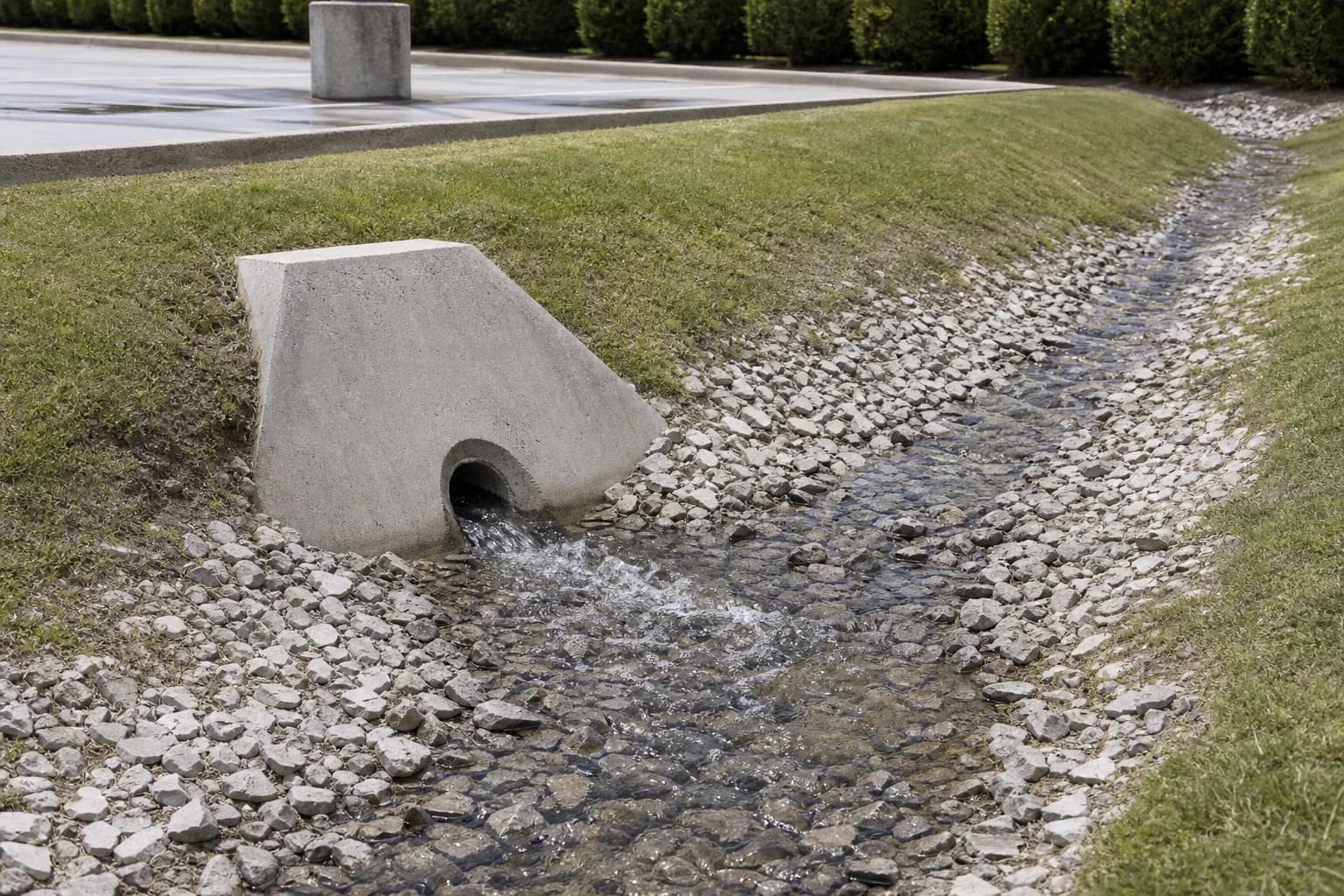
Storm and downspout tie-ins. Collecting roof and gutter water and carrying it to a proper outlet, not dumping it next to the building.
Erosion and slope control. On graded sites and retained slopes, we pair drainage with regrading and stonework and retaining walls so the soil stays put.
What changes
The entrance and walkways stay dry and safe, so the slip risk and the claim that comes with it go away.
The parking lot stops breaking down from standing water, which buys years before a costly repave.
Water moves away from the building instead of toward the foundation.
The property looks cared for after a storm, not flooded.
It becomes a one-time, scoped project instead of a problem you manage every rain.
Manage more than one property? One point of contact can cover all your sites and keep the drainage plans consistent.
How it works
We walk the site with you.
Where it ponds, where it drains now, and where the water needs to end up.
We find the cause.
Usually grading, a clogged or too-small drain, or clay that won't soak up water. We solve the cause, not the symptom.
You get a written proposal.
Scope, the drainage plan, and the price, before any work starts. If your ownership group or lease requires additional-insured paperwork, we can handle that on request.
We build it and tie it to an outlet.
Grading, drains, and lines installed so the water actually leaves the site.
We work around your operations.
We phase the work in sections and keep fire lanes and accessible entries open, so the property keeps running while we're on site.
Why DFW sites flood the way they do
As a commercial drainage contractor in North Texas, we see the same two local facts behind most of what we fix. The first is the clay. Blackland clay swells when it's wet and shrinks when it bakes, and it barely soaks up water. So a hard rain runs off the surface instead of sinking in. It pools wherever the grade lets it. That same clay moves under slabs and pavement. So keeping water off the foundation matters more here than it would in sandy ground. The second is how our sites are built. Big flat lots and wide parking fields shed sheets of water fast, often toward a building or one low corner. When the storms come hard, as they do here, a clogged or too-small drain backs up in minutes. Good commercial drainage plans for our clay and our downpours, not for an average year. We design it in, then tie it to an outlet that can carry the load.
See the work
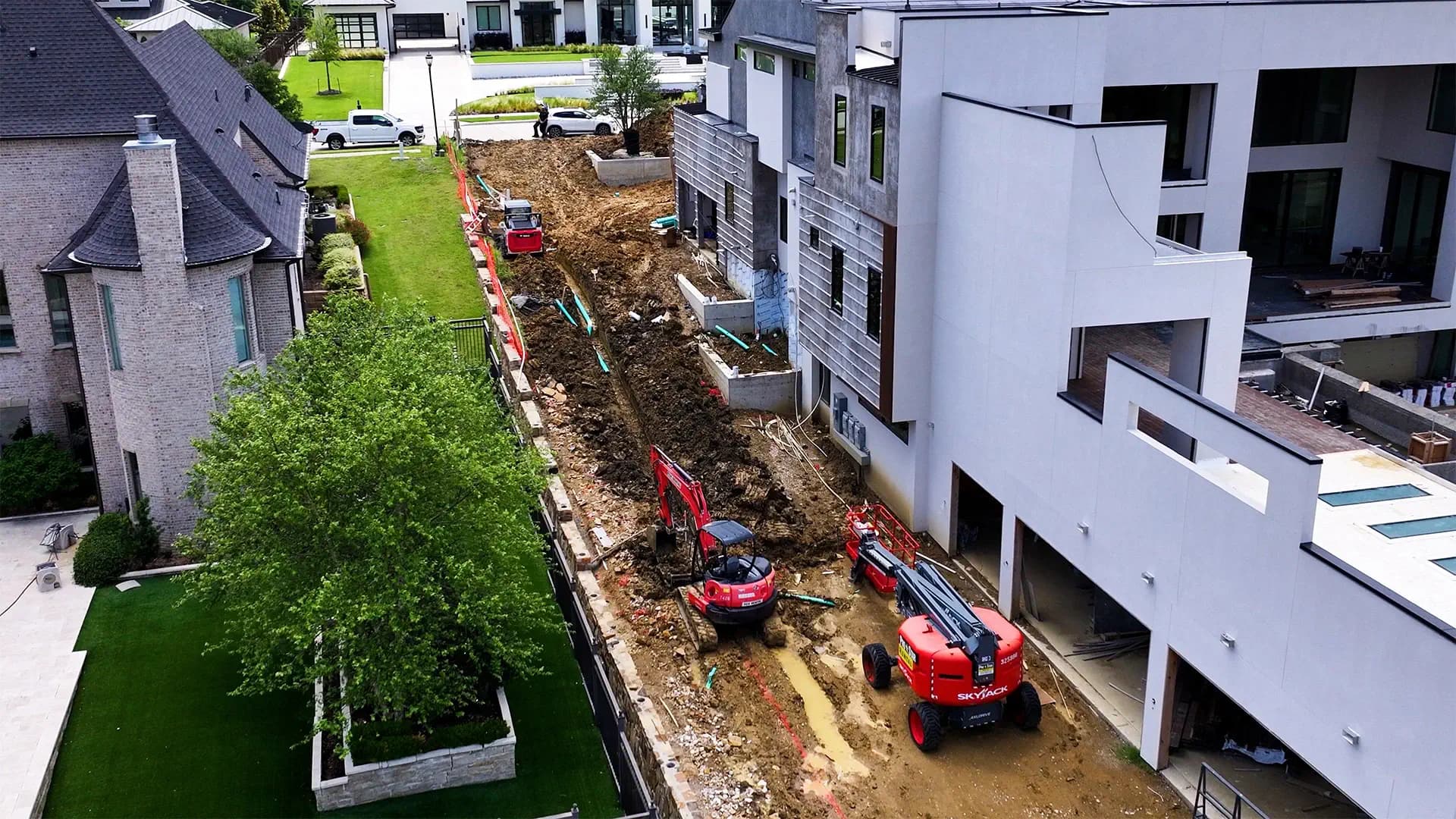
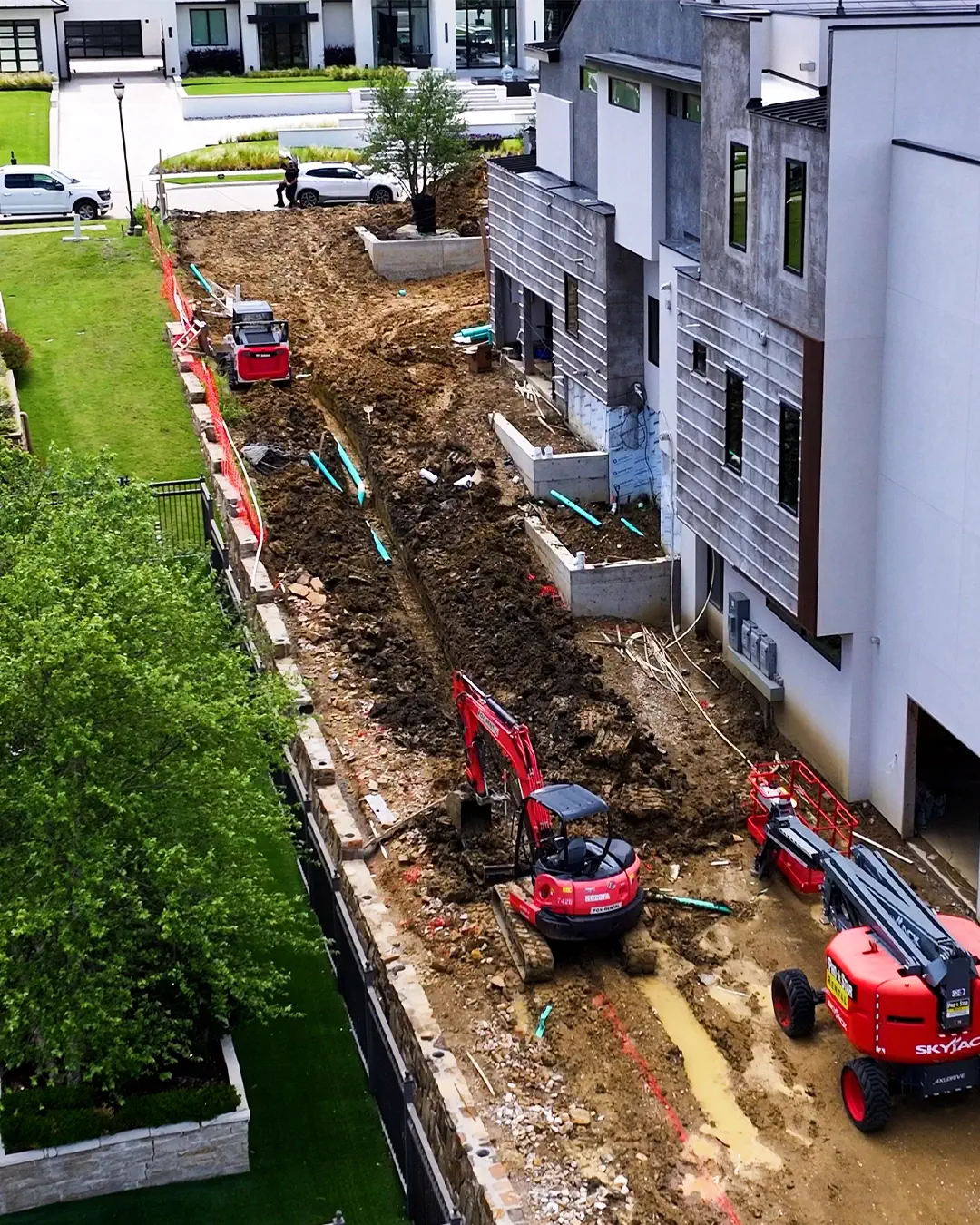
Our reviews live on Google, not just on this page: 4.8 stars from 93 customers. On a drainage job the real proof is the before and after — sites where we got the water under control.
Questions commercial decision-makers ask
Request a proposalIt depends on the site. A single low corner that needs a drain and some regrading is a small job. A parking lot that needs catch basins and new grade lines is a bigger one. We walk the property, find what's actually causing the water, and put the scope and price in a written proposal before any work starts. No phone guesses.
Usually one of three things, or a mix. The grade is too flat or pitched the wrong way, so water has nowhere to run. The catch basins are clogged, undersized, or missing. Or it's our clay, which won't absorb a hard rain and sends it across the surface instead. We find which one it is before we quote a fix.
Parking lot drainage starts with the grade. We reset the slope so water runs to a collection point instead of sitting. Then we add or clear the catch basins, area drains, or channel drains that carry it off, and we tie those to an outlet that can handle a hard rain. Where the ground underneath stays wet, a French drain pulls the water from below. The right mix depends on your lot, which is what the site walk sorts out. Once it's in, an occasional clean-out keeps the drains flowing.
Both the graded ground and the paved areas around it: catch basins, area drains, channel drains, and the grading that feeds them. What we don't do is interior plumbing, floor drains, or grease traps. That's a plumber's work. If your problem is inside the building, you want a different trade.
We plan around your operations. On a lot, that usually means working in sections and scheduling the disruptive parts for slower hours, so you keep most of your parking and access the whole time. The plan is in the proposal, so there are no surprises on day one.
A small fix can be a day or two. A larger site with grading and several collection points takes longer. Once we've scoped it, the timeline goes in the proposal with the price.
Yes. We're licensed and insured. We don't send a certificate of insurance with every proposal by default. We can name your ownership or management company as an additional insured on request.
Because waiting is the expensive option. Standing water keeps damaging the asphalt and working toward the foundation every storm, and the slip risk sits there the whole time. A planned fix is a scoped, budgeted project. An emergency is a rushed one, on top of whatever the water already ruined.
Call us and we'll come look. Most drainage work is a scoped project rather than a same-day patch, but we can prioritize an assessment, tell you what's causing the water, and lay out what the fix takes. The sooner we see it, the more options you have.
Yes. We're based in Colleyville and serve commercial properties across the surrounding cities and the wider Dallas–Fort Worth metroplex. If you manage several sites, we can look at all of them.
For boards and property managers
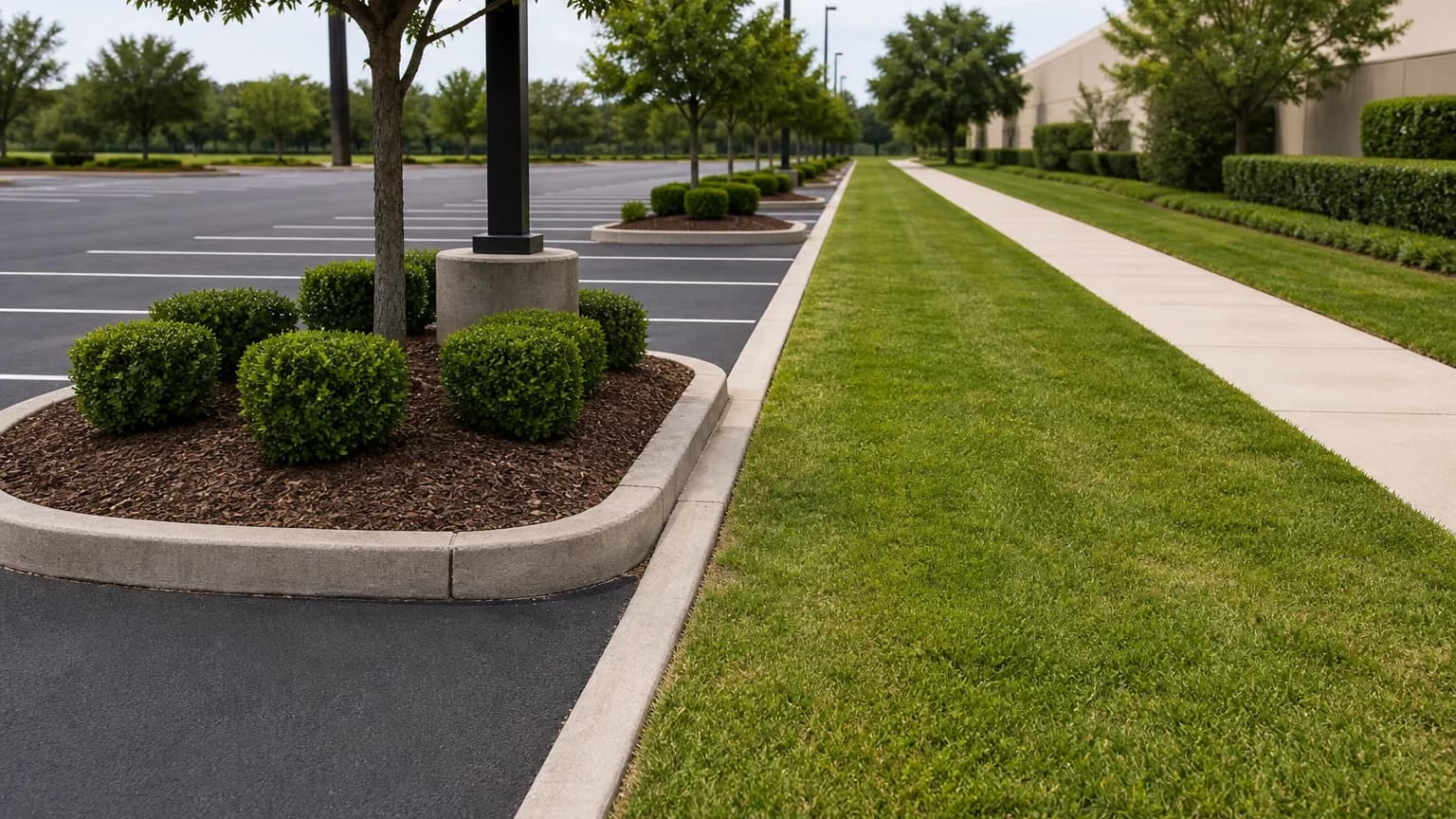
What property managers should know about commercial landscaping
What Colleyville property managers should look for in a commercial landscaping contract: scope, drainage, and what to get in writing. (817) 701-8920.
Read article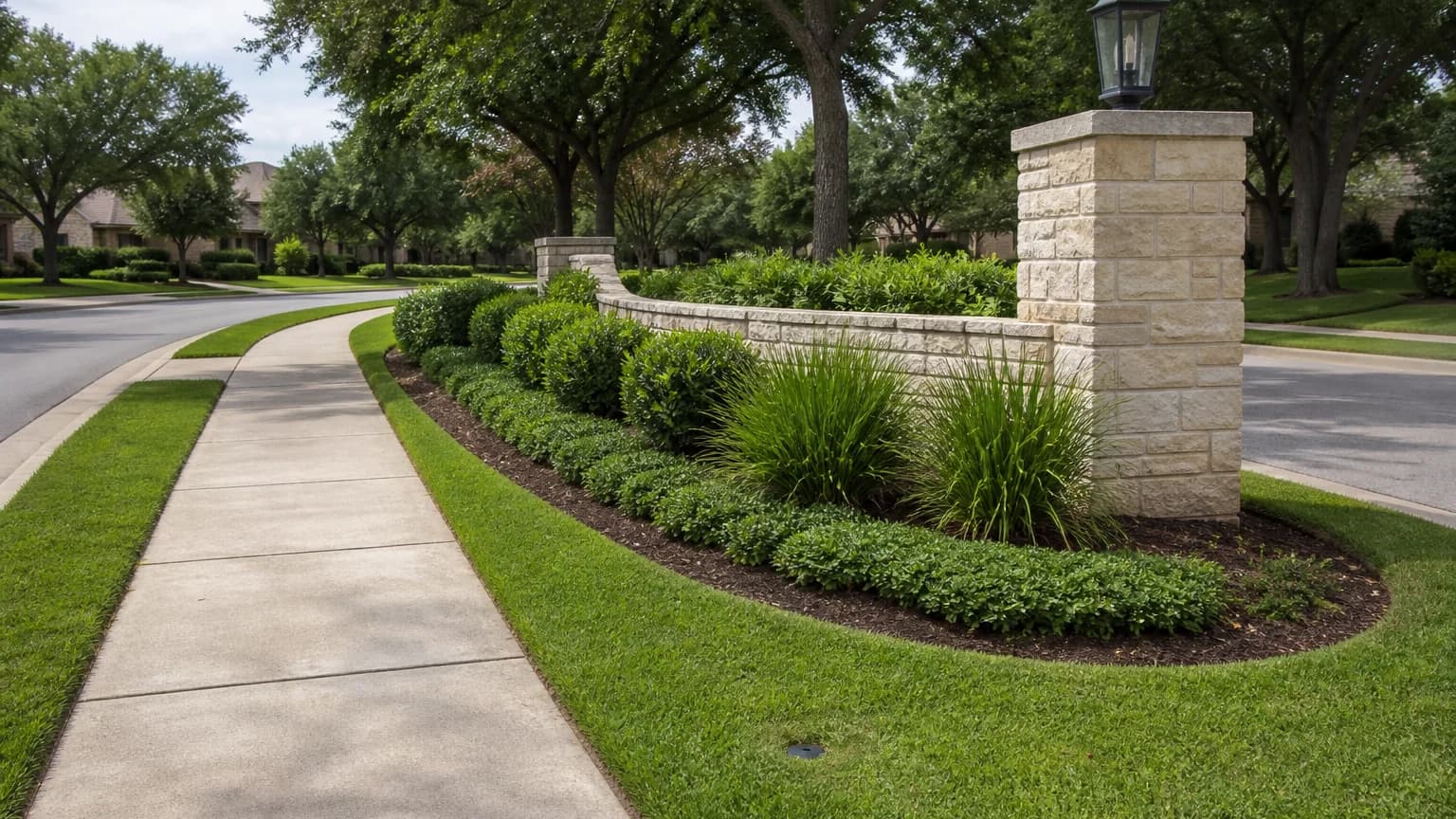
HOA landscaping compliance guide for Colleyville communities
What Colleyville HOA boards can require, where Texas law draws the line, and how to keep common areas compliant year-round. Call (817) 701-8920.
Read article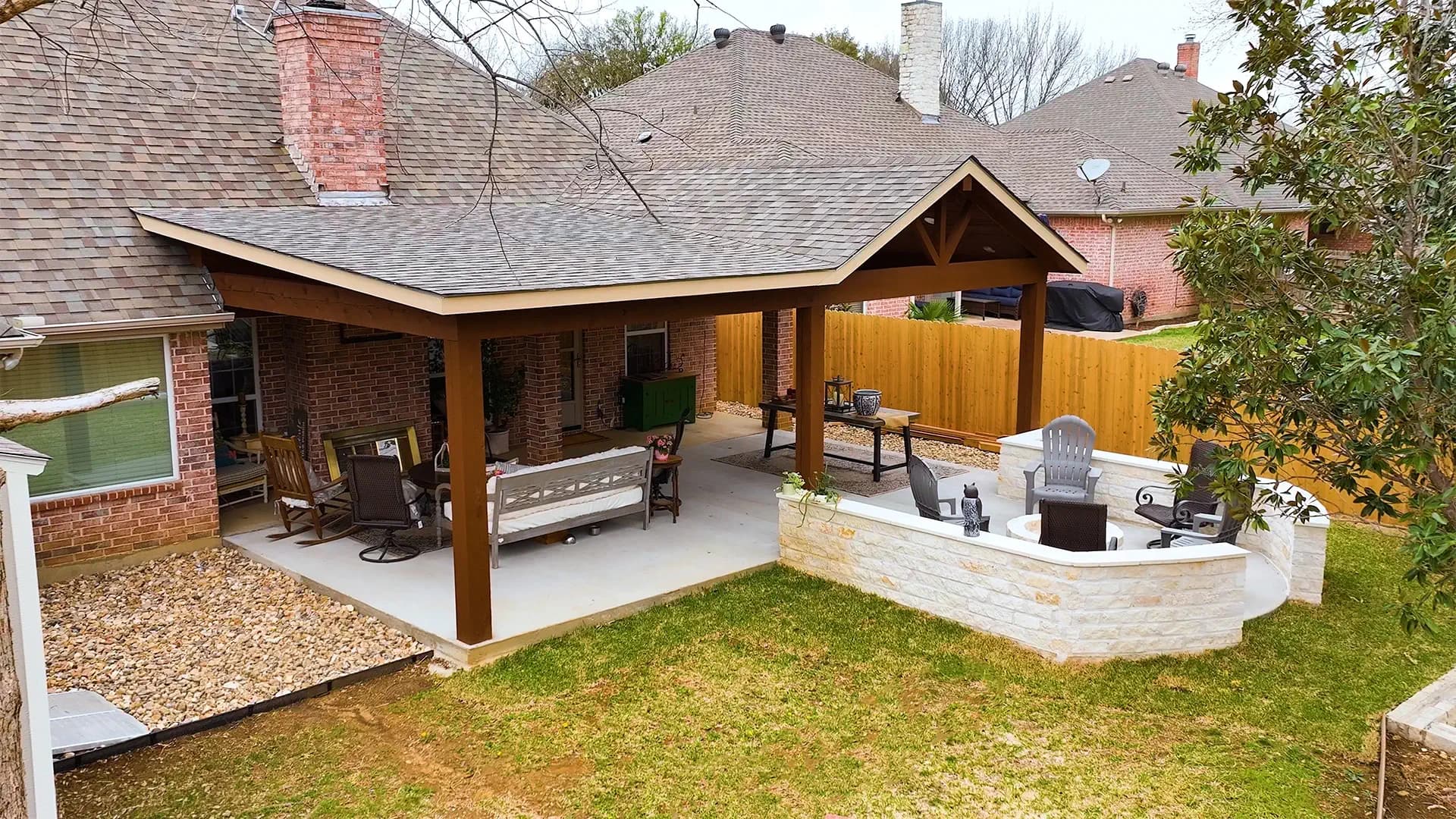
Ready to get the water off your site?
Tell us about the property and where it floods. We'll walk the site, find what's causing the water, and scope the fix in writing. Then you decide with the numbers in front of you.