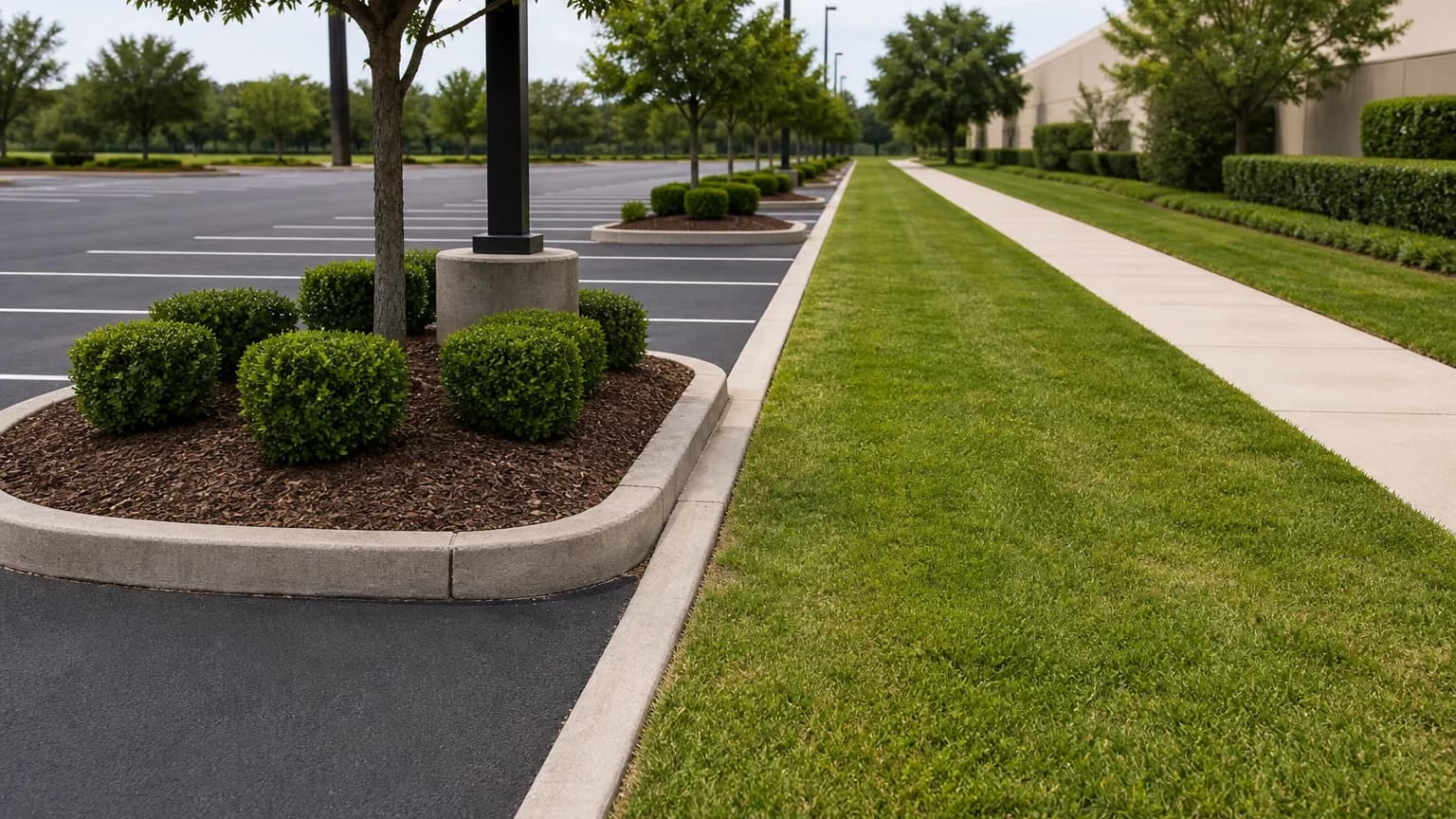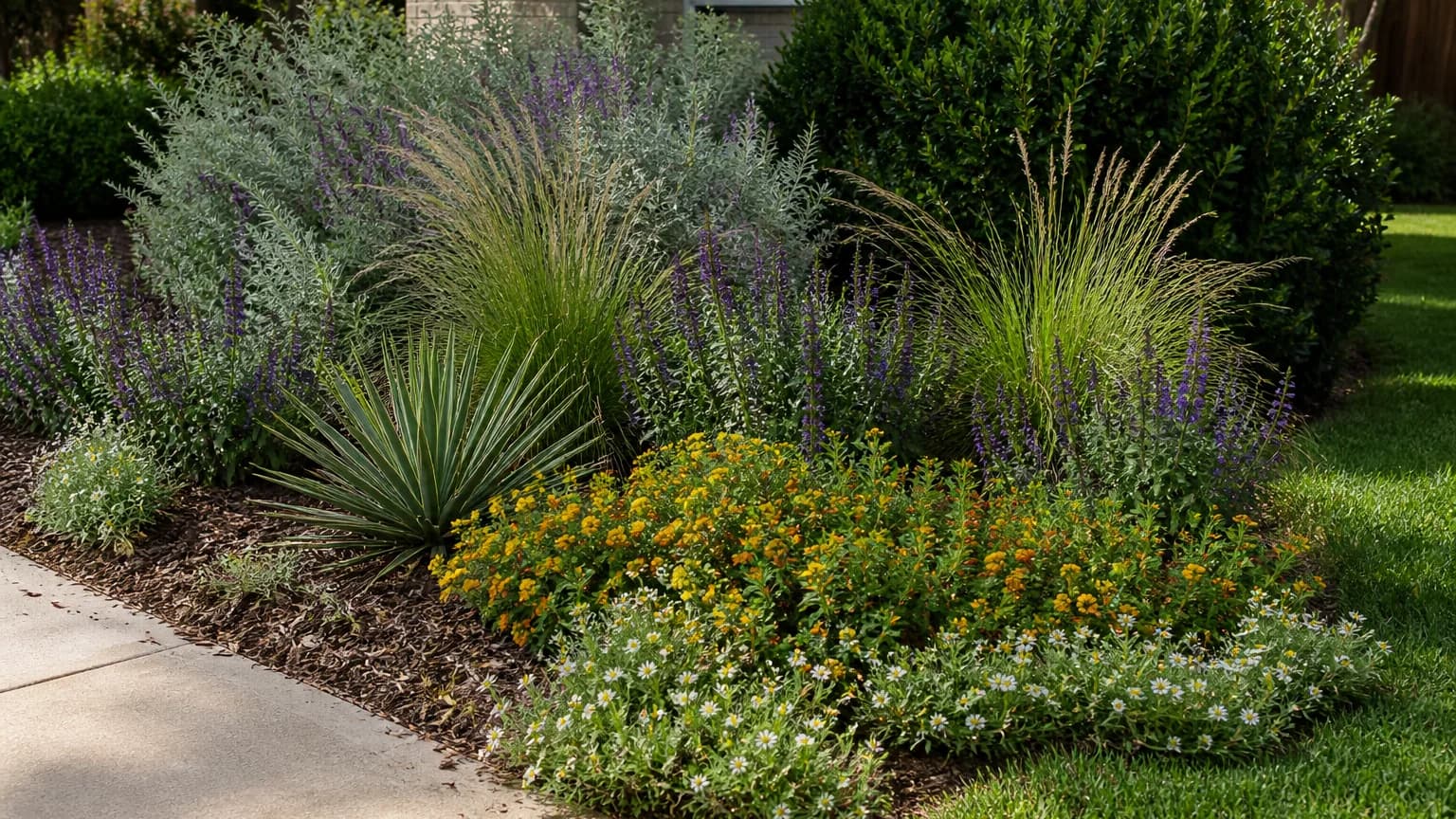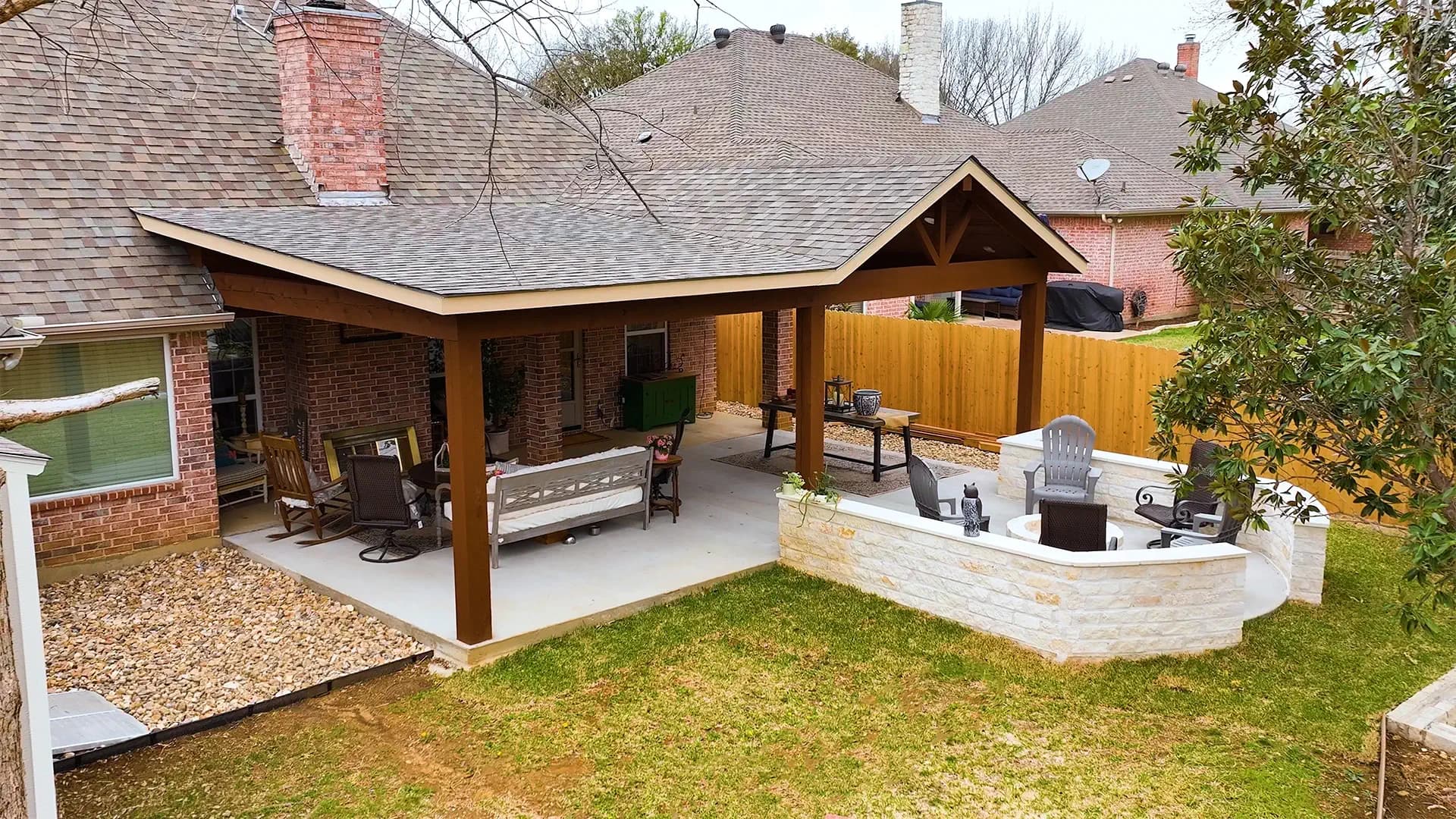

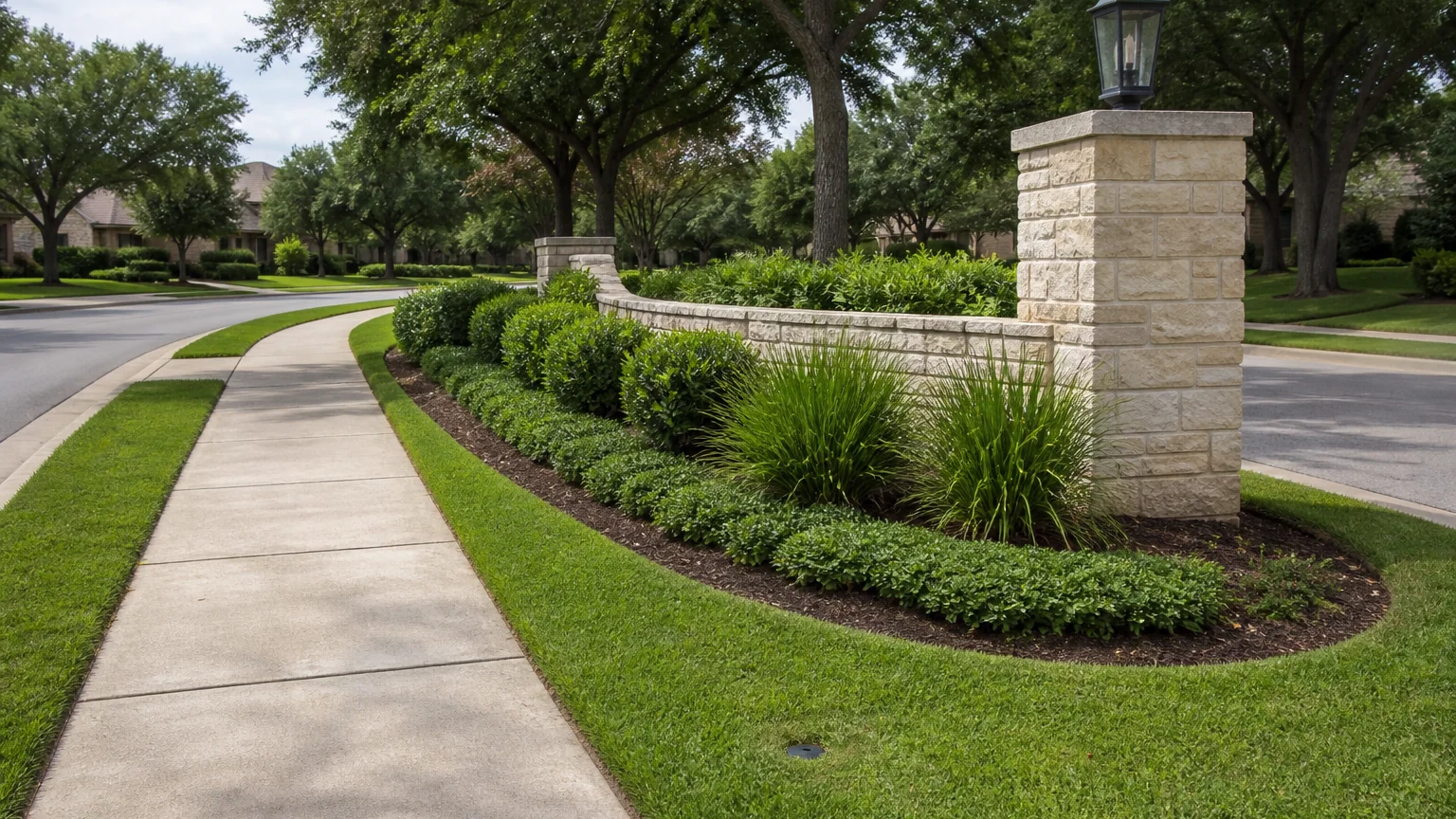
Job one: standards the law will actually back
A board's first job is getting the HOA landscaping rules right. Broad enough to keep the community sharp. But inside the lines Texas law draws. Get it wrong and a fine doesn't just fail — it can expose the board. Three parts to it.
What you can require. Most Colleyville HOA boards cover the same ground, and the state lets you:
- Set a top grass height. Require edging along sidewalks and driveways.
- Require weed-free beds and clean edges.
- Require healthy plants — no dead shrubs or bare soil in the front yard.
- Set clearance for trees and shrubs over sidewalks.
- Require sprinklers that don't flood the sidewalk.
- Send visible structures through architectural review — the ARB or ARC — for walls, patios, pergolas, and lights.
Where state law draws the line. This is the part boards miss. Section 202.007 of the Texas Property Code says you can't ban a homeowner from:
- Composting, or leaving grass clippings on the lawn.
- Putting in rain barrels.
- Using drip or other efficient irrigation.
- Using drought-resistant plants or water-saving turf.
A rule that bans any of those is void. You keep some say. You can ask for a plan so a change fits the street. You can set fair limits on a rain barrel you can see from the road. You can steer new turf toward water-saving types. What you can't do is say no on principle.
Color in a dry summer is protected too. Section 202.008 took effect in September 2025. It bars fining for brown turf during a city or utility water limit. That bar holds for 60 days after the limit ends.
Job two: enforce so the fine holds. A clean violation can still fall apart on procedure. Chapter 209 is clear. Before you fine, send written notice and give a fair chance to fix it. And since January 2024, House Bill 614 adds one more step. A board that fines must adopt a written fines policy and share it with members. It has to list the violation types, a fine schedule, and the hearing process. No policy on file, and your power to fine is shaky.
What this looks like in a Colleyville summer
The North Texas calendar decides which rules actually come up.
- Water limits make §202.008 a live issue most summers. Cities here cap watering on dry days. That's just when lawns brown out. And it's just when you can't fine for it. A board that sends color notices in August is often aiming into a limit window. Check your water provider's current stage first.
- Heat and clay make some rules unrealistic. Plants not built for our summers die on schedule. A strict "no dead plants" rule turns into a treadmill of notices. Standards built on tough, drought-tolerant plants hold up better. And the law already protects those.
- Drainage is a common-area problem here. Heavy clay turns low medians into standing water after a storm. That reads as neglect on an inspection. But it's a grading and drainage issue, not a mowing one. And it's the board's to fix, not a homeowner's.
If your HOA is rewriting its plant list, the drought-tolerant plants that thrive in North Texas are a good baseline. They keep common areas green on less water. And they're already on the right side of the law.
Job two is really an operations problem
Here's what surprises new board members. The HOA landscape violations boards cite most — overgrown turf, dead plants in front beds, weedy bed edges, sidewalk overspray — are nearly all maintenance issues, not rule-breaking homeowners. Most complaints don't start with a homeowner breaking a rule. They start with a common area that drifted. An entrance that got shaggy. A median that browned. An island holding water. The standards were fine. The grounds weren't. That happens when a vendor misses a week, or three.
That's a maintenance problem, and it's the board's to solve. It's worth handing to a pro when:
- The common areas are big or visible enough that one missed visit shows up at the next meeting.
- You're tired of chasing a vendor for the visit that didn't happen.
- You want the work on a schedule, not a phone tree.
That's the case for commercial landscaping built for HOAs. Scheduled care for entrances, medians, and common areas. One point of contact, not a rotating crew. It keeps the grounds ahead of the complaints. That's cheaper, and quieter, than enforcing your way out of a problem later. Curious what a program for your community would look like? Request a proposal.
A year-round rhythm, not a fire drill
Complaints cluster in spring and fall, when growth is fast and curb appeal is top of mind. A simple seasonal rhythm on the common areas keeps the board ahead of both.
- Spring. Pre-emergent weed control goes down before the weeds wake up. Mulch gets refreshed to a couple of inches. Edges get cleaned. Winter damage gets fixed before growth takes off. This season sets the tone for the year.
- Summer. Sprinklers get dialed in for the heat — without flooding walks, which is its own violation. Heads get checked monthly. And the board watches the city's water stage, because color notices and a water limit don't mix.
- Fall. Debris cleared. Bare spots fixed. Structures checked before dormancy. Fall is also the quiet time to plan next year's big projects, so approvals are ready by spring.
- Winter. Even dormant common areas have to look kept. Leaves off the turf. Edges clean. Storm damage handled. It's the right time to review your standards against current law.