
How pre-emergent works, and why timing is everything
Most weed problems start underground, weeks before you see a single weed. The soil is full of weed seed, waiting for the right warmth and moisture to sprout. Pre-emergent is how you get ahead of that.
Here's what it actually does. A pre-emergent herbicide forms a thin barrier in the top layer of soil. When a weed seed sprouts and pushes a root through that layer, the barrier stops it before it can grow. The weed dies as a sprout, before it ever breaks the surface. That's the whole idea — you're not killing weeds, you're stopping them from ever starting.
Two things follow from that, and they're the whole game:
- It only works before the weed sprouts. Once you can see a weed, pre-emergent can't touch it — that weed already made it through. At that point you need a post-emergent, which is a different product for weeds that are already up. So pre-emergent is all about being early.
- The timing follows the soil, not the calendar on the wall. Weed seeds sprout at certain soil temperatures. Crabgrass, for example, starts sprouting when the soil holds around 55°F for a few days running. Your job is to get the barrier down before that happens. Wait until the air feels like spring and you've usually already missed it.
The two windows in North Texas:
- Late winter, for summer weeds. This is the big one. Get pre-emergent down before the soil warms in spring — here that's usually February into early March. One barrier starts breaking down before the whole sprouting window closes. So a second round, about six to eight weeks later, carries the protection through the rest of spring.
- Early fall, for winter weeds. A second application stops the cool-season weeds. Put it down as the soil cools, usually September, before it drops below about 70°F. Those weeds sprout in fall and sit in the lawn all winter.
A few things that make or break the application:
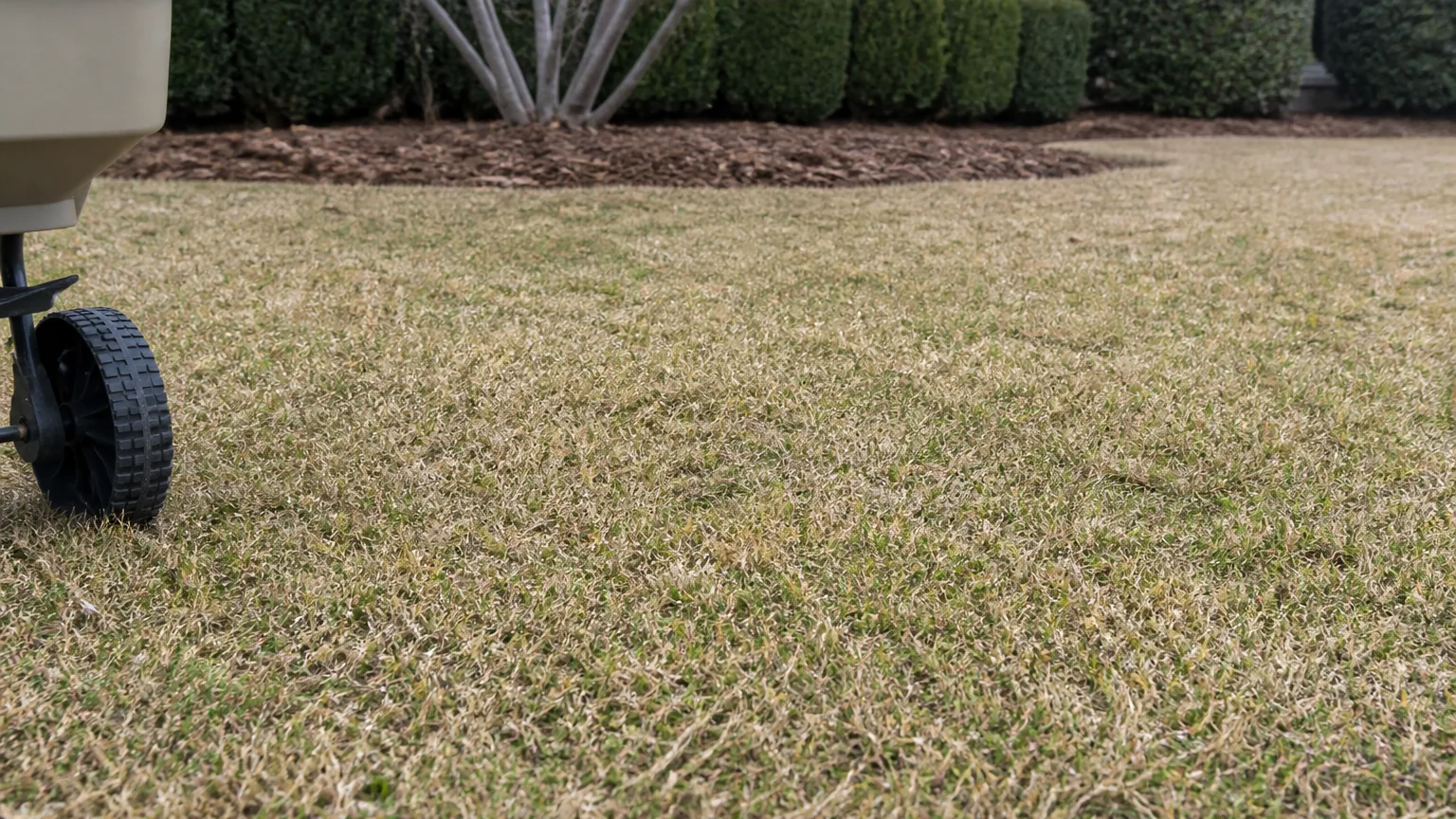
- Water it in. Most pre-emergents need to be watered into the soil within a few days to form the barrier. A rain or about a half-inch from the sprinklers does it. Left dry on top, it just sits there.
- Don't break the barrier. Aerating, dethatching, or heavy raking after you apply pokes holes in the layer and lets weeds through. Do that work before you put pre-emergent down.
- Don't mix it with new grass seed. Pre-emergent can't tell a weed seed from a grass seed — it stops both. If you're planting or overseeding, skip the pre-emergent on that area until the new grass is well established.
Why timing is harder in North Texas
Pre-emergent in North Texas runs on a tighter clock than it does most places. Our short, mild winters are exactly what makes it tricky. The soil warms up early and fast. So the late-winter window comes sooner than people expect, and it doesn't wait for the lawn to look ready.
- Watch the soil, not the lawn. A Bermuda lawn in Colleyville is still brown and dormant when it's already time to put pre-emergent down. If you wait for it to green up, the crabgrass is usually sprouting right alongside it. Go by the season and the soil temperature instead.
- A warm spell can fool you. North Texas gets warm stretches in January and February, then drops cold again. One early warm week can start seeds moving, so leaning toward the early side of the window is safer than waiting.
- Our clay holds moisture. Heavy clay soil stays damp, and damp plus warm is what weed seeds want. It also means a barrier that's watered in well tends to hold.
- Summer is too late to start. Once the heat sets in and you're seeing weeds, the pre-emergent window for those weeds is closed. The move then is to treat what's up, keep the lawn thick, and get the next application down on time.
The honest takeaway: the single biggest reason pre-emergent fails here isn't the product, it's being two weeks late.
When to hand it off
Plenty of homeowners put down their own pre-emergent. It's worth handing off when:
- You keep missing the late-winter window — the most common reason a yard fights weeds all summer.
- You're not sure which product or rate is right for your grass type, and you'd rather not guess with herbicides.
- You want both windows covered every year without having to track two calendar dates yourself.
- The lawn is already thin or weedy, so even a perfect pre-emergent leaves bare soil for the next weed to fill.
That's where a lawn-care company earns its fee. They track both windows and apply at the right rate for your grass. That isn't work we do. What we do is a separate job: pre-emergent that isn't watered in evenly never forms a barrier, so if your coverage is patchy, get the sprinklers sorted first. And if a bigger yard project is on the list, get a free quote.
Crabgrass: the weed pre-emergent was made for
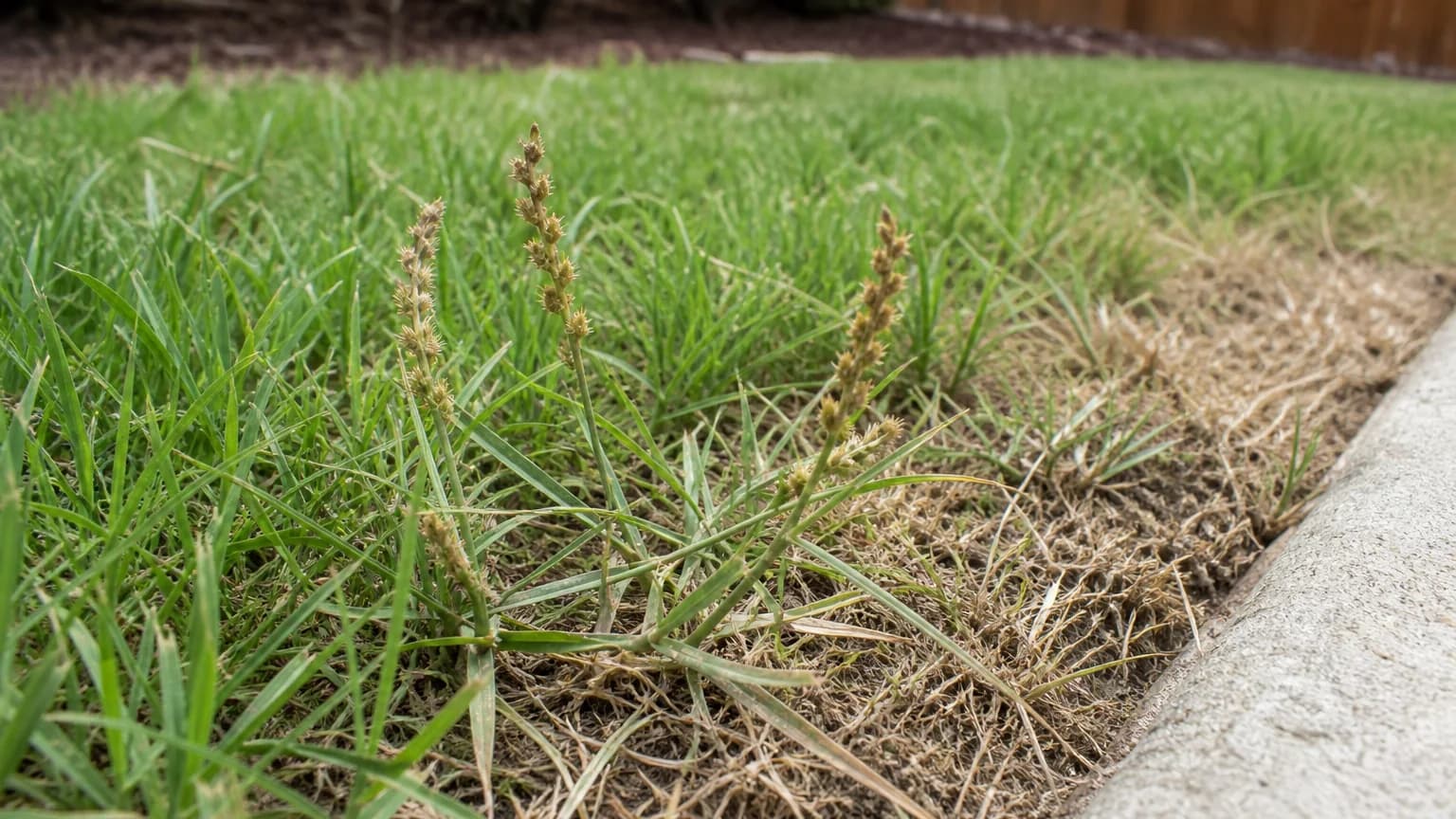
If there's one weed that explains why pre-emergent timing matters, it's crabgrass. Crabgrass is a summer annual. It sprouts from seed in spring, spreads into low, light-green clumps all summer, then dies at the first frost. Before it dies, one plant drops thousands of seeds into your soil for next year.
That's why you can't pull your way out of it. Yank a crabgrass clump in July and you've done nothing about the seed already waiting in the ground. The reliable answer is the same one this whole page is about: get pre-emergent down before it ever comes up.
- Prevent it — late winter pre-emergent. Crabgrass seed starts sprouting when the soil holds about 55°F for a few days. In North Texas, that's usually late February into March. Get the barrier down before that, and most of the crabgrass never comes up. A second round six to eight weeks later covers the late sprouters.
- If it's already up — post-emergent. Once you can see crabgrass, pre-emergent is done for the year on that weed. A post-emergent labeled for crabgrass can knock it back while it's young and small; older, established clumps are much harder to kill. After that, the plan is to prevent it next spring instead of chasing it every summer.
- Keep the lawn healthy. Bare, thinning turf is the open ground crabgrass needs to get a foothold. A well-kept lawn leaves it far less room — the other half of prevention, alongside timing.
If your "crabgrass" turns out to be the spiny kind that sticks to socks and dog paws, that's a different weed. See our guide to grass burrs and stickers — pre-emergent handles them on the same late-winter timing.