
How to read your brown patches
The lawn is telling you what's wrong by where and how it browns. Walk the yard and match what you see to the list below.
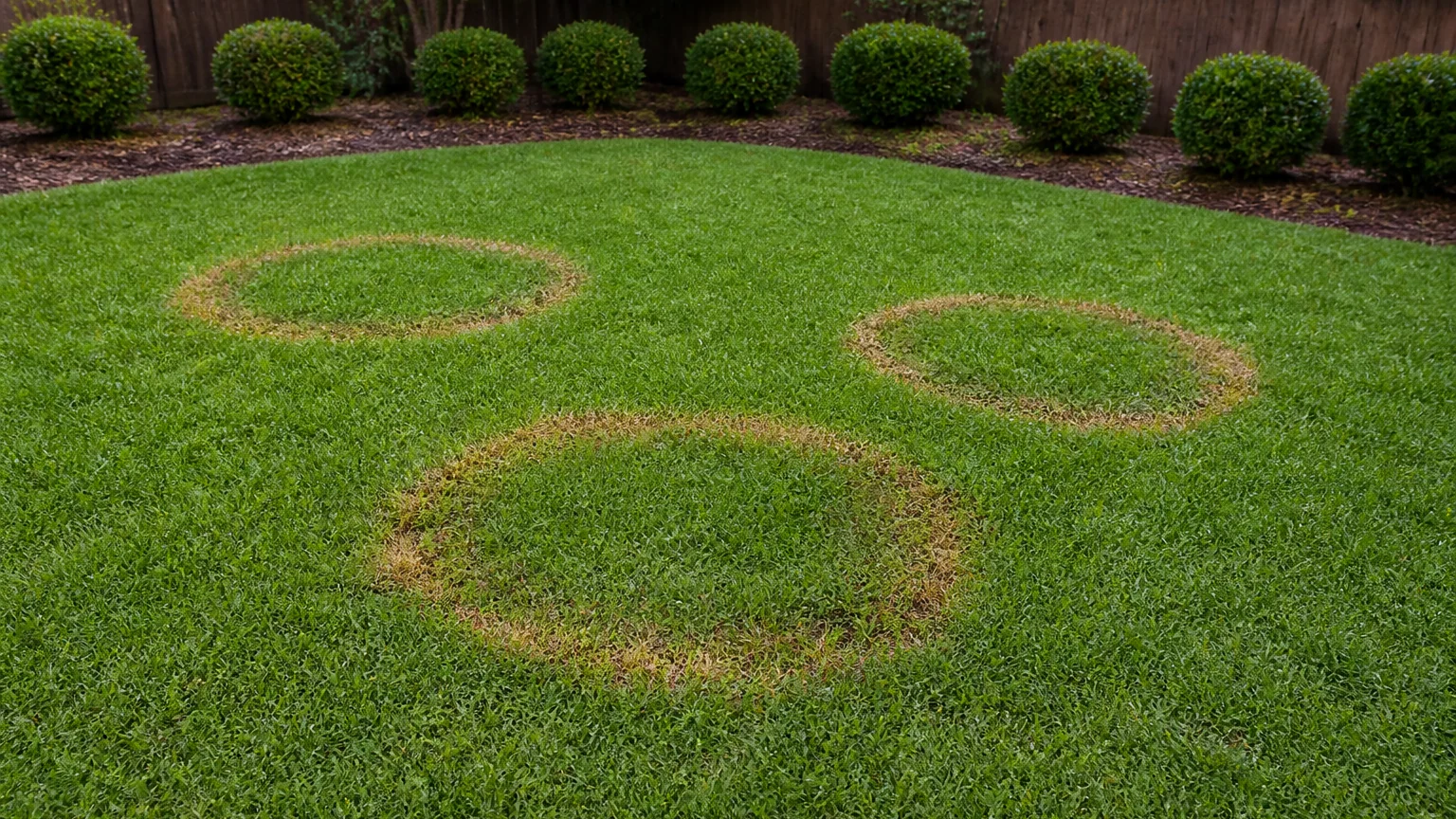
- Round or arc-shaped rings — a lawn fungus. Brown circles, sometimes with a darker edge or a still-green center, usually mean fungal disease. Our St. Augustine and zoysia lawns get one so common it's literally called brown patch. It shows up in the mild, damp stretches of spring and fall, and it loves a lawn that stays wet — heavy clay, evening watering, or a sprinkler running too often. The fix is less water, not more. Water early in the morning so the blades dry by night, and cut back how often the sprinklers run. If it keeps spreading, treat it with a fungus control matched to your grass.
- Patches that peel up like carpet — grubs. If a brown patch lifts right off the soil because the roots are gone, you have grubs. These beetle larvae eat grass roots in late summer and fall. The turf feels spongy, and you may see birds, skunks, or armadillos digging at night. This one needs a grub treatment timed to the season; watering won't bring back grass with no roots.
- Small spots ringed with dark green — dog urine. Coin-sized brown spots with a lush green halo, out where the dog goes, are urine burn. The salts scorch the center while the diluted edge gets a nitrogen boost. Soak those spots with water to flush the salts, and pick one out-of-the-way area for the dog when you can.
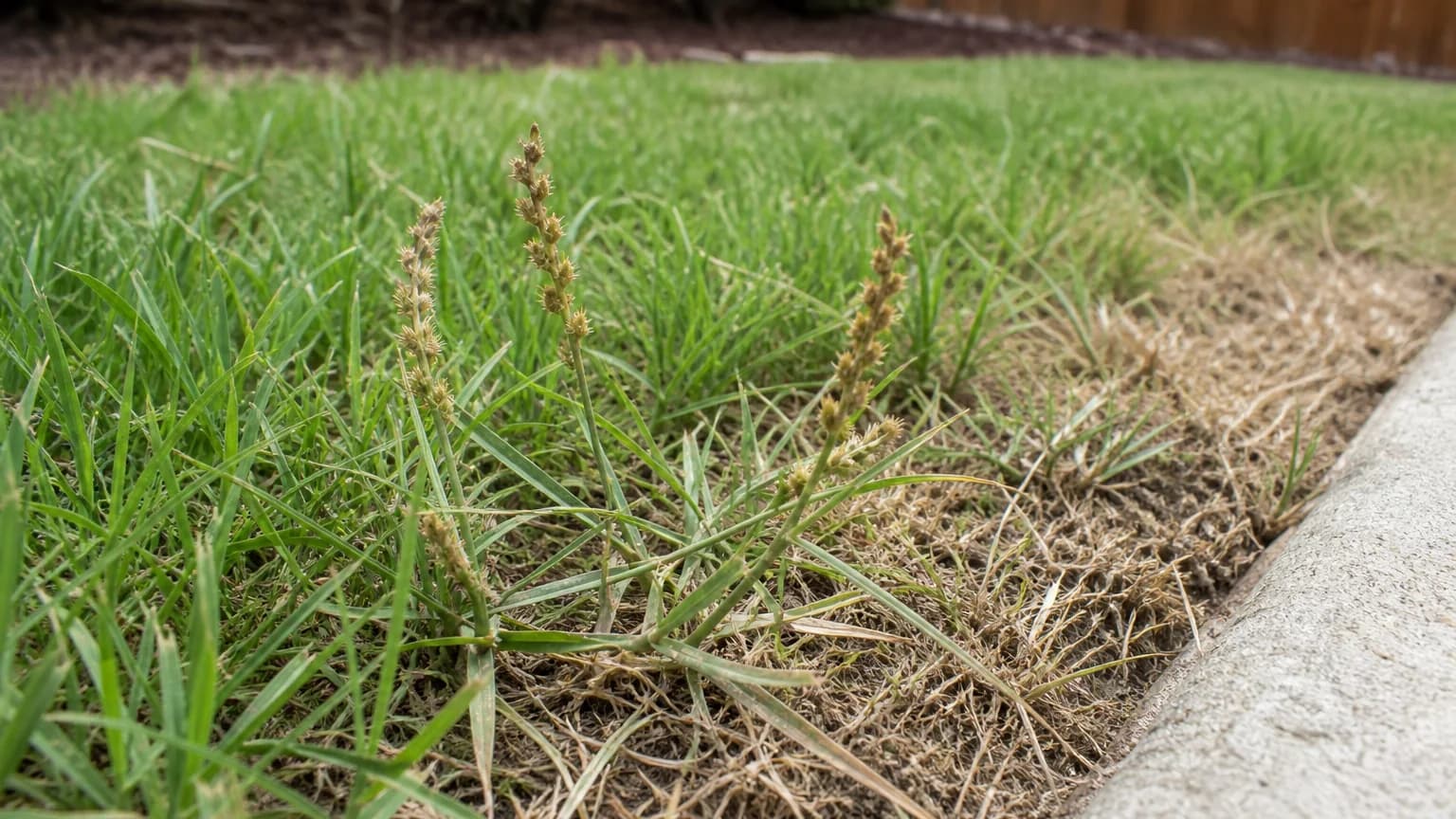
- Dry strips and high spots — drought stress. Grass along driveways, sidewalks, and the tops of slopes browns first, because it dries out fastest. A quick test: step on it. Healthy grass springs back, and drought-stressed grass stays flat and shows your footprint. This is the one case where the answer really is more water — but deep and less often, not a daily sprinkle.
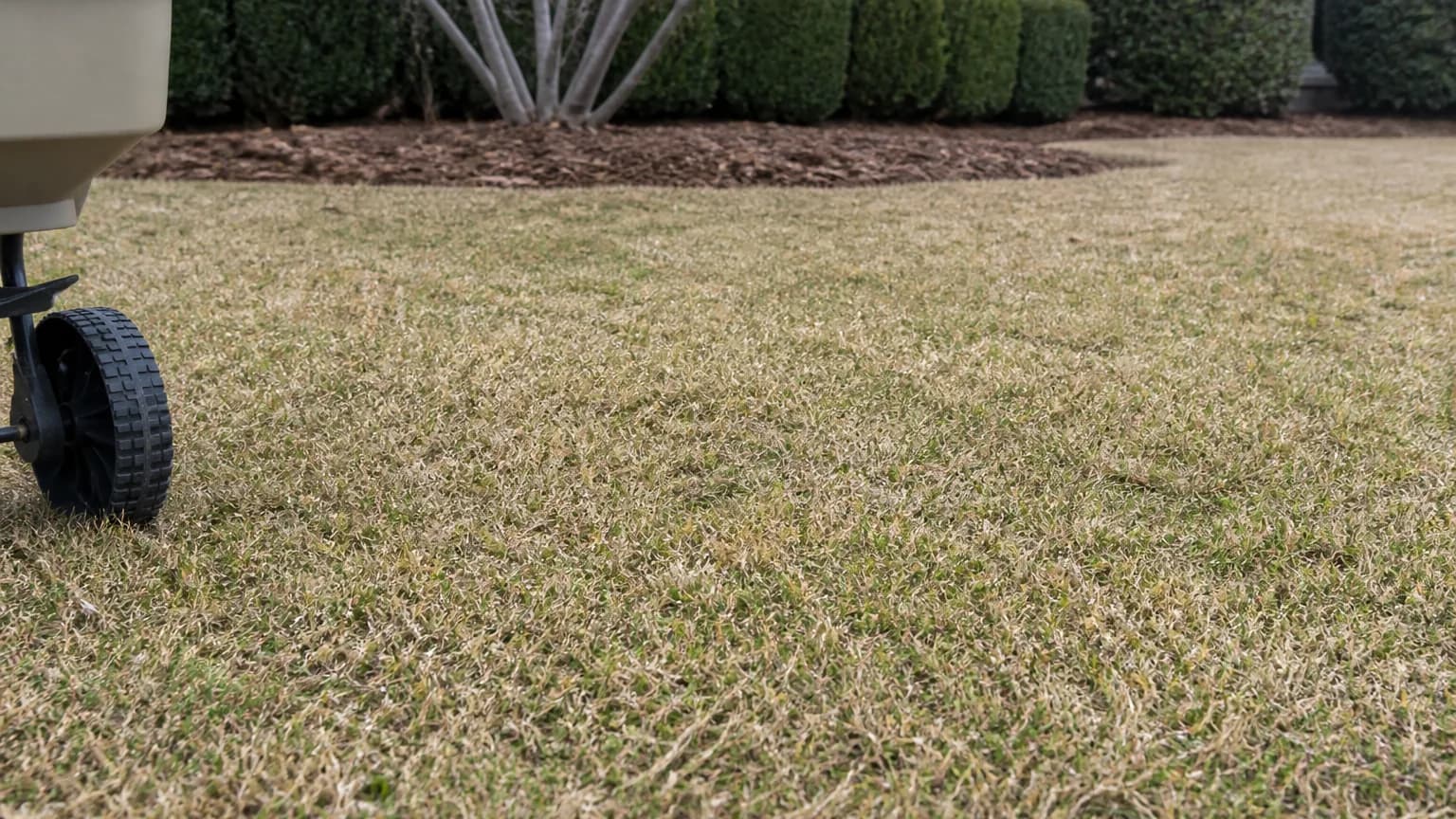
- Whole lawn, tan and even — dormancy or a mowing problem. If the lawn browns all over rather than in patches, it's usually not a disease. Warm-season grasses like Bermuda go dormant and brown in cold, and can brown in a hard summer drought too. An even tan with frayed tips can also mean a dull mower blade shredding the grass, or mowing too low and scalping it. Sharpen the blade, raise the cut, and the color often comes back.
- Straight lines or odd geometric shapes — a spill or a chemical. Brown in sharp lines or splashes usually isn't natural. Think spilled fertilizer, gas from a mower, or weed killer that drifted. There's no cure for the burned grass; you clear it, flush the soil, and reseed or re-sod the spot.
Most yards have one main cause, sometimes two. Find yours before you reach for the hose or a bag of anything.
What makes North Texas lawns brown
A few things about our area decide which brown patches you're most likely to get.
- Our grasses go dormant on a schedule. Most DFW lawns are Bermuda, with some zoysia and St. Augustine. Bermuda greens up in spring and browns out after the first hard frost, usually staying tan through winter. That brown is normal and not a problem. People who move here from cooler places often think the lawn died its first winter.
- Clay soil holds water, and fungus likes that. Our heavy clay drains slowly. Pair that with humid spring and fall nights, and lawn fungus has everything it wants. If a low area stays soggy long after rain, that's a drainage problem feeding the disease, not just a watering one.
- Summer heat and watering rules dry the edges. When the city limits watering to certain days, the thin, sunny strips along concrete are the first to go brown. A lawn that's allowed to bake all summer also gets weak, and weak turf is where weeds like grass burrs and stickers move in.
- Grub damage shows late. Grubs do their feeding through late summer, so the brown often appears in early fall, right when people assume it's just heat stress. The peel-up test sorts it out.
When to bring in help
A lot of brown patches clear up once you find the cause and stop making it worse. A few situations, though, are worth a professional's eyes:
- You can't tell whether the grass is dead or dormant, and you don't want to wait a whole season to find out.
- The brown keeps spreading even after you've changed the watering, which often means a fungus or grubs that need the right product at the right time.
- A big share of the lawn is gone, and you're deciding between reviving it and replacing it.
- You'd rather not guess with herbicides, fungicides, or grub treatments — the wrong one at the wrong time wastes money and can set the lawn back.
The fix starts with reading the lawn right. From there, a lawn-care company can match the treatment to the cause and put it on the right schedule. That part isn't us. But plenty of brown patches turn out to be a water problem, and if the cause is coverage, runoff, or a low spot that never dries, that's work we handle. Want that checked? Get a free quote.
Dead or dormant — and how to bring a lawn back
Two questions come up so often they're worth their own section: is my brown grass actually dead, and if a lawn has gone bad, can I bring it back?
- Dead or just dormant? Dormant grass is alive but resting — brown on top, with the crown and roots still good. Dead grass is gone for good. Three quick checks tell them apart. First, the tug test: dormant grass holds firm when you pull it, while dead grass lifts out easily. Second, the calendar: if it browned with the season (cold winter, peak summer drought) and the rest of the lawn did the same, it's likely dormant. Third, water: dormant grass greens up within a couple of weeks of real water or its growing season returning; dead grass just stays brown. When in doubt, give a patch two weeks of proper watering and watch.
- How to bring a struggling lawn back. If the grass is alive, recovery is straightforward once you fix what caused the trouble. Get the watering right — deep and infrequent, in the morning. Feed it on a steady schedule so it can grow back in. If the soil is packed hard, aerating lets air, water, and roots move again. Rake out the dead thatch so new growth has room. For spots that are truly dead and bare, you reseed or lay new sod — dead grass does not turn green again, so those patches get replaced, not revived. Then the lawn fills back over them with steady care.