
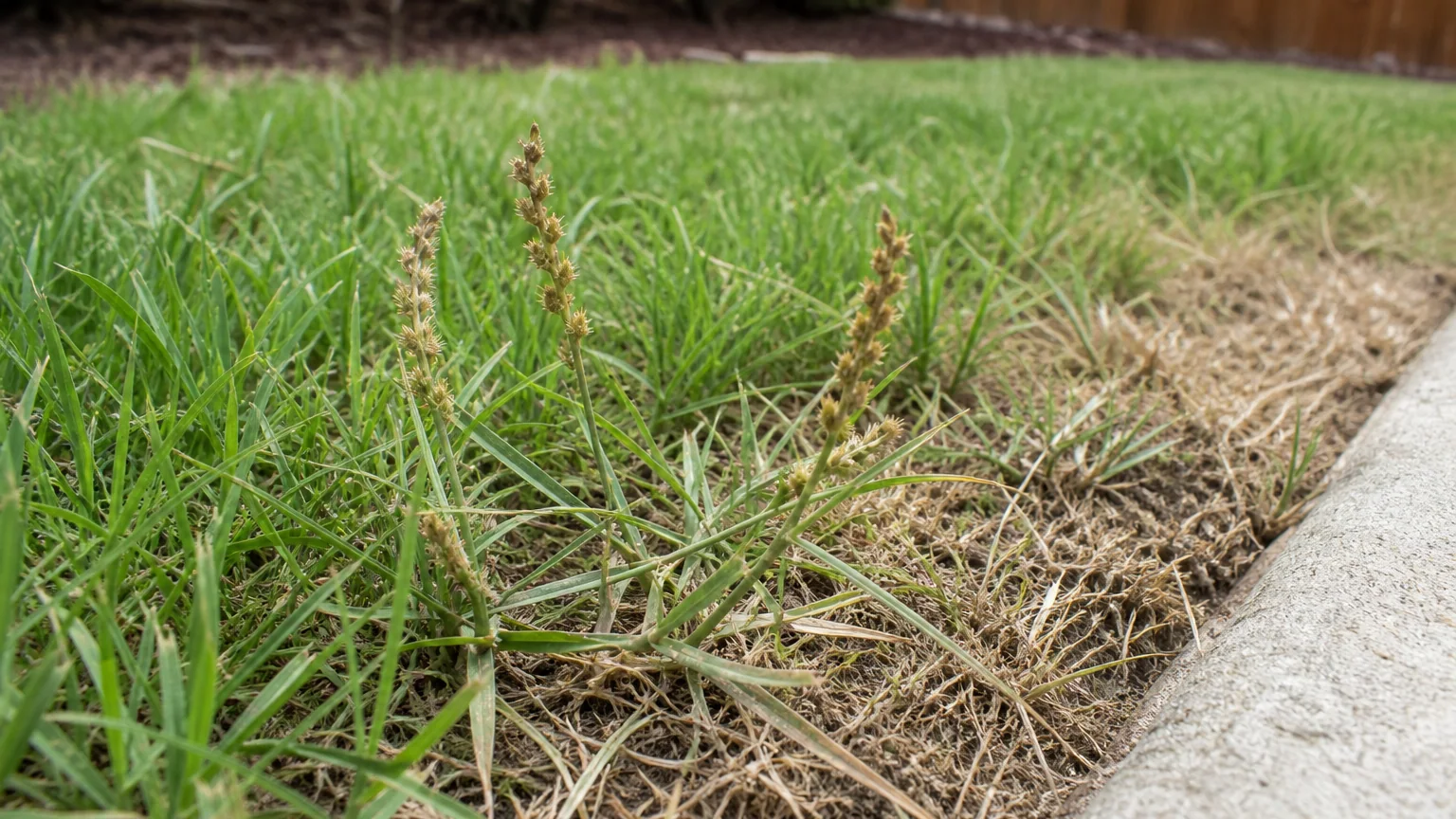
What grass burrs are, and why they keep coming back
Grass burrs go by a lot of names: stickers, sticker weeds, sticker burrs, grass stickers, sandburs, sometimes spelled grassburs. They're all the same kind of plant — a tough, low grassy weed that grows fast in summer heat and then sets those spiny burs in late summer and fall. Each bur is a seed pod. Step on one, and it hitches a ride on your shoe, your dog, or the mower, and plants itself somewhere new.
Here's the part that catches people out. By the time you can feel the stickers, the plant has already made its seed for next year. Pulling it then doesn't undo the damage. And every bur you miss drops seed that can sit in the soil and sprout for years. That's why a yard "full of stickers" stays full year after year, even when you yank what you can see.
So the fight is about the seed, and about timing:
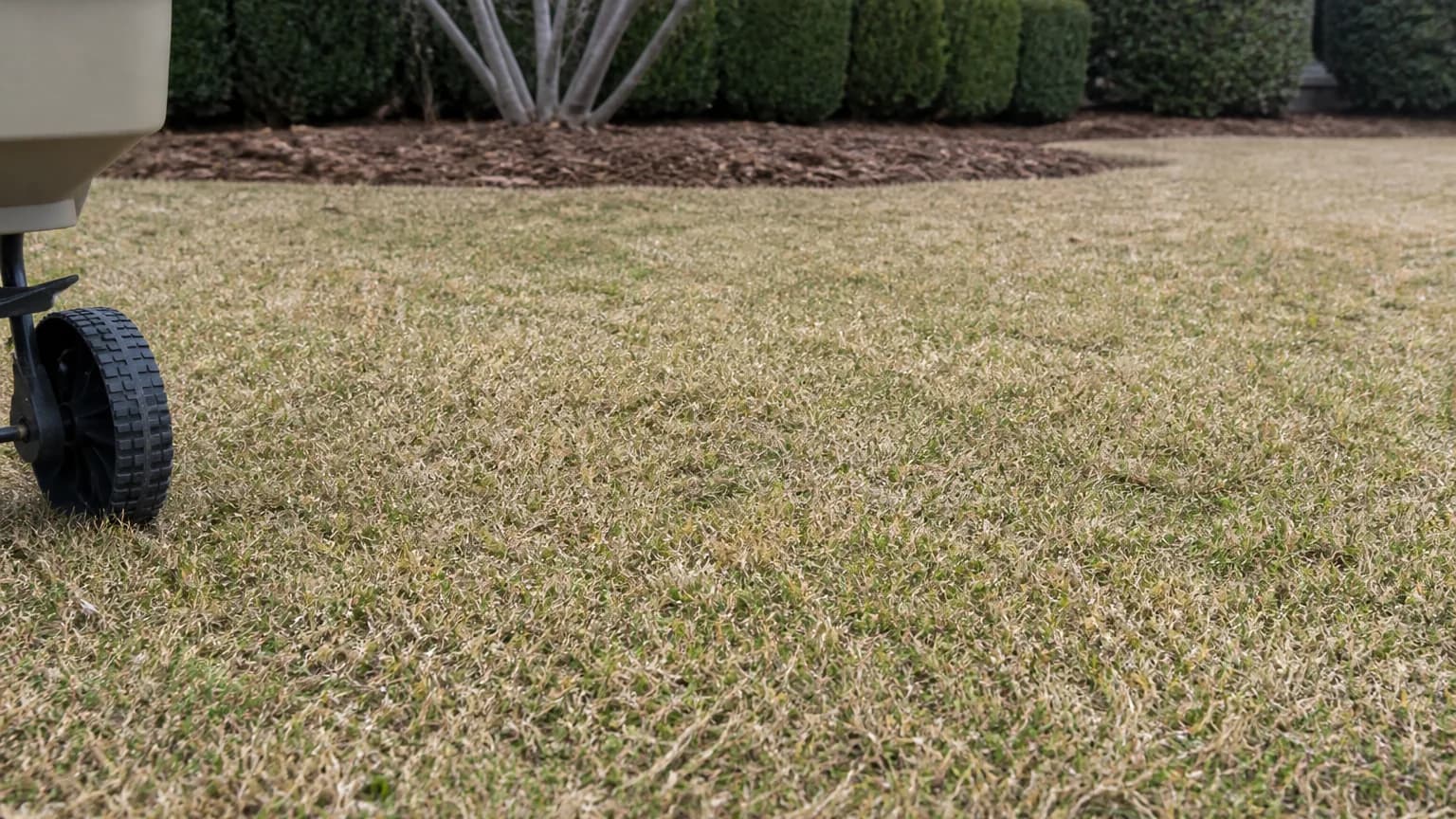
- Pre-emergent is the main weapon. A pre-emergent herbicide creates a barrier in the soil that stops the seeds from sprouting. It only works before they germinate, so the timing is everything — too late and the burrs are already up. Most North Texas lawns need it in late winter. The first barrier starts breaking down before the burrs are done sprouting, so a second round about six to eight weeks later covers the rest of the window. See our pre-emergent weed control guide for the timing details.
- Post-emergent cleans up what sprouts anyway. No pre-emergent catches everything. For the burrs that do come up, the safest fix is a post-emergent matched to your type of grass, used while the plants are young and growing. Because grass burrs are a grass themselves, the wrong spray can hurt the lawn too — this is where a lot of homeowners hand it to a pro. Once the burrs go woody and set their seed, they're much harder to kill either way.
- A thick lawn is the long-term answer. Burrs are opportunists. They take the spots your grass isn't using — bare patches, dry strips along the driveway, thin shade-stressed turf. The denser your lawn, the less room they have. Steady feeding, mowing at the right height, and deep, less-frequent watering build the kind of turf that keeps them out.
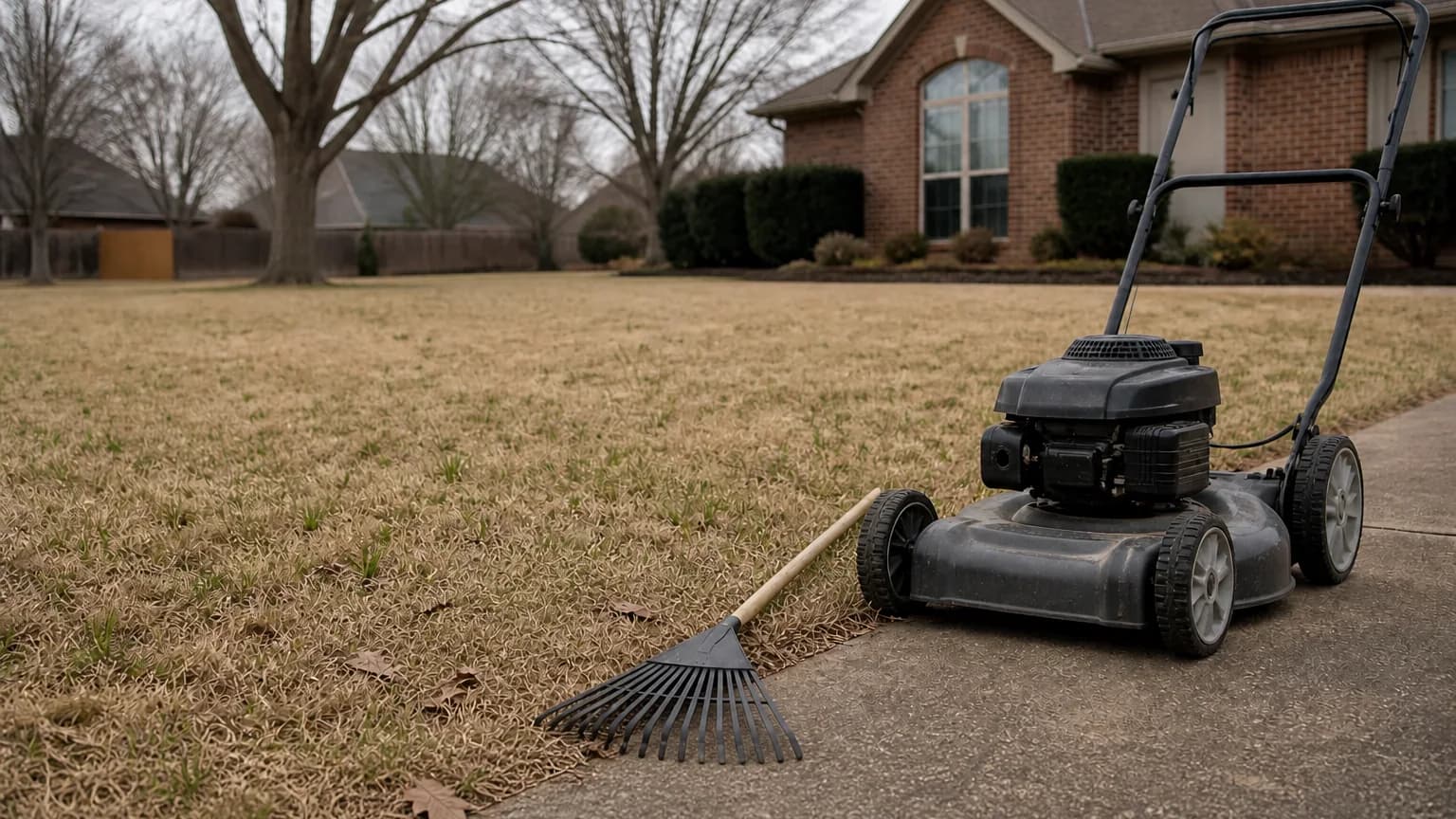
Mowing has a place, but it won't solve it. Cutting before the burs harden can keep some seed from forming, but the plant just grows lower and sets burs under the blade. Mowing is damage control, not a cure.
Why North Texas yards get them
Grass burrs love what a lot of DFW yards have plenty of: sun, heat, and dry, thin patches. The strips along driveways and sidewalks, the worn spots by the back gate, and sandy areas where the grass never filled in — that's prime sticker territory.
Timing here is its own challenge. Our winters are short and mild, so the soil warms early. Wait until the lawn greens up to think about pre-emergent and you've usually missed the window. The safe move is to watch the calendar, not the lawn: late winter, before the first warm stretch. If your city has watering-day rules in summer, that matters too, because a lawn that's allowed to thin out in the heat gives burrs the opening they want.
When to hand it off
Plenty of homeowners knock back a light case on their own. It's worth calling a lawn-care company when:
- The burrs come back every year no matter what you try — that usually means the timing or the product is off, and the seed bank is winning.
- The lawn is thin or struggling, so even a clean kill leaves bare ground for the next weed.
- You'd rather not handle herbicides yourself, or you keep missing the late-winter pre-emergent window.
The routine is what wins. The pre-emergent goes down on time. The post-emergent follow-ups happen on schedule. And the lawn gets fed and watered so it fills in the gaps. That combination is what clears a yard over a season or two. If the watering side needs fixing first, see our sprinkler work or get a free quote.