
Walking the checklist, in order
Spring isn't one job. It's a short sequence, and the order matters more than any single date. Do these in roughly this order and the lawn does the rest.
First: get the pre-emergent down (the one with a deadline)
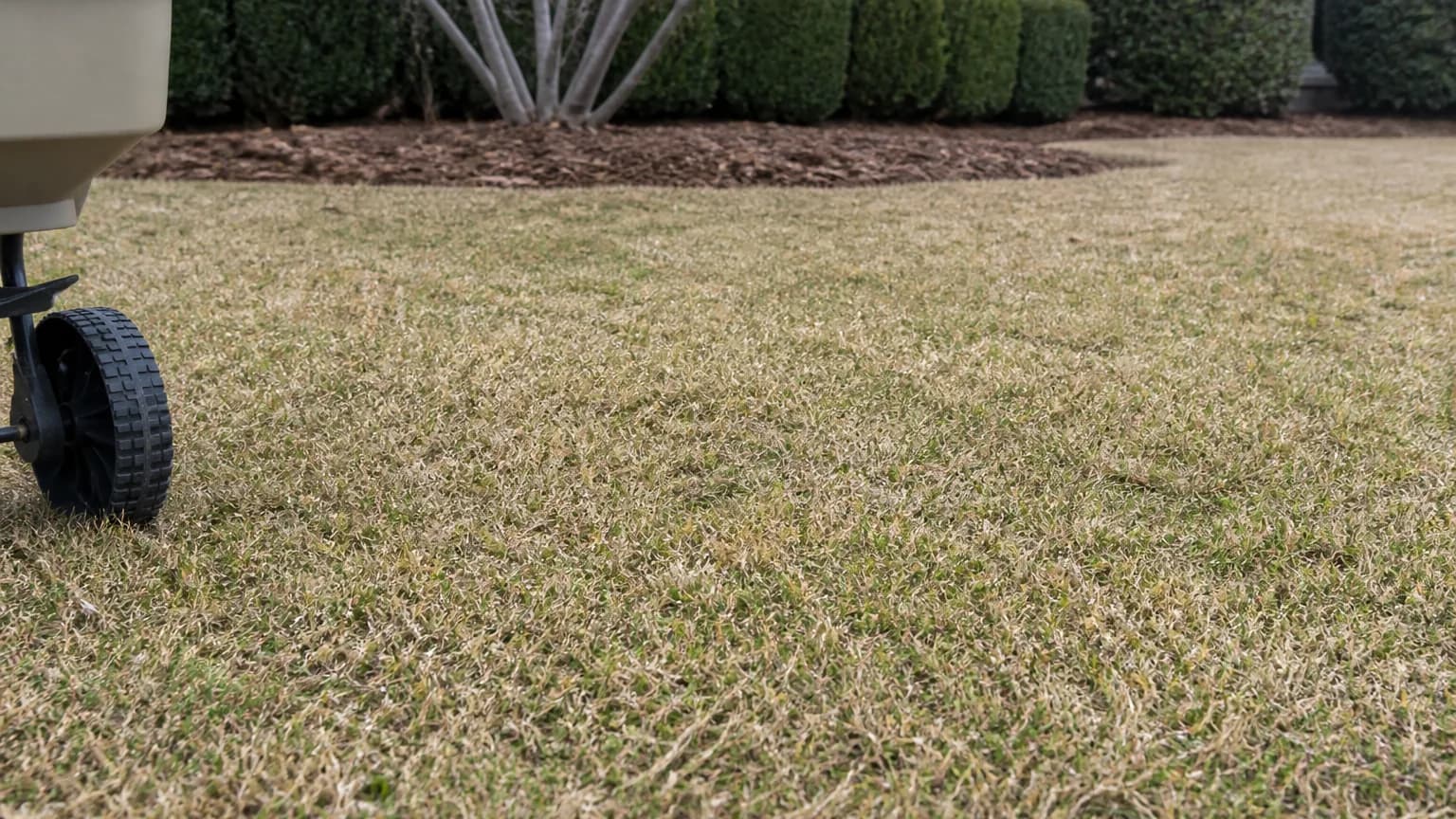
This is the only spring task you can be late for. A pre-emergent is a barrier in the soil that stops weed seeds as they sprout. It does nothing to weeds you can already see. So it has to be down before the seeds wake up — and they wake up on soil temperature, not on the calendar.
Here's the part that trips people up: your lawn still looks brown and dead when it's time. Crabgrass and grass burrs start sprouting once the soil holds around 55°F for a few days. In Colleyville, that's usually late February into March — weeks before your grass greens up. Wait until the lawn looks like spring and you've already missed it.
You don't need to track soil temperature yourself. A second pass goes down about six to eight weeks after the first, to carry the protection through the rest of spring. Our pre-emergent weed control guide lays out the North Texas windows for both. The one thing to remember: early beats late, every time.
Clean up what winter left
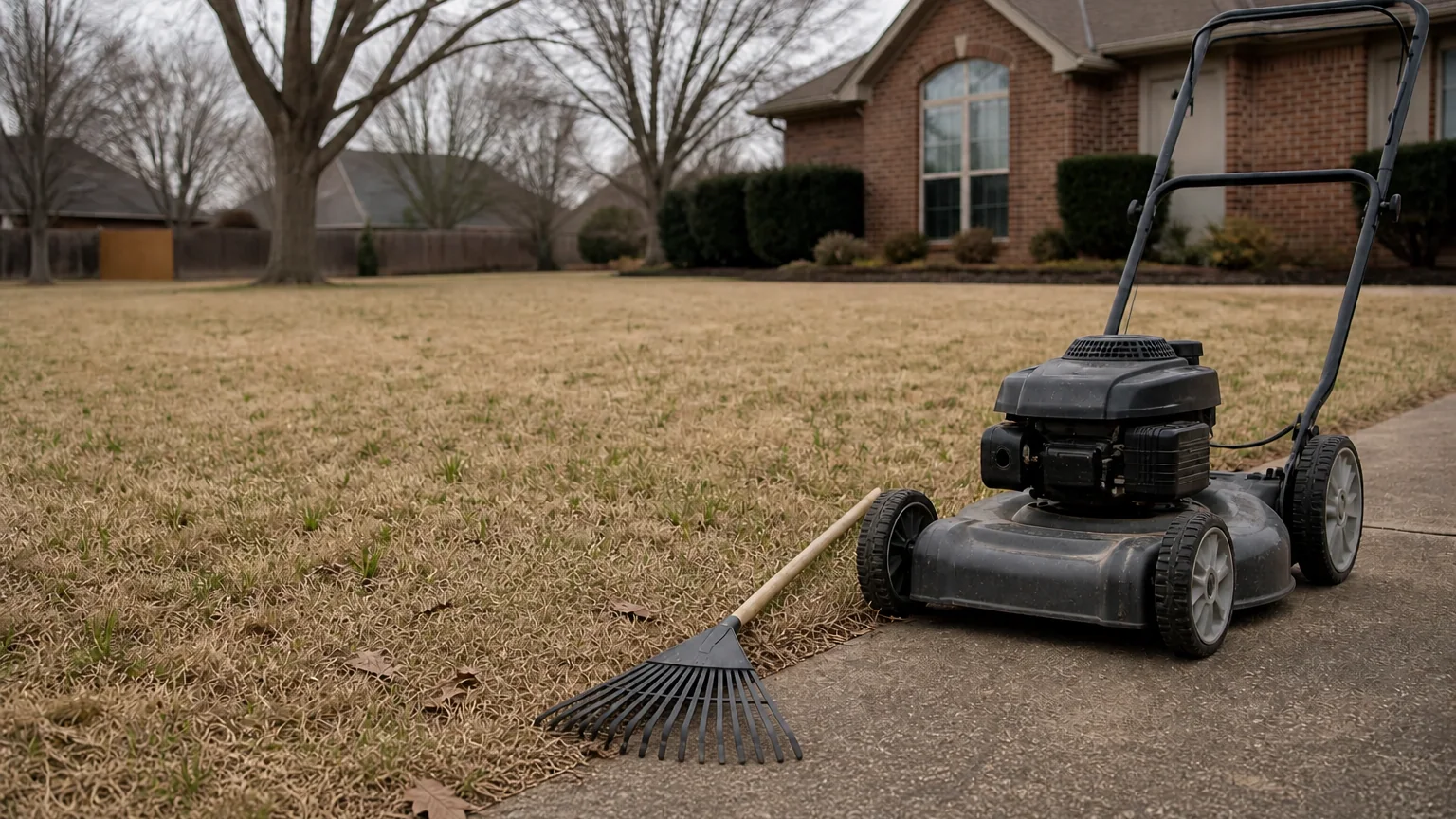
Once the worst cold has passed, clear the lawn off. Rake up fallen leaves, sticks, and the matted dead grass that built up over winter. A thick layer of debris blocks sunlight and traps damp air against the soil — exactly what keeps the grass cold and slow to wake. Clearing it lets the sun reach the dirt and warm it, which is what green-up — the grass turning green and growing again — is waiting on.
The spring low-mow — Bermuda and Zoysia only
There's one spring move that looks like a mistake but isn't: a single low mow, often called scalping. Cutting Bermuda or Zoysia short once in early spring strips off the dead winter blades. That lets sunlight hit the soil and warm it, so the lawn greens up faster and more evenly.
Three rules make it safe:
- Only on Bermuda and Zoysia. Never scalp St. Augustine — it spreads above the ground and can't recover from a cut that low. If you're not sure what you've got, our guide to grass types helps you tell.
- Only once, and bag the clippings. Drop the deck a notch below normal, mow it, and collect everything. All that dead material needs to leave the yard.
- Wait out the hard freezes first. Don't strip the lawn bare right before a cold snap. Late February into March, after the worst cold, is the window.
This is the opposite of summer, when cutting that low would cook the lawn. In early spring, on the right grass, it's a head start.
The first real mow
Once the grass is actually green and growing again, go back to mowing at its normal height. Don't rush the first cut — mowing a lawn that's barely awake does nothing for it. Let it green up and start putting on real growth first.
When it's ready, the rule that matters all year is the same: never take off more than a third of the blade in one pass. How often depends on the season — weekly at the spring flush, slower in the August heat — and the right height depends on your grass type.
Wake up the sprinklers and look for freeze damage
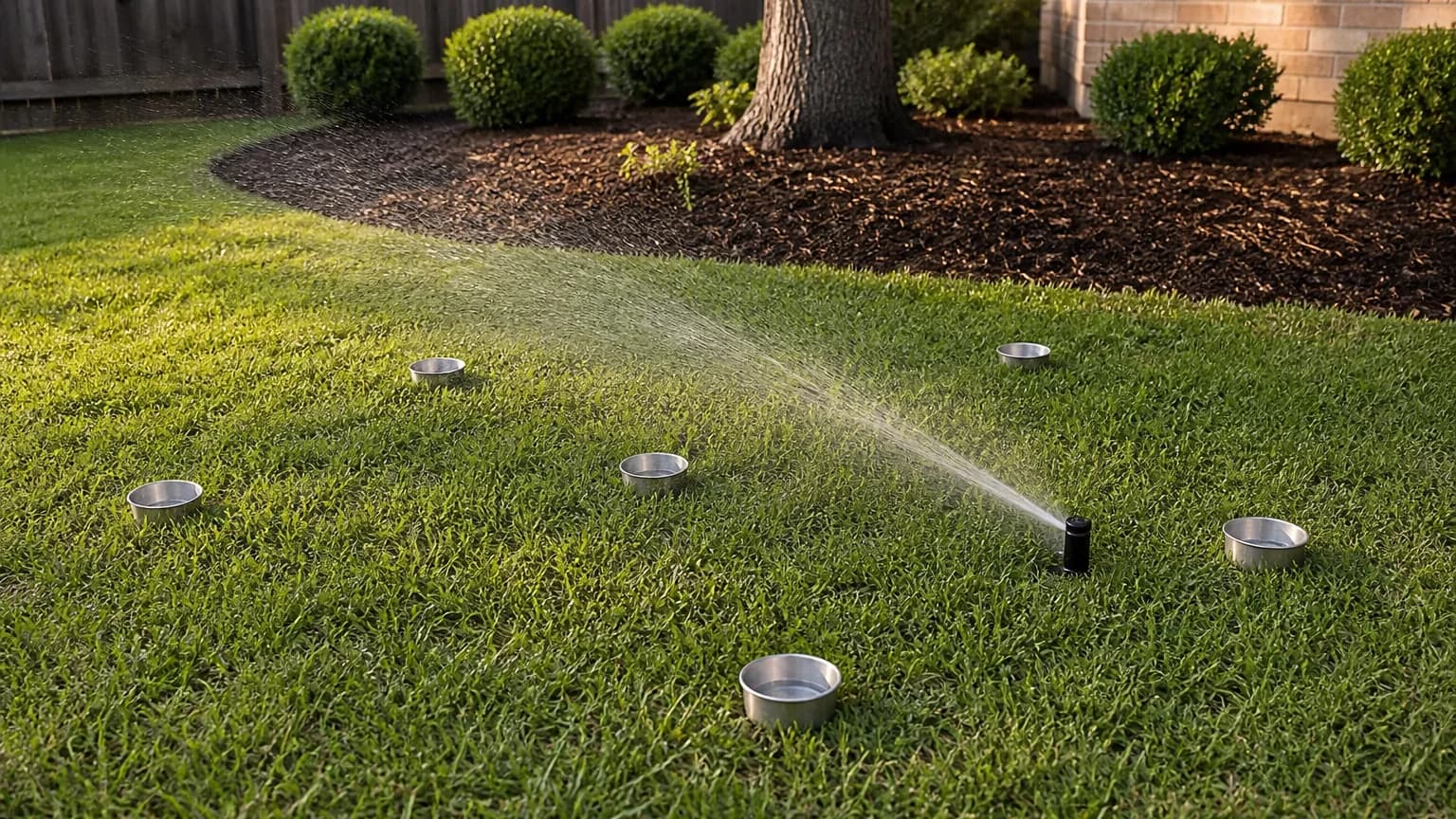
Your irrigation system slept through winter too, and North Texas freezes crack pipes and split sprinkler heads. Before you lean on it, turn it on and watch every zone run:
- Look for heads that are broken, tilted, or spraying the fence instead of the grass.
- Watch for water bubbling up from the ground or pooling — that points to a cracked line or a stuck valve.
- Reset the timer for spring, then plan to adjust it again as it heats up.
Catching a cracked line in March is a quick fix. Finding it in July means a dead strip of lawn told you first. There's a right way to bring the system back, too. Wait out the last hard freeze, then open it slowly and watch one zone at a time. Our full guide on when to turn on your sprinkler system walks through the start-up step by step. If a zone looks wrong, our irrigation services team can track down the leak and get the coverage even again.
The first feeding — after it greens up, not before
Wait to fertilize until the lawn is actively growing — green, and starting to need mowing. That's usually mid-to-late spring here, not the first warm week.
The reason is simple. Fertilizer feeds growth, and a dormant lawn isn't growing yet, so an early feeding mostly just feeds the weeds. Worse, it can push tender new growth right before a late freeze flattens it. Let the grass tell you it's ready.
Aerate packed soil — late spring, while it's growing
North Texas clay packs down hard over winter, and tight soil keeps water, air, and roots from getting where they need to go. Aeration pulls small plugs out of the lawn to open it back up. The right time is late spring, once the warm-season grass is growing strong and can heal the holes quickly — not while it's still waking up.
If your lawn feels hard underfoot, puddles after rain, or has thinned out in the high-traffic strips, it's a good candidate. Here's what aeration does and when it's worth it.
Close up the bare and thin spots
Spring, once the grass is growing, is the time to fix the patches winter left behind. For our warm-season lawns — Bermuda, Zoysia, St. Augustine — that usually means plugs (small rooted pieces you transplant) or a small piece of sod, since these grasses spread by runners rather than seed. Get to them now, while the lawn is growing enough to knit back together, and you head off the bare ground that weeds and summer heat would widen later.
What makes a Colleyville spring tricky
Spring lawn advice written for the whole country sets you up to act too early here. A few North Texas realities change the timing:
- Green-up runs on the soil, not the calendar. Our warm-season grasses stay brown and dormant until the soil warms up for good. A single warm week in February doesn't mean spring is here — it means the soil got a little warmer for a few days. Watch the ground, not the thermometer on the porch.
- The late freeze is real. The last frost in the metroplex usually lands in mid-March, but a hard freeze can still hit into early April. That's the whole reason not to feed or push new growth early — a late cold snap will burn off anything tender you forced out.
- The warm-week trap. Those same warm February stretches wake the weeds before they wake the grass. It feels like time to fertilize. It isn't — but it is the sign your pre-emergent should already be down.
- The clay packs down. Heavy North Texas clay compacts hard over winter, especially where people and pets walk. That's why spring aeration pays off here more than it would in sandy soil — it breaks the surface back open so water and roots can move.
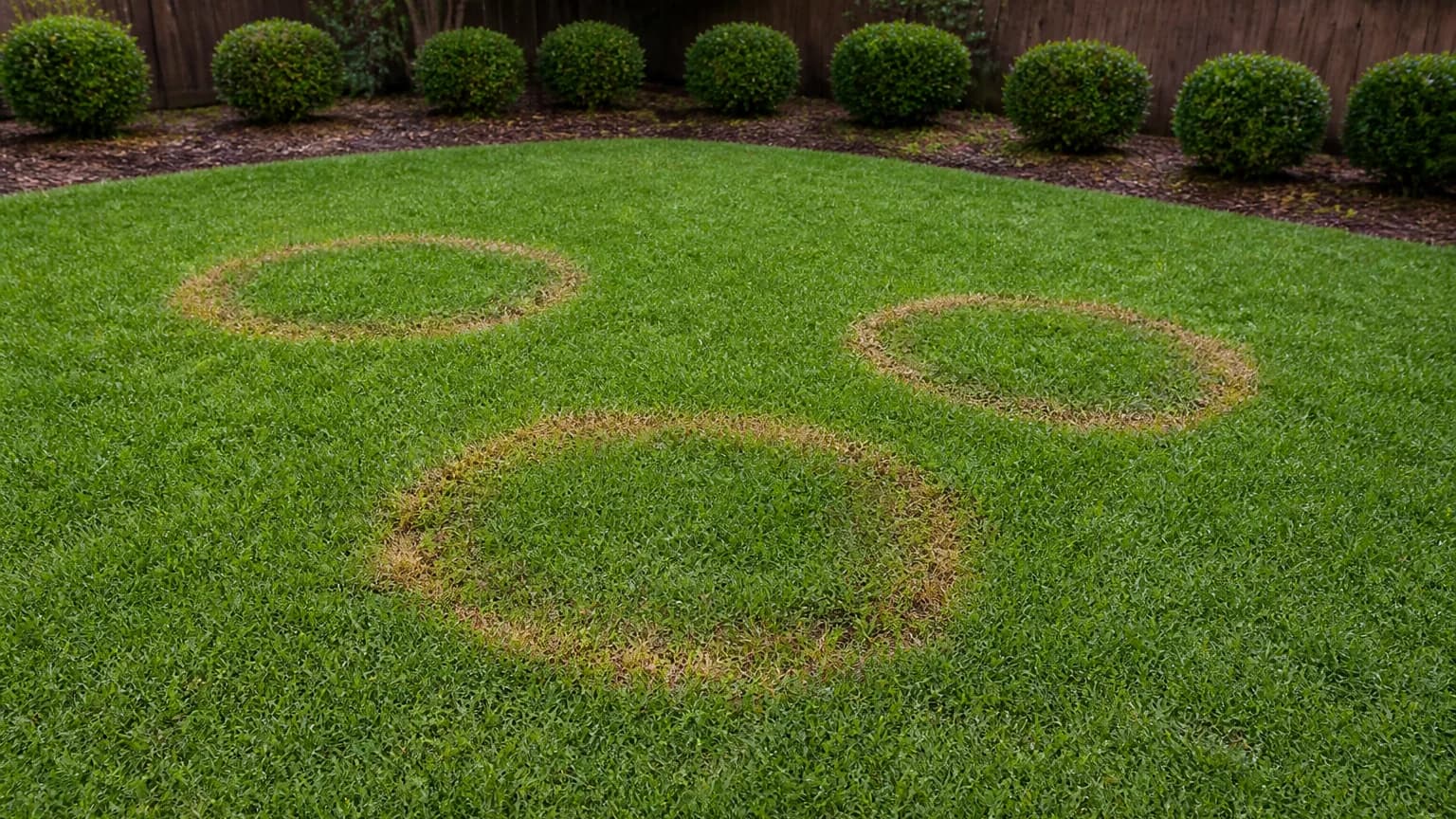
If big stretches of the lawn are still brown well into spring while neighbors are greening up, don't assume it's dead and tear it out. Brown grass has a few different causes, and dormant grass looks identical to dead grass until you check. Our guide on why there are brown patches in your lawn walks through the simple tug test before you do anything drastic.
When to hand it off
Plenty of the spring list is a weekend's work. A few parts are easy to get wrong, or just easy to miss:
- The pre-emergent window. It's the one task with a real deadline, and it lands while the lawn still looks dead — which is exactly when it's easy to forget.
- Aeration. It needs the right timing and the right equipment, and it's heavier work than it looks.
- The sprinkler start-up. Finding freeze damage and fixing coverage before summer beats discovering it as a brown stripe in July.
- A lawn that came back rough. If big patches never greened up, or last year was a struggle from spring on, it's worth a real look.
Three of those go to a lawn-care company: the pre-emergent, the aeration, and a lawn that needs real diagnosing. None of those are ours. The sprinkler start-up is a separate job, and it is one we do — if the watering is the part that keeps slipping every spring, that's our daily work. Coverage gaps, a controller nobody trusts, a corner that stays wet — spring is the right time to fix all of it. Get a free quote or call us at (817) 701-8920.