
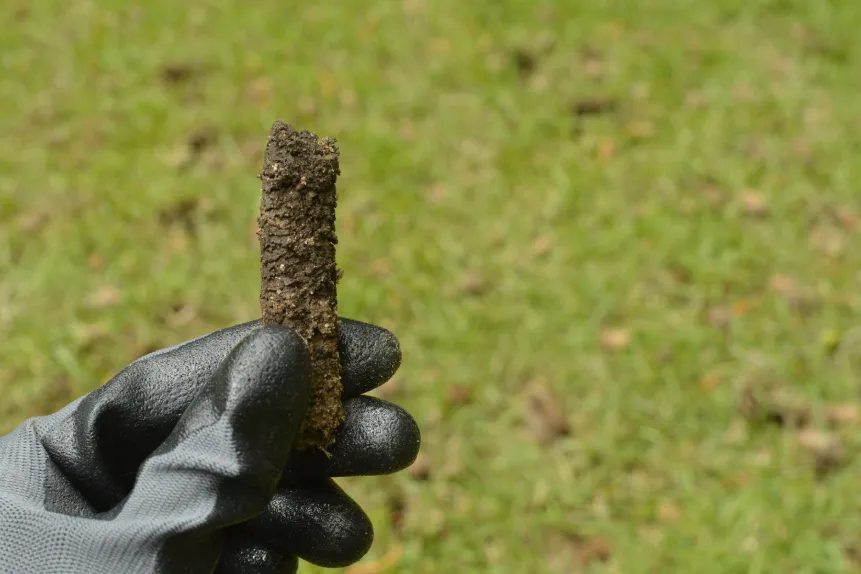
What aeration actually does
Aeration is simple to picture. A machine rolls across the lawn and pulls out thousands of finger-sized plugs of soil, each about two to three inches deep. That leaves a grid of open holes across the yard. Those holes are the whole point: they give water, air, fertilizer, and roots a clear path down into soil that had sealed them out.
To see why that matters here, you have to look at what clay does.
Why North Texas soil packs down
Soil compacts on its own over time. Foot traffic, pets, the weight of the mower, summer heat, and rain all press the particles closer together. Clay makes it worse than almost anywhere. Clay particles are tiny and pack tight — the soil binds like glue when it's wet and hardens like concrete when it dries. Add our rainfall pattern, where heavy storms sit on top of long dry stretches, and the ground cycles between sealed-up wet and baked-hard dry. Neither state leaves a root anywhere to go.
Once soil is compacted, three things go wrong at once. Water runs off instead of soaking in. Fertilizer stays at the surface instead of reaching the roots. And the grass thins from the bottom up, because the roots can't push down. You can keep watering and feeding, but you're treating a lawn that can't take any of it in. That's the trap aeration breaks.
Water that finally soaks in
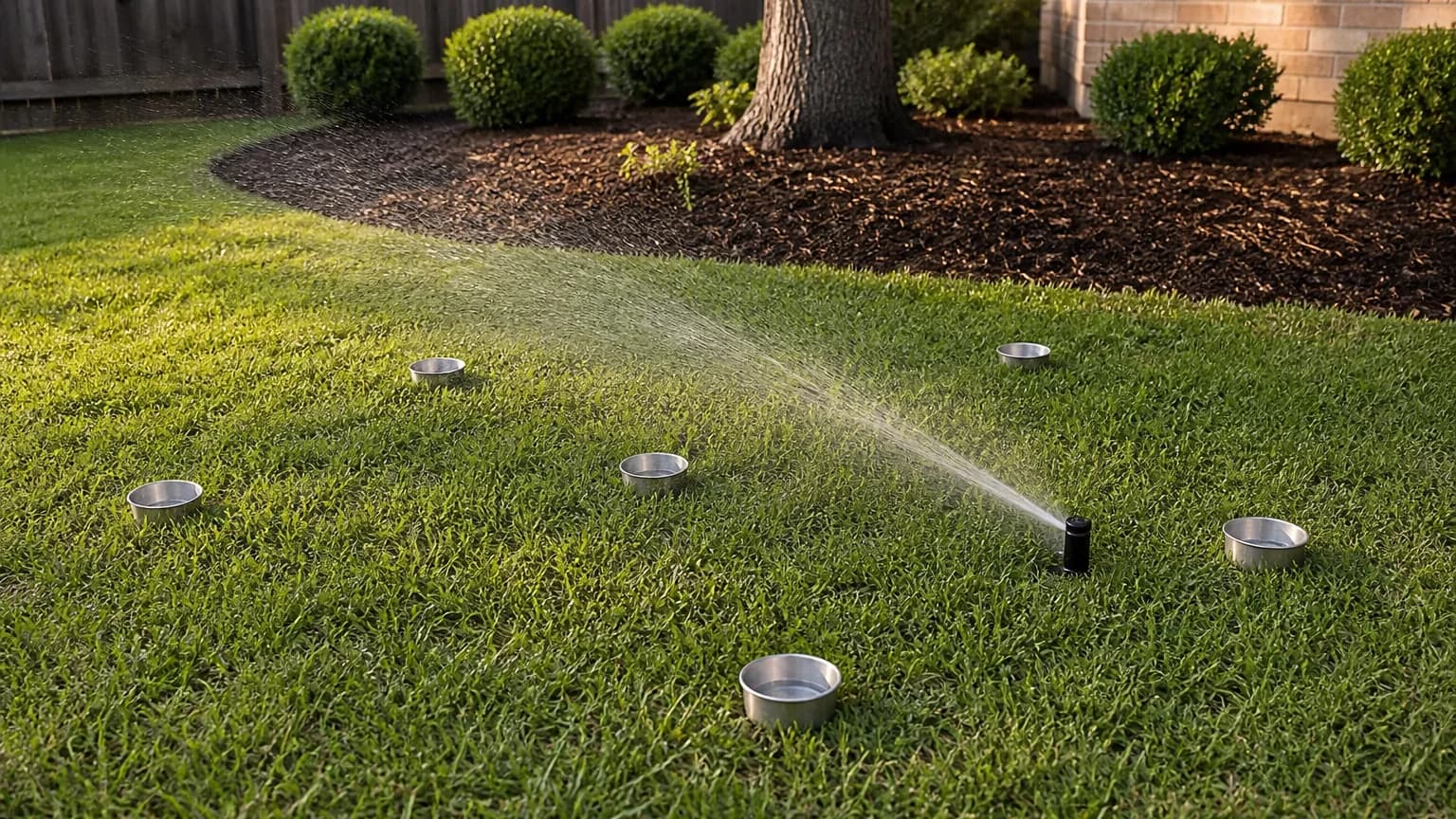
A packed lawn can shed a large share of the water that hits it — it sheets off toward the curb instead of going down. After aeration, water moves into the holes and reaches the root zone. You get fewer dry patches between watering days, better staying power through a heat wave, and less water wasted. If you're on a sprinkler system, that water finally goes where you're paying to put it — more on dialing that in through our irrigation services.
Fertilizer that reaches the roots
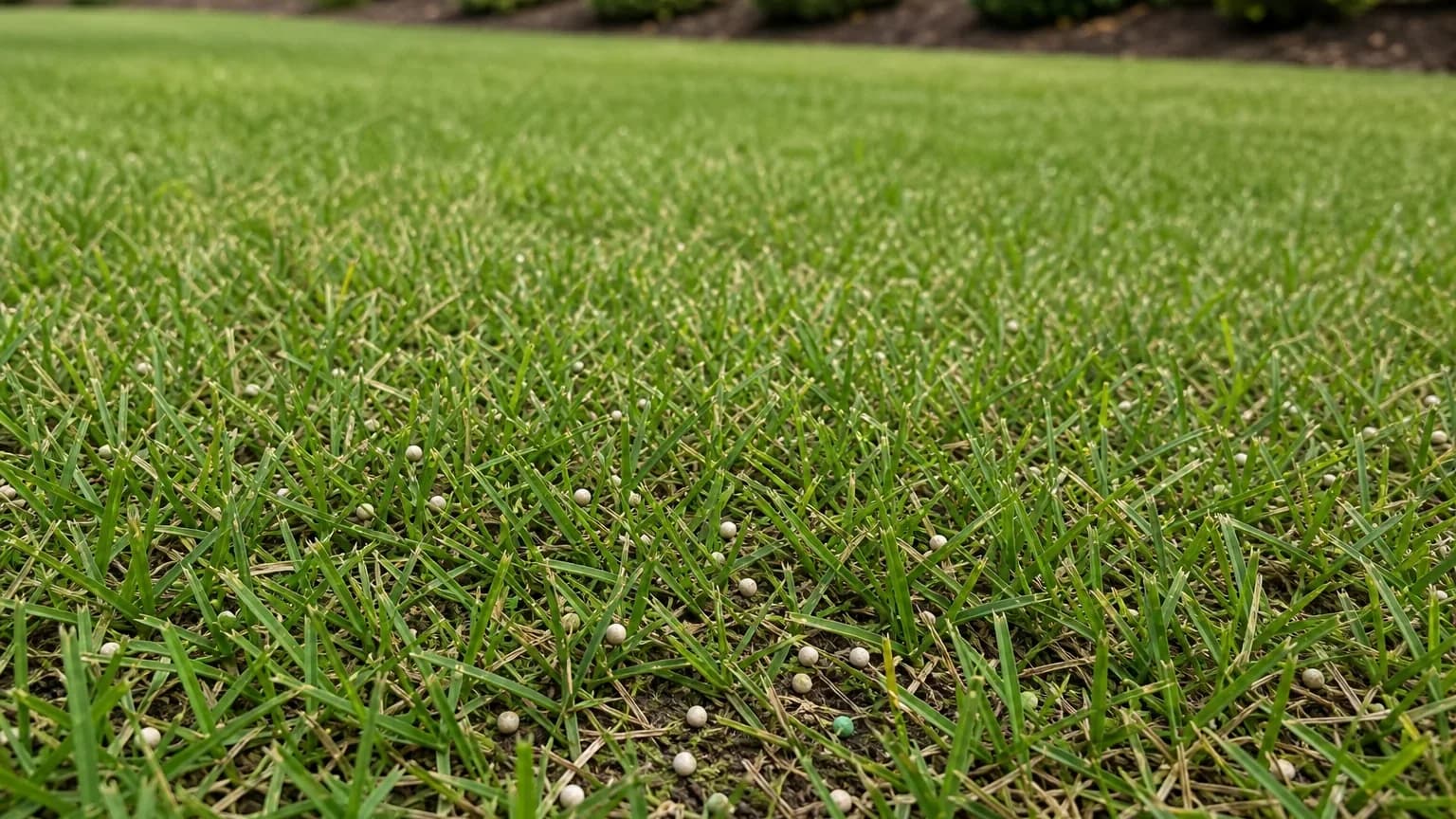
Granular fertilizer on compacted soil mostly sits where it lands. It can wash off in the next rain or burn the grass in the heat before it ever does any good. Aeration opens channels that pull the feeding down to the roots, where the grass can actually use it. That's why the best time to fertilize is right after you aerate. Our guide on how long fertilizer takes to work covers the timing and what to expect once it's down.
Deeper roots, tougher lawn
Roots grow toward the easiest path. Aeration holes give them one. In the weeks after, roots reach deeper and the grass fills in thinner areas on its own. Deeper roots are the whole game in North Texas. They're what lets a lawn pull through a triple-digit August instead of frying at the surface.
Less thatch
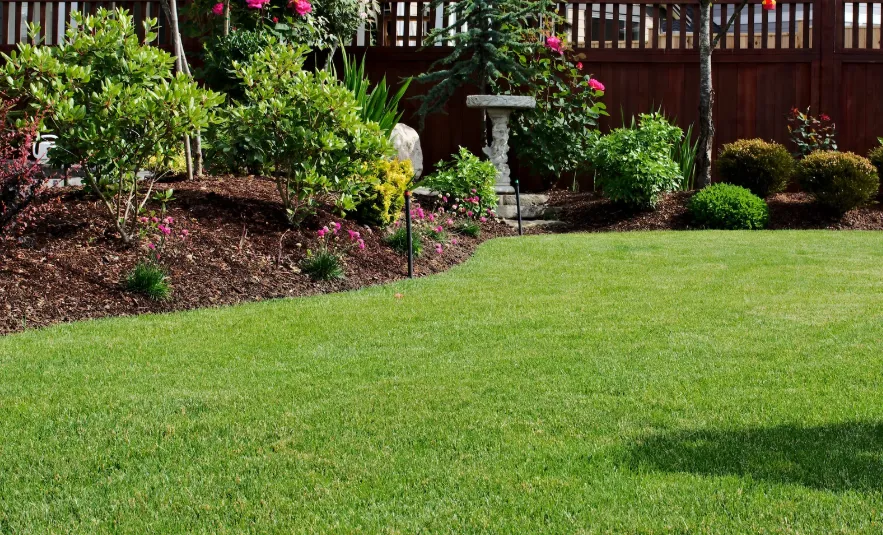
Thatch is the spongy layer of dead stems and roots between the soil and the green blades. A thin layer is normal. Once it gets thicker than about half an inch, it starts blocking water and giving pests like chinch bugs a place to live. Aeration mixes soil and microbes up into that layer, which helps it break down before it becomes a problem.
Thin and worn spots fill back in
High-traffic strips — the path everyone walks, where the kids play, where the dog runs — compact first and thin out first. Loosening that soil lets the surrounding grass spread back into it. On our warm-season lawns, that filling-in happens by runners, not seed. Bermuda, St. Augustine, and Zoysia all creep sideways to close a gap once the soil lets them. (Cool-season fescue is the exception — it's seeded, and fall is its time.) Are the thin spots still not bouncing back after you loosen the soil? Then the cause may be something other than compaction. Our guide on brown patches in your lawn helps you read what's actually going on.
When to aerate your lawn in Texas
Timing is the part people get wrong, and it comes down to one thing: aerate when your grass is growing, so it recovers fast. That means the right window depends on your grass type.
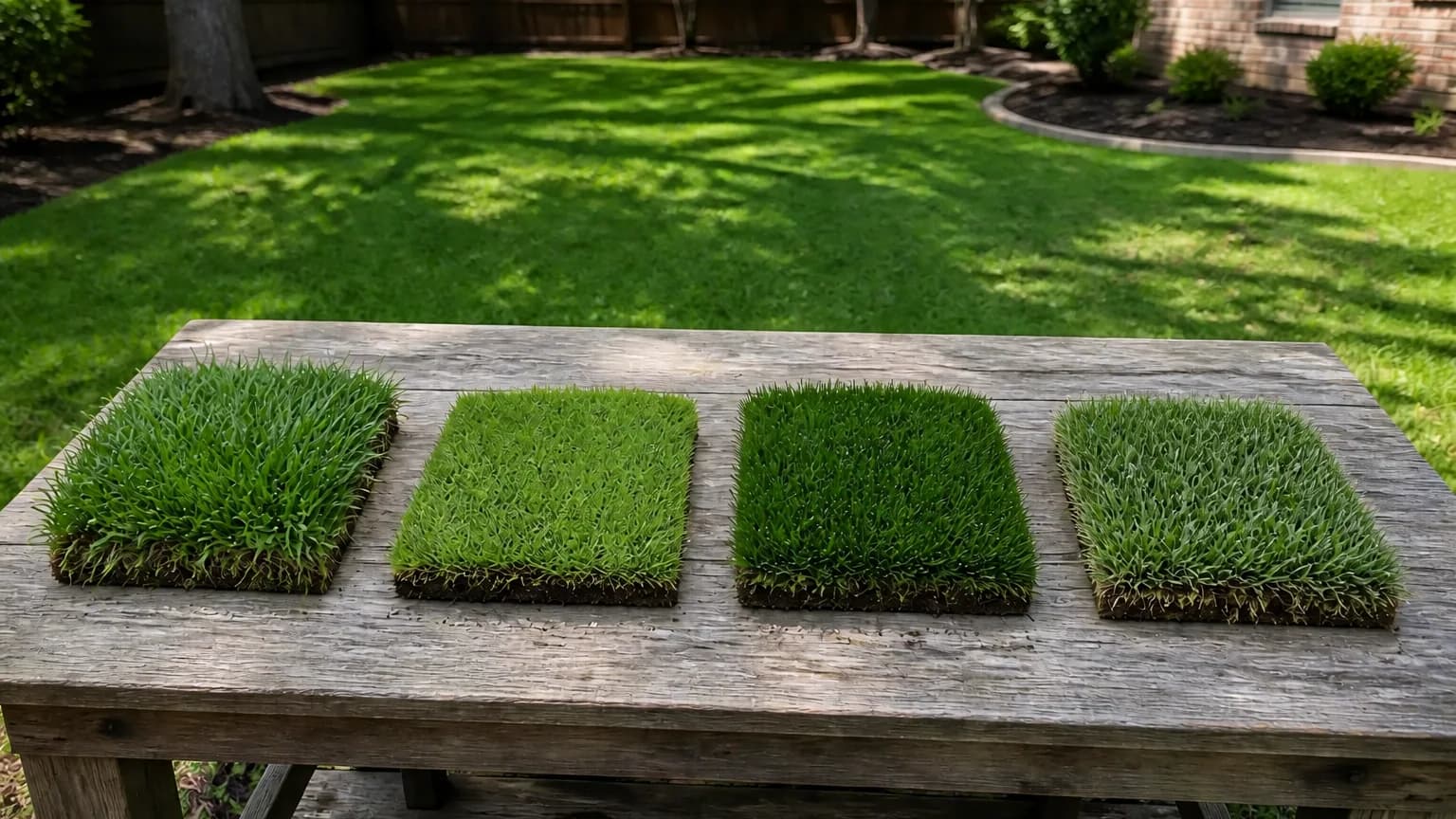
Bermuda, St. Augustine, and Zoysia (warm-season — most Colleyville lawns):
- Aerate late April through early summer, once the soil has warmed and the grass is actively growing and past its first few mowings.
- Soil temperature should be steadily above about 65°F.
- Don't aerate a warm-season lawn that's stressed from peak summer drought — wait for it to recover, or do it earlier next year.
Tall fescue (cool-season — less common here):
- Aerate in early fall, around September into October, when cooler weather and rain help it recover.
- This is the one case where overseeding right after aeration makes sense — fescue is seeded, and the holes make a good seedbed.
Not sure which grass you have? Our guide to the best grass types for Colleyville lawns walks through telling them apart — and your grass type decides the timing.
How to tell your lawn needs it. You don't need a soil test to spot compaction. The quickest check is the screwdriver test: after a good watering, push a screwdriver into the soil. If you can't slide it about six inches down without fighting it, the ground is packed. Other signs:
- Water pools on the surface or runs off instead of soaking in.
- The soil feels rock-hard, or oddly springy, underfoot.
- The grass thins out along walked-on paths and play areas.
- The lawn looks tired even though you're watering and feeding it.
None of those ring true? Then your soil is probably fine for now. A newer lawn, or one on looser soil that passes the screwdriver test, can wait. Aeration is the fix for packed soil — not a yearly tax every yard has to pay.
Most established Colleyville lawns do well with aeration once a year. A yard on heavy clay may need more. With a lot of foot traffic or serious compaction, aerate twice a year for the first couple of years, then settle into an annual rhythm.
One thing aeration doesn't fix: a lawn that's actually uneven — low spots that pool water, ruts, or settling. That's a leveling job, not a compaction one. If your yard has both, our page on why lawn leveling matters covers the surface side.
Renting a machine vs. handing it off
You can rent a core aerator. Be ready for it, though. The machines are heavy, awkward to steer, and usually take two people just to get on and off the trailer. Flag your sprinkler heads and shallow lines first, so the tines don't catch them. And you'll get the best results making two passes in a crosshatch — which is a lot of wrestling with a heavy machine in the heat.
If you do run it yourself, timing makes or breaks the job. Water the lawn a day or two before, so the tines pull clean plugs instead of dry chunks or mud. Then leave the plugs where they fall. They look messy for a week, then break down and feed the soil back.
Aeration itself is a lawn-care company's job, not ours. It's worth calling one when:
- You're on heavy clay and want plugs pulled deep and clean, not a shallow once-over.
- You'd rather not track down a rental, load it, and run it yourself.
- You want the aeration timed with feeding and watering so the whole thing actually pays off.
We do a different job. If a sprinkler zone under-shoots, or the ground stays soggy after every storm, that's work we handle every week. The crew is our own — licensed, insured, and in-house, not a sub. Get a free quote or call us at (817) 701-8920.