
Why a Colleyville lawn goes bumpy in the first place
Lawns don't start out uneven. They get that way, and around here the soil is usually behind it. A few common causes of uneven lawn repair work we see on North Texas yards:
- Clay that shrinks and swells. Our clay puffs up when it's wet and shrinks back when it dries out. Do that for enough seasons and the ground settles unevenly, leaving shallow dips and ridges.
- Low spots that wash out. Water takes the same path across the yard every storm. Over time it carries soil out of the low areas and they sink a little lower.
- Ruts and worn paths. The strip everyone walks, where the kids cut the corner, where the dog runs the fence line — that soil packs down and dips.
- Settling around new work. Soil dropped back into a utility trench, or backfilled against a new patio or wall, settles for a year or two and leaves a seam of low ground next to it.
- Pets and critters. Dogs dig. So do moles and other diggers. The holes get stomped flat and leave a lumpy surface behind.
Whatever started it, an uneven lawn causes the same handful of headaches. That's why leveling matters:
- The mower scalps. Roll over a high spot and the blade shaves it to bare dirt, while the dips never get touched. You end up with a patchy, two-tone cut.
- Water sits in the dips. Shallow low spots hold water after you mow or water, which stays soggy long enough to thin the grass or breed mosquitoes.
- Thin and bare patches. The scalped high spots dry out and the soggy low spots rot. Both struggle to hold grass.
- Tripping hazards. Ridges and holes you can't see in thick grass are a real risk, especially in a yard with kids or older folks.
The right way to level a lawn: thin layers, not a dump truck
Here's where most do-it-yourself yard leveling goes wrong. Someone sees a low spot, buys a few bags of topsoil, and dumps them in to fill it level in one shot. A few weeks later the grass under that pile is dead, and now there's a bare brown patch instead of a dip.
Grass can only grow up through so much at once. So the fix is patience, not volume. The pros call it topdressing.
- Mow a little low and clear it. Cut the grass on the short side and rake off the clippings, so the new material settles down to the soil instead of sitting on the blades.
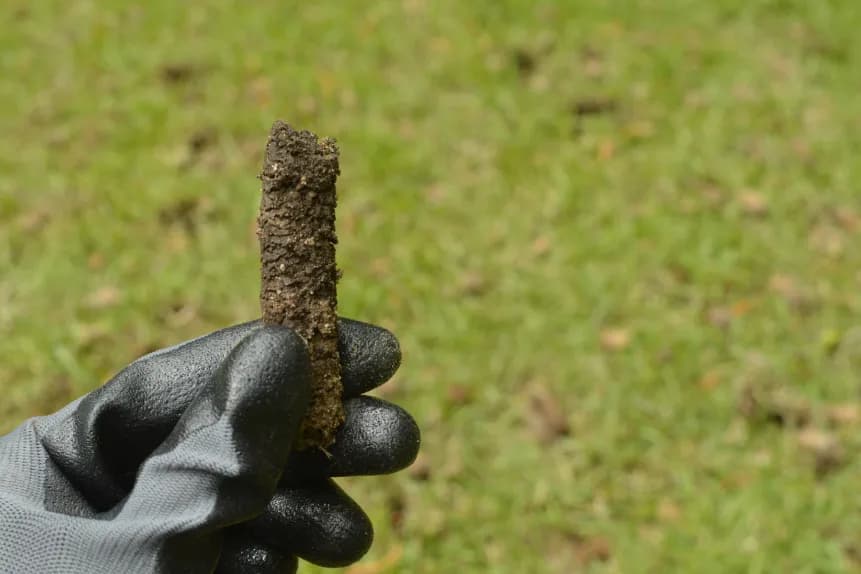
- Loosen packed spots first. If the ground is hard, aerate before you level. Topdressing a sealed clay surface just stacks loose mix on top of soil that still won't take water. Our page on the benefits of aeration covers that side.
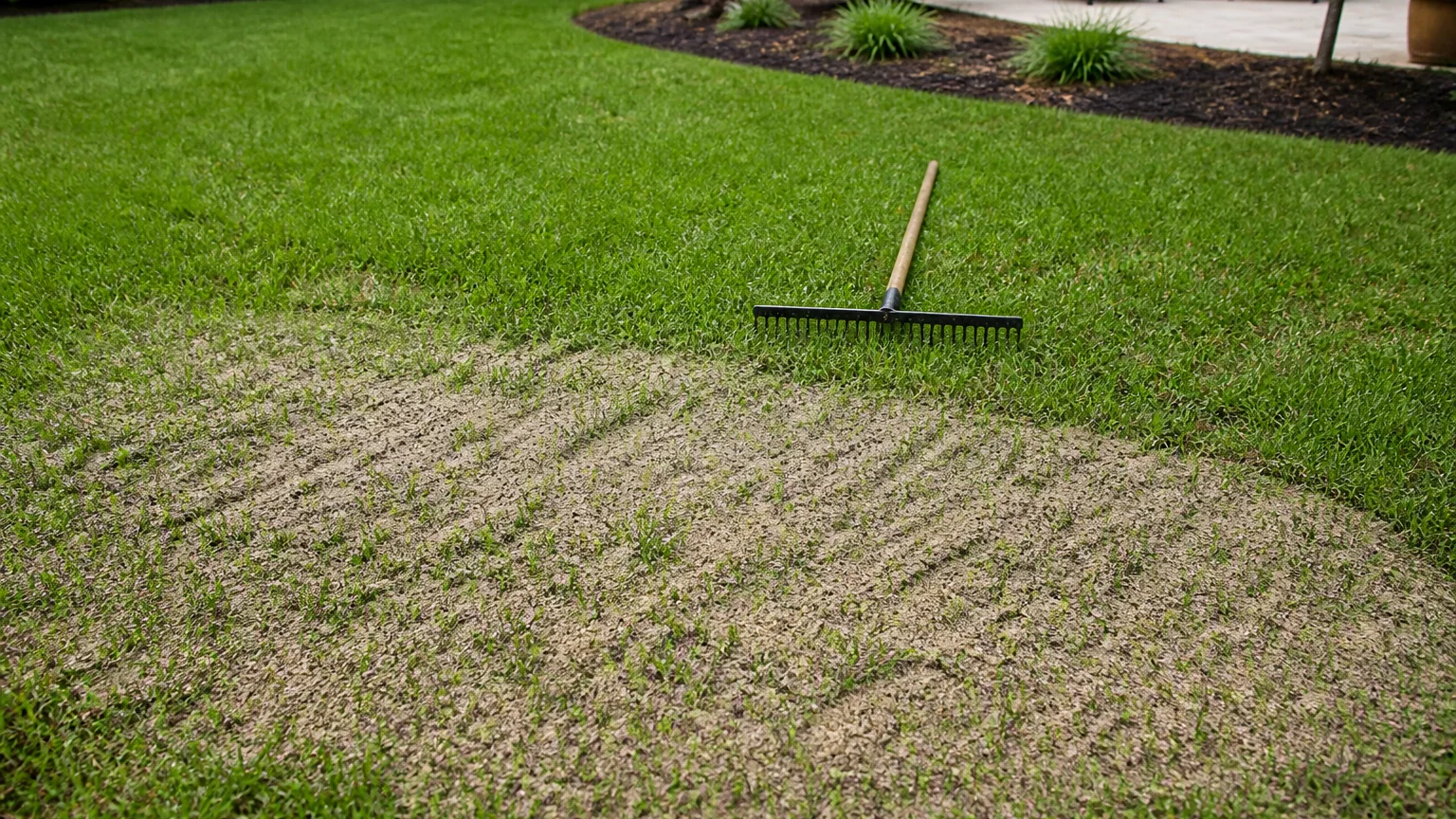
- Spread a thin layer. Use a leveling mix made for your soil, usually sand mixed with compost or topsoil. Skip pure sand: on clay it packs into the gaps and makes drainage worse, not better. Spread a quarter to a half inch over the low areas and no more. The blade tips should still show through.
- Work it level. Drag a leveling mat across the surface so the mix settles into the low spots and off the high ones. A leveling mat is just a flat metal grid you pull over the lawn; most hardware stores carry one, and a stiff garden rake does the job on small spots. You want the green blades poking back through, not buried.
- Water it in, then wait. A light watering helps the mix settle against the soil. Give the grass a few weeks to grow up through the layer before you judge it.
- Repeat next time it grows. A deep low spot won't level in one pass. You build it up over a few rounds across the growing season, half an inch each time.
Two things to know before you start. First, timing. Level when the grass is actively growing, so it recovers fast and fills back in. On our warm-season lawns (Bermuda, Zoysia, St. Augustine), that's late spring into summer. St. Augustine spreads on top of the soil, so keep its layers especially thin. Don't topdress a dormant or heat-stressed lawn in the dead of summer or winter; it just sits there.
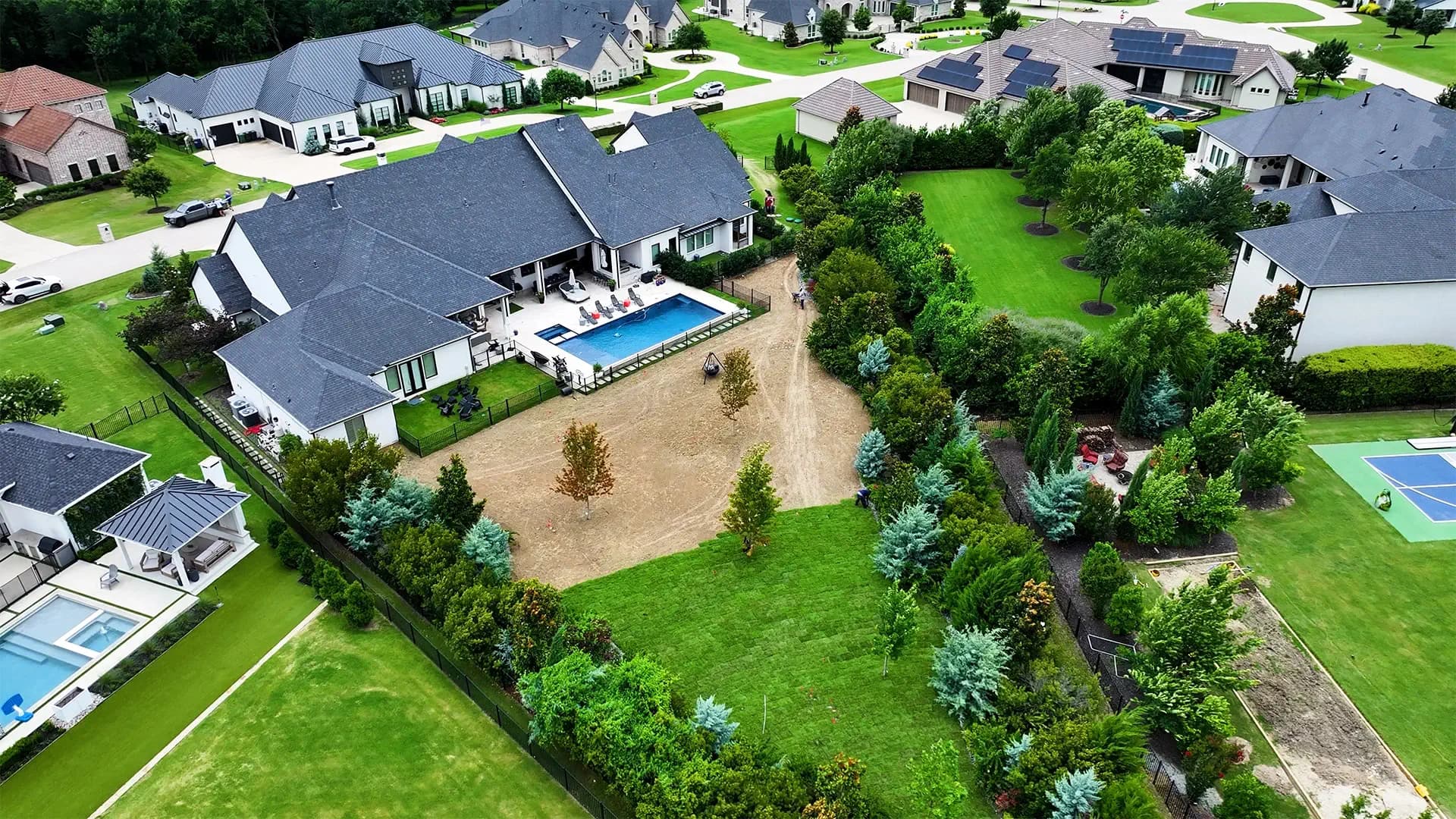
Second, know the limits of topdressing. A thin-layer fix handles the bumps, ruts, and shallow dips. It does not handle a deep hole, a hump you want gone, or a yard that truly sits too low. Those mean cutting the sod, fixing the soil underneath, and re-laying it. Our sod installation guide walks through that work.
And the boundary that matters most for lawn leveling in North Texas: leveling smooths the surface, it doesn't move water. Topdressing a shallow dip so it stops puddling is fair game. But a yard that holds standing water for days, or slopes so storms run toward the house, has a drainage problem, and no amount of sand on top will fix it. That's grading and drainage work — our drainage services page covers it.
Doing it yourself vs. handing it off
A few shallow dips in a small yard is a reasonable weekend project. A bag of leveling mix, a leveling mat or a stiff rake, and some patience will get you there. Keep the layers thin and plan on more than one pass.
On cost, leveling is one of the cheaper lawn fixes. There's no excavation and no heavy equipment. For a do-it-yourself job, it's mostly the price of the mix. For a hire, it comes down to the size of the yard and how much prep it needs, like aeration or sod work. The bigger thing to plan for is time, not money: a deep dip levels over two to four thin passes across a growing season, not in one weekend.
Topdressing isn't work we take on. It's a lawn care company's job, and it's worth calling one when:
- There's a lot of yard, or a lot of unevenness. Spreading and leveling mix by hand across a big lawn is slow, heavy work, and easy to do unevenly.
- The ground is packed hard. Then it's an aeration job before it's a leveling one, and doing both in the right order is the whole point.
- You're not sure if it's leveling or drainage. If water sits for days, the real fix may be grading, not topdressing. Walking the yard with someone who does drainage work tells you which.
- The dips are deep, or there are humps to take out. That's sod work, not topdressing, and it's easy to make a yard worse guessing at the grade.
What we do handle is the water underneath. When runoff carves a low spot, or a corner never dries, grading and drainage is our crew's daily work, and fixing it is what makes any leveling last. The crew is our own, not a sub, and they're insured. Get a free quote or call us at (817) 701-8920.