
Why fertilizer works on two clocks
When people ask how long fertilizer takes to work, they're usually watching for the lawn to turn green. That's the fast clock. There's a second, slower clock that matters more, and it's the reason you feed a lawn in the first place.
- The fast clock is color. Fertilizer feeds the grass nitrogen, and nitrogen drives the green. That's the change you see first — a deeper color, sometimes a growth spurt. How fast depends on the type (more on that below). But green alone isn't a healthy lawn. A lawn can look green and still be thin and shallow-rooted.
- The slow clock is strength. Underneath the color, the lawn is building thicker roots and denser turf. That's what lets it stand up to weeds, shrug off heat, and bounce back from wear. This part takes the whole season, and it's the real payoff. You don't see it in a week. You see it in a lawn that holds up in August.
Liquid vs. granular sets the speed:
- Liquid is the sprinter. Liquid feeds are taken in through the blades and roots, so the color shows up fast — often within a few days. The trade-off is that it doesn't last. The lawn burns through it in two to four weeks, so liquid means more frequent feeding.
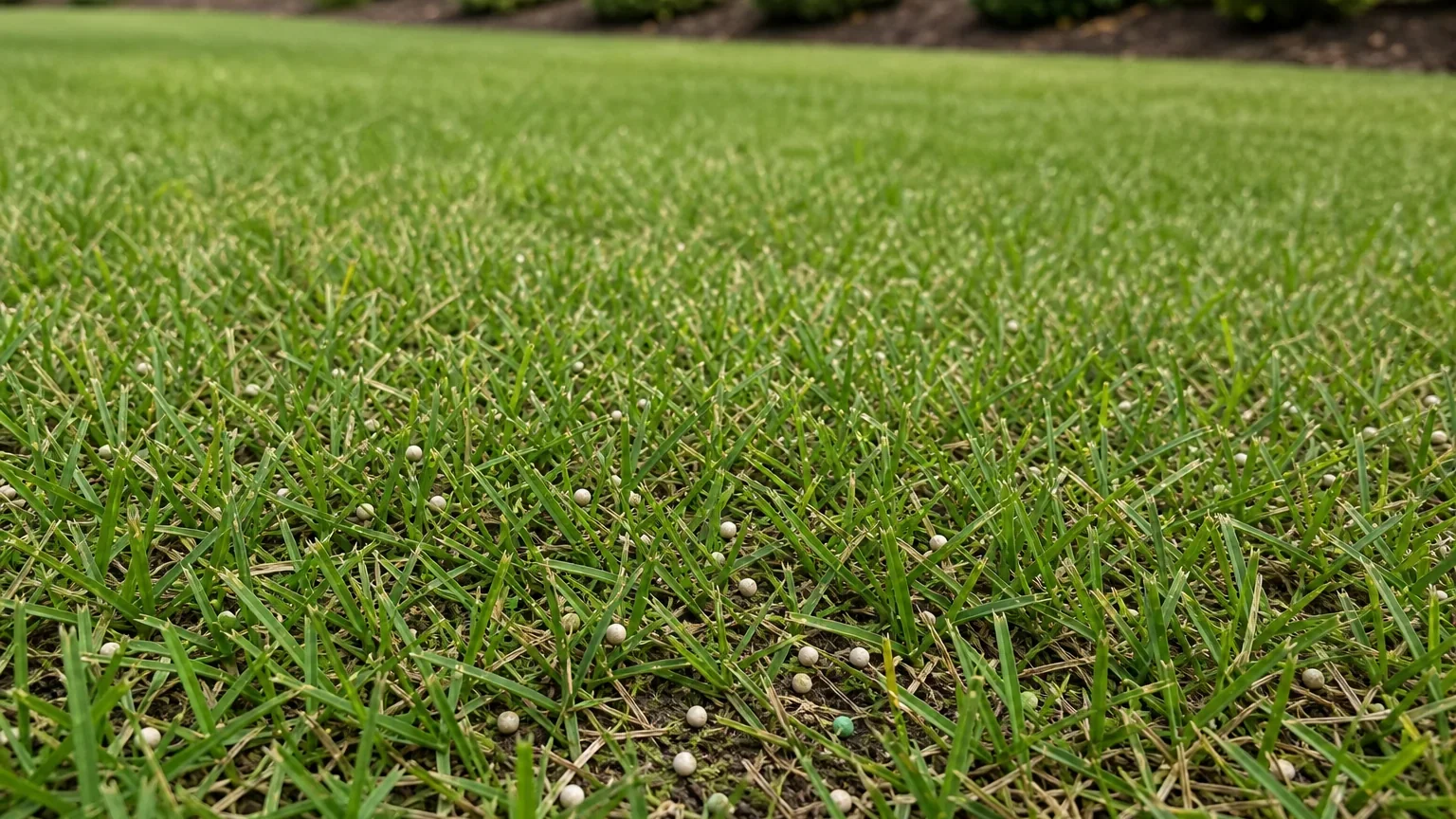
- Granular is the distance runner. Granular fertilizer has to be watered in and broken down before the lawn can use it, so it's slower to show — usually one to two weeks. In return it lasts longer.
- Slow-release is the steady one. Many granular products are coated to release a little at a time. These feed the lawn gradually over about six to eight weeks, for even, steady growth instead of a quick surge and a fade.
Two things decide whether it works at all:
- Water. Fertilizer needs water to move into the soil where the roots are. Granular especially just sits on top until it's watered in — about a quarter to a half inch does it, from rain or the sprinklers. Skip that and you won't see much.
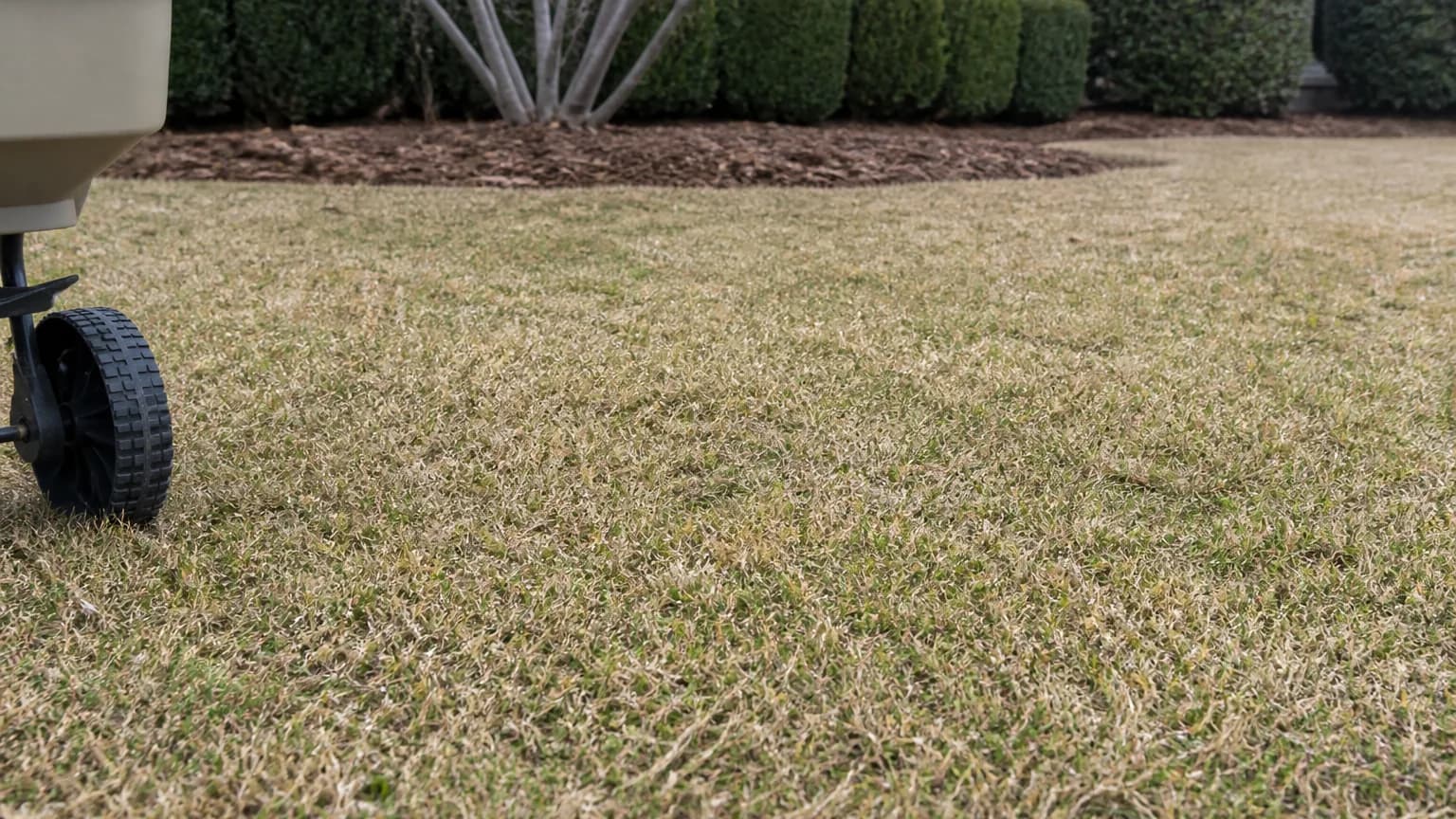
- A grass that's actually growing. Fertilizer only works when the lawn is awake and growing. Feed a dormant, brown winter lawn and it can't use the food — it's wasted, and it can feed weeds instead. Warm-season grasses like Bermuda only take up fertilizer once they've greened up and the soil is warm.
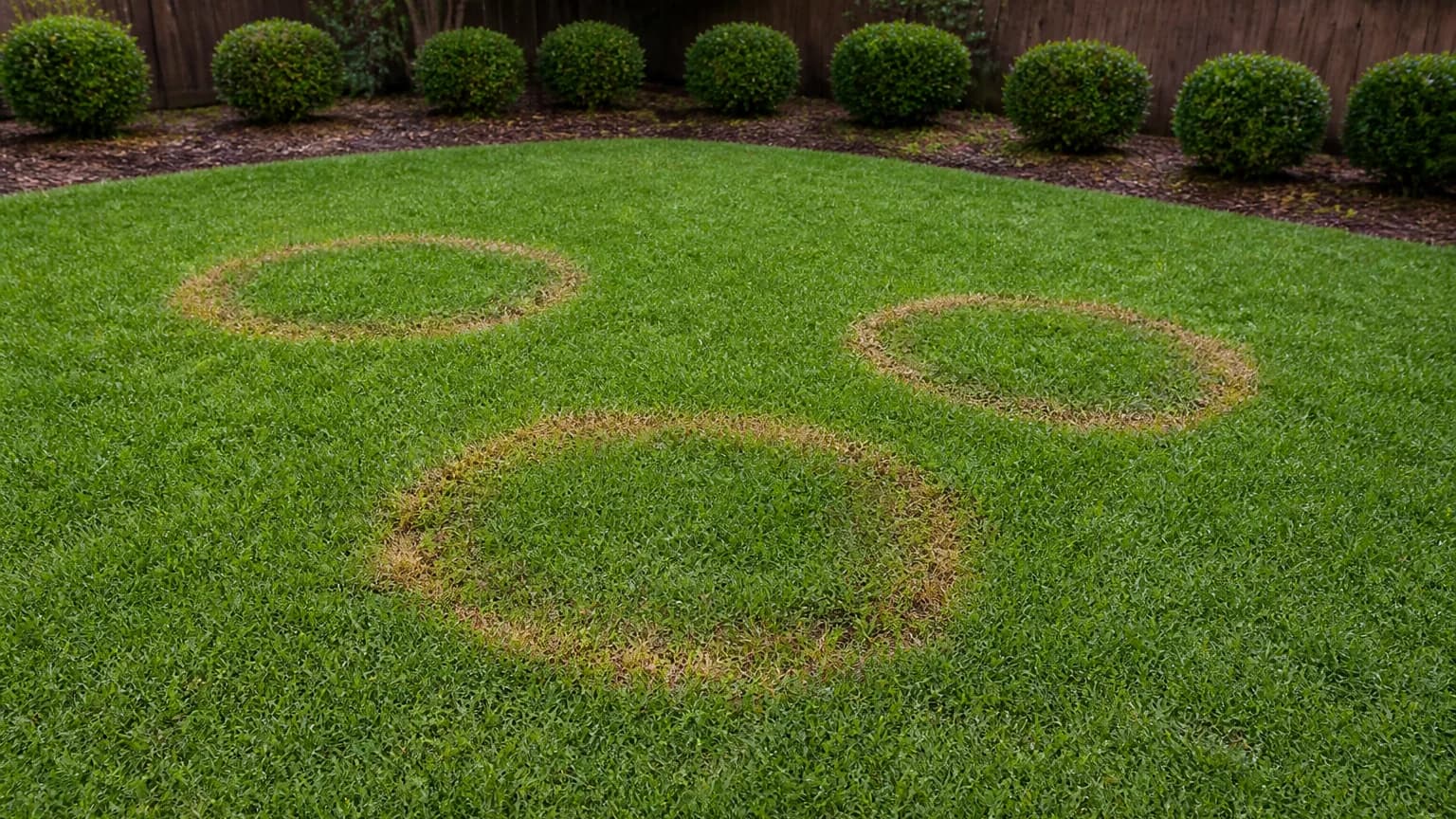
And the thing not to do: more is not faster. Lawns can only use so much at once. Pile on extra, or feed again before the first round is done, and the excess salts burn the grass — you get brown streaks instead of green.
What North Texas does to the timeline
Our soil and climate change how fast feeding shows, and sometimes whether it shows at all.
- Clay soil holds nutrients hostage. Our heavy clay binds up nutrients, so feeding can take longer to reach the roots than the bag suggests. Loosening compacted soil — aerating — helps the food and water actually get down there.
- Pale grass is not always hunger. Plenty of DFW lawns stay pale even after a good feeding. Sometimes the issue is water, shade, disease, pH, or nutrient availability rather than a lack of nitrogen. Do not keep adding fertilizer just to chase color. A fed lawn that still looks washed out is worth a read in our guide to brown and off-color patches.
- Summer heat changes the goal. In the heat, with watering limited, a growth spurt is the last thing the lawn needs. Force one in July and you just stress it. So summer feeding stays light, favors color over a growth push, and waits out the worst of the heat.
- Warm-season grass has an on-season. Bermuda, zoysia, and St. Augustine grow spring through fall and rest in winter. Feed them while they're growing and the food works. Feed them dormant and it mostly doesn't. Timing the feeding to the grass is half the battle here.
When to hand it off
Plenty of homeowners feed their own lawns. It's worth calling a lawn-care company when:
- You've fed the lawn and it still looks pale or patchy, and you can't tell if it's the product, the soil, or the timing.
- You're not sure which fertilizer or rate is right for your grass, and you'd rather not risk burning it.
- You keep buying bags that don't seem to do much — usually a sign the timing or the soil is the real problem, not the brand.
The lever you control most directly is water. Fertilizer only moves once it's watered in, and even sprinkler coverage is what turns a feeding into a visible result. If your system isn't holding up its end, that's work we handle. Want a yard that shows what you put into it? Get a free quote.
Feed smarter: test the soil, then follow a schedule
Two questions come right after "how long" — what should I feed, and when? Both come down to knowing your lawn instead of guessing.
- Use a soil test when the lawn keeps confusing you. A soil test turns feeding from a guess into a plan. It tells you your soil's pH and what nutrients it's short on, so you feed what the lawn actually needs instead of a generic bag. In our area it often explains why a lawn stays pale even after feeding.
- Then feed on a schedule, not a whim. A lawn does best on a few well-timed feedings across its growing season, not one heavy dump in spring. The simple version for North Texas warm-season grass: a light feeding at spring green-up, steady feeding through the growing season, a lighter touch in peak summer heat, and a fall feeding that strengthens the roots for winter. Match the amount to your grass type, water it in, and never feed a dormant lawn. Steady and timed beats heavy and occasional every year.