
Plants that earn their spot in a North Texas yard
A drought-tolerant plant isn't one that never drinks. It's one that, once its roots are established, can ride out our heat and dry spells without daily watering or constant replacing. The best of them do that and look good. Here's how they break down by the job they do in the yard.
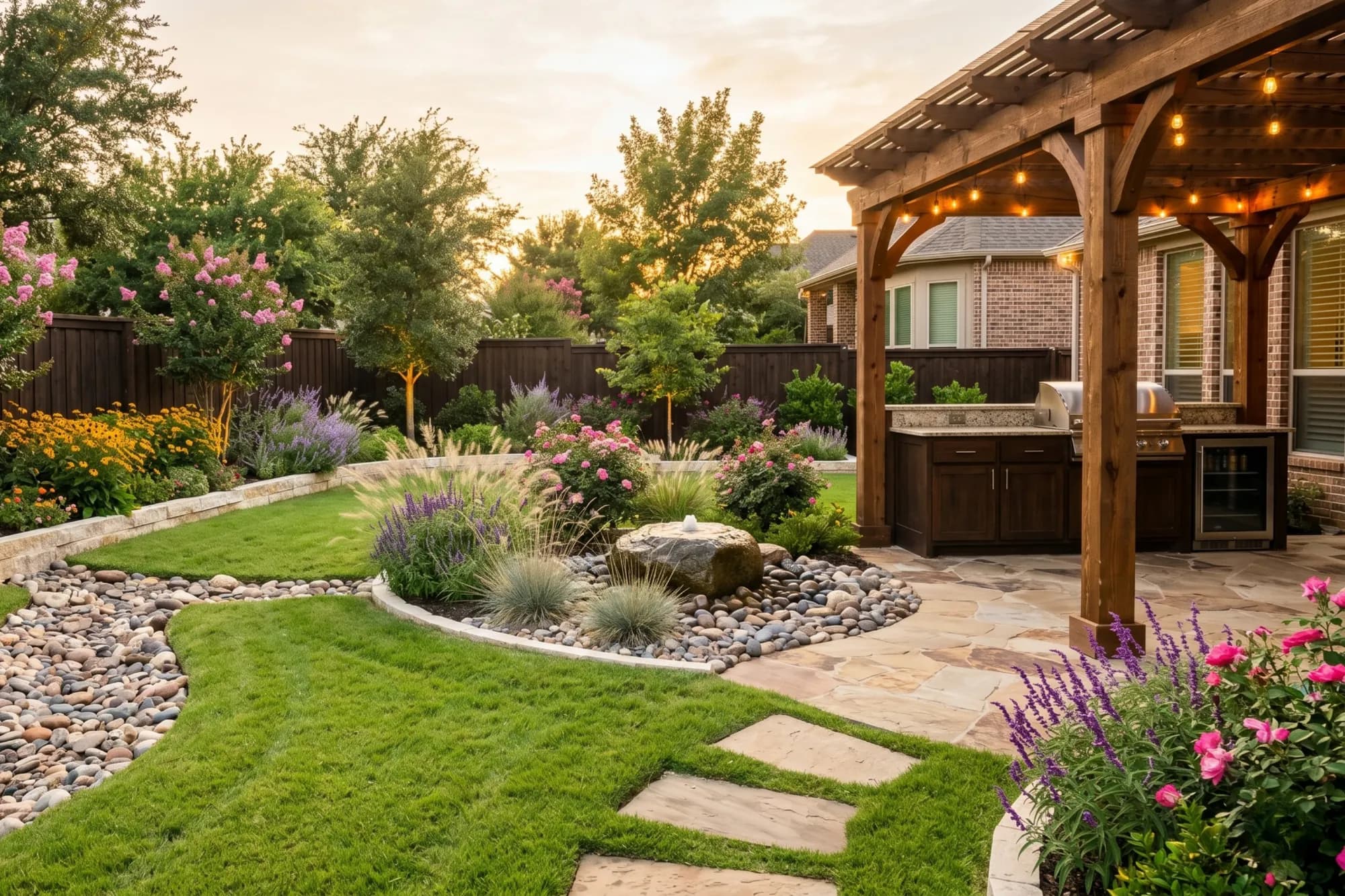
- Shade trees and big anchors. For real shade, live oak is the workhorse here. It takes our clay, heat, and even ice storms, and barely needs extra water once it's grown. Cedar elm is a Texas native that does well in heavy clay and turns yellow in fall. Texas red oak stays a bit smaller and gives you red fall color, which is hard to get here. For a small flowering tree, crape myrtle and desert willow both bloom right through the heat. And for bold, architectural shapes that ask for almost nothing, yucca and hardy agave are hard to beat. Just set agave somewhere that drains fast, like a raised or gritty spot. That keeps it from sitting wet.
- Perennial flowers for color all summer. These come back year after year and bloom through the heat. Salvia and autumn sage flower for months and bring in hummingbirds. Lantana takes the worst full sun you've got. Coneflower and black-eyed Susan give you that meadow look. Turk's cap even blooms in part shade, where a lot of color won't. Gaura adds wispy white or pink flowers that wave in the wind, and yarrow brings flat clusters over feathery leaves. Both are natives that handle poor soil.
- Shrubs for structure. Shrubs are the bones of a bed. Texas sage (cenizo) handles reflected heat off driveways and walls, and blooms after a rain. Dwarf yaupon holly stays neat and green with little fuss. Texas mountain laurel is evergreen, and its purple spring flowers smell like grape soda — a rare bit of scent in a low-water bed. Indian hawthorn is another tidy evergreen, with spring blooms, that fits foundations and borders. Rosemary and Russian sage add evergreen and silver tones, and both shrug off dry soil. Give rosemary your best-drained spot, though. It can struggle in wet clay through a hard winter.
- Ornamental grasses for movement. Grasses carry a bed in late summer and fall when a lot of flowers fade. Muhly grass throws up a pink cloud in October. Lindheimer's muhly stands tall and silver, and it's native to our soils. Little bluestem turns copper for the cooler months.
- Groundcovers for the hard spots. The strips along driveways and the open ground between plants bake all day. Blackfoot daisy flowers there for most of the year. Trailing lantana and low sedums spread to cover bare soil and hold it against erosion.
You don't need all of it. A good bed mixes a few of each — some height, some color, some texture — chosen for the light that spot actually gets. A lot of these are Texas natives, like Turk's cap, blackfoot daisy, and coneflower. That's part of why they take our weather without fuss.
Getting them through a North Texas summer
"Drought-tolerant" comes with one honest catch: it starts after the plant is established. A brand-new plant has a small root ball and can't reach water on its own yet. So the first season, even a tough plant needs regular water to push roots down deep. After that, you can back off, and that's where the savings come.
A few things make the difference here:
- Plant in fall when you can. Cooler air and warm soil let roots grow all winter, so the plant is ready before its first summer. Spring planting works too; it just needs more watering help that first year.
- Water deep, not often. A long, slow soak once or twice a week sends roots down. A daily splash keeps them shallow and thirsty. This also helps you stay inside summer watering-day rules without the plants suffering.
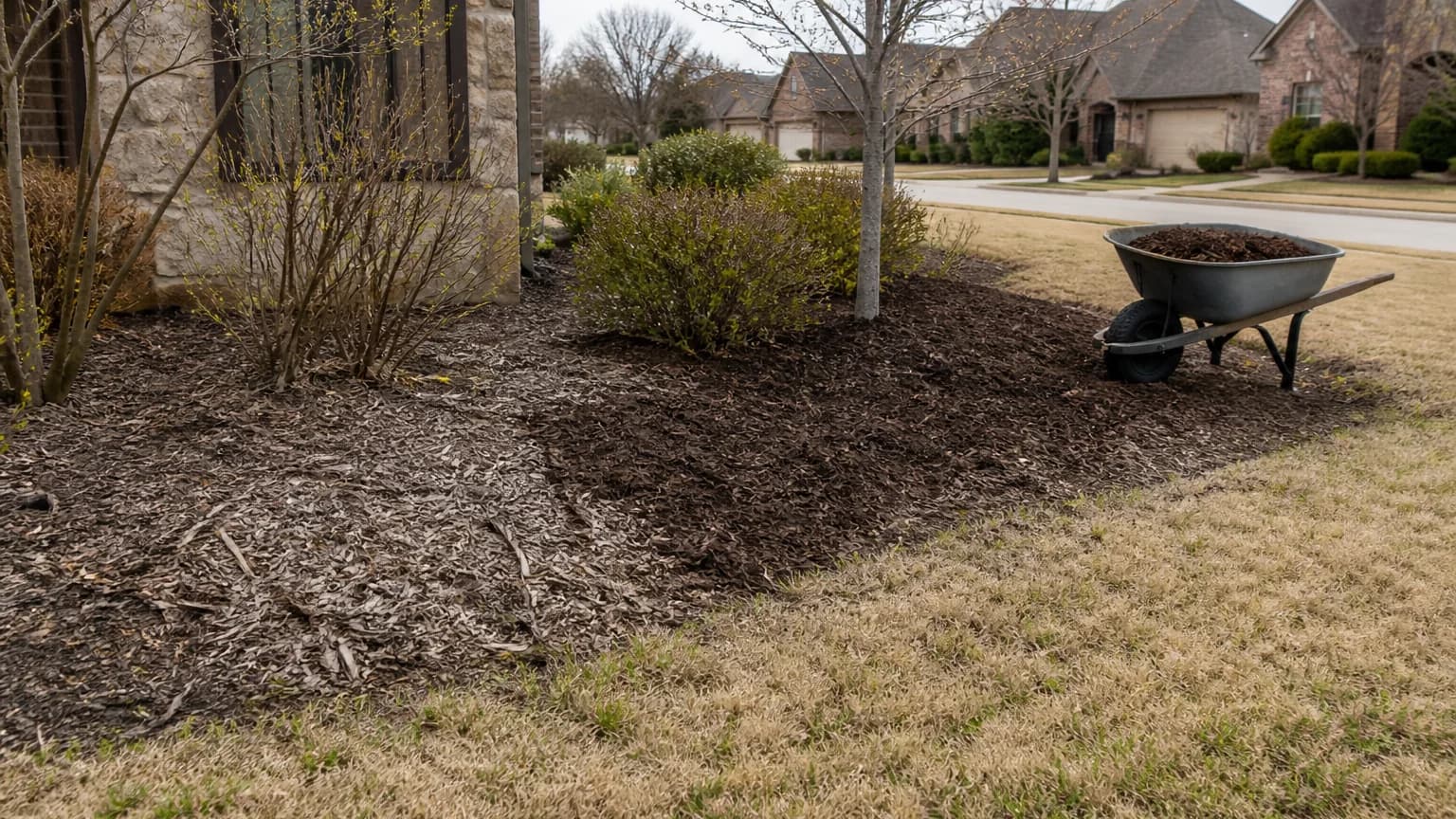
- Work the clay and mulch the top. Our heavy clay holds water but drains slowly, so loosening it at planting and adding a few inches of mulch keeps roots cooler and cuts how often you water.
When a plan pays for itself
Most of the money wasted on plants isn't on the plants. It's on putting the wrong one in the wrong spot, then buying it again next year. A little planning fixes that. It's worth bringing in help when:
- You're starting a bed from scratch and want it to fill in and hold together, not look like a row of pots set in dirt.
- You've replaced the same plant more than once and want to know what will actually live there.
- The spot is tricky — deep shade, a hot west wall, a low area that stays wet, or a slope that washes out.
This is what landscape design is for: the right plants, placed for the light and soil they're in, grouped by how much water they want, and set up so the bed gets better every year instead of thinner. Want a plan for your yard? Get a free quote.
Foliage and color that still take the heat
A low-water yard — what some folks call a xeriscape — doesn't have to mean a beige one. Two things people worry they'll give up, bold foliage and steady color, are easy to keep.
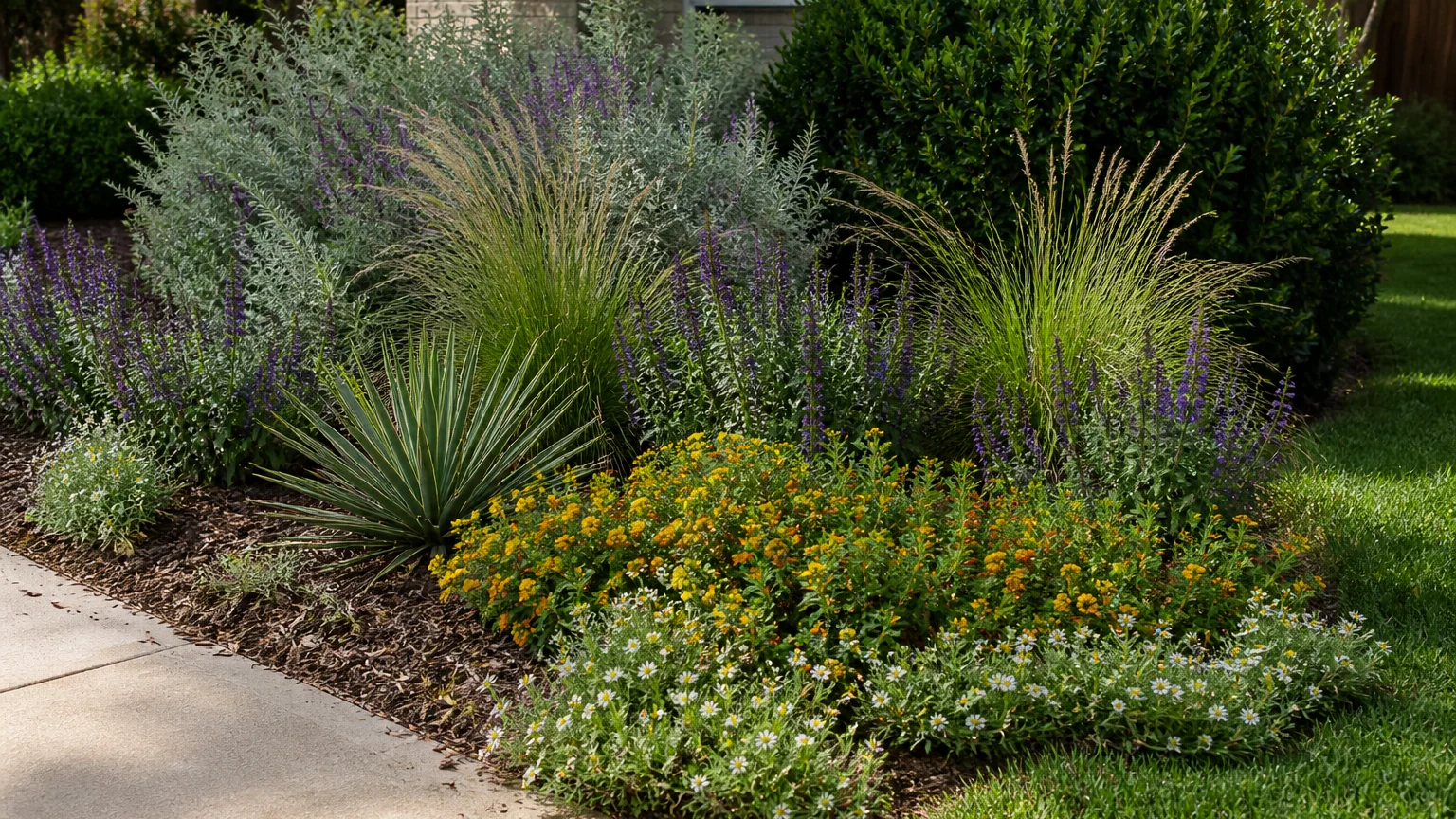
- Foliage that does the work. Some plants earn their place on leaves alone, no flowers needed. Silver and gray foliage like Russian sage, artemisia, and the soft gray of Texas sage cools down a hot bed and sets off brighter colors. Bold shapes from yucca, hardy agave, and grasses like little bluestem and muhly give a bed structure that looks good even in the dead of summer. Mixing leaf shapes and shades keeps a planting interesting between bloom cycles.
- A colorful garden on less water. For color that lasts, lean on long-blooming, heat-proof perennials: salvia, lantana, coneflower, esperanza (yellow bells), and blackfoot daisy. Together they'll carry a bed from spring well into fall. Esperanza is the one to plan around — it dies back in winter and returns in late spring, so pair it with something evergreen. Plant in drifts of a few of the same thing rather than one of everything, and stagger bloom times so something is always going. You get a full, colorful garden that isn't fighting the climate to stay that way.