
Spring: the layer that goes down before the heat
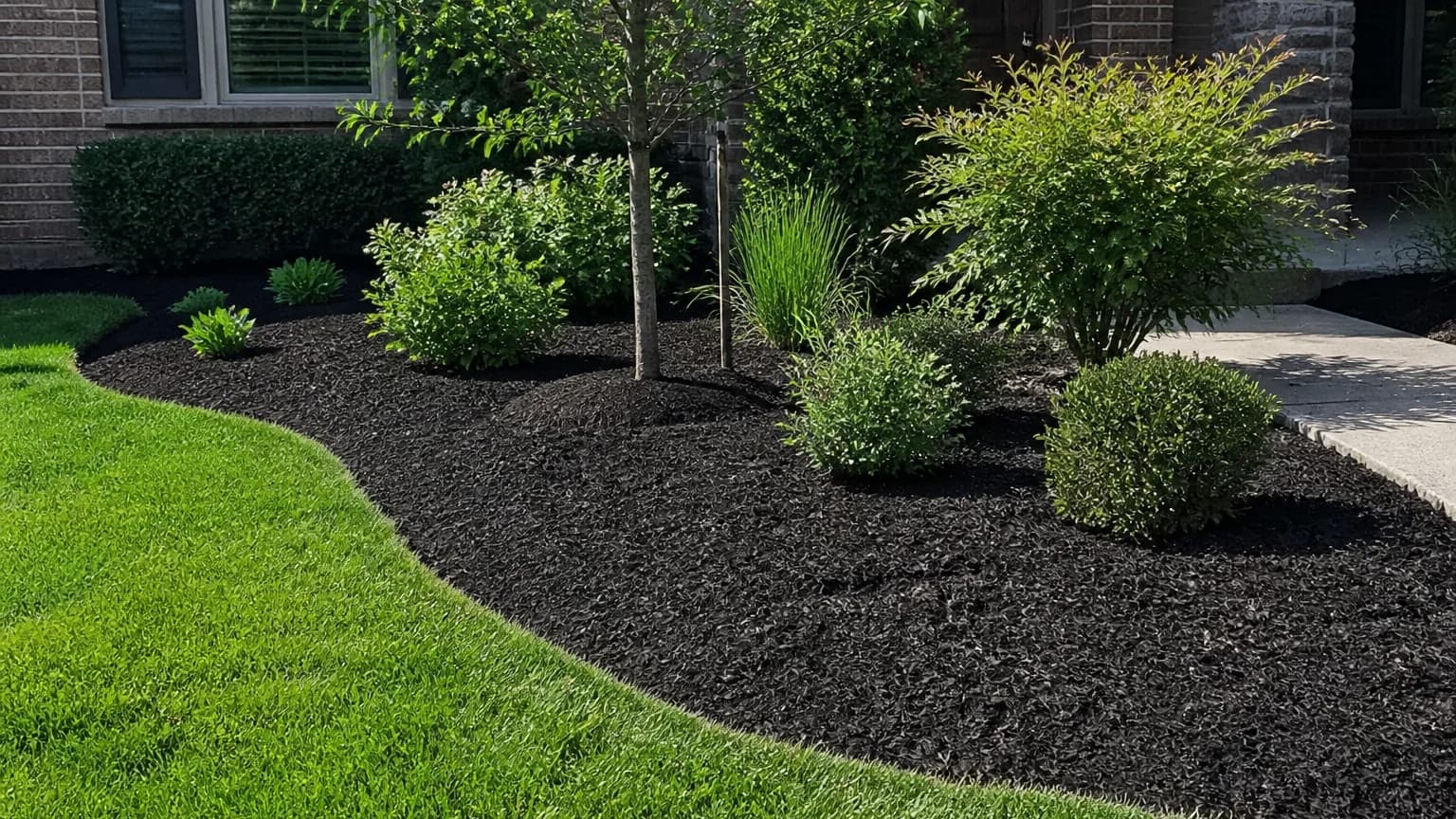
Spring is the application that does the most for a North Texas bed. The timing has a logic to it. You're not mulching for spring. You're mulching for the summer that's coming.
Wait until two things are true. First, the hard freezes are past. That's usually by mid-March here, though the latest freezes on record reach into mid-April. Second, you've cleaned the bed up — old leaves cleared, winter weeds pulled. Mulch laid over live weeds just hands them a head start, so that order matters. Once the bed is clean and the freeze risk is gone, lay the fresh layer.
Get it down before the real heat arrives. By the time July hits, the mulch is already doing its job. It holds the water you put down in the root zone, instead of letting our sun cook it off. And it keeps summer weeds from ever sprouting. Lay it late, after the bed has baked dry for weeks, and you've paid for the look without the protection.
Fall: a lighter layer before the freeze
The fall layer has a different job. It's not about summer moisture. It's about getting the roots through winter.
Our winters don't stay cold. They swing — a warm stretch, then a hard freeze, then back again. That back-and-forth is what stresses shallow roots. The soil heaves as it freezes and thaws. A thin layer of mulch steadies the ground underneath. The roots ride out the swings instead of taking the full hit each time.
Aim for late fall, before the first freeze settles in. That's usually November here. You're topping off, not starting over, so a light layer over the existing mulch is plenty. This window is optional for an established, hardy bed. It earns its keep around tender plants and anything you put in late, when the roots are still young heading into the cold.
How often to refresh, and how to tell it's time
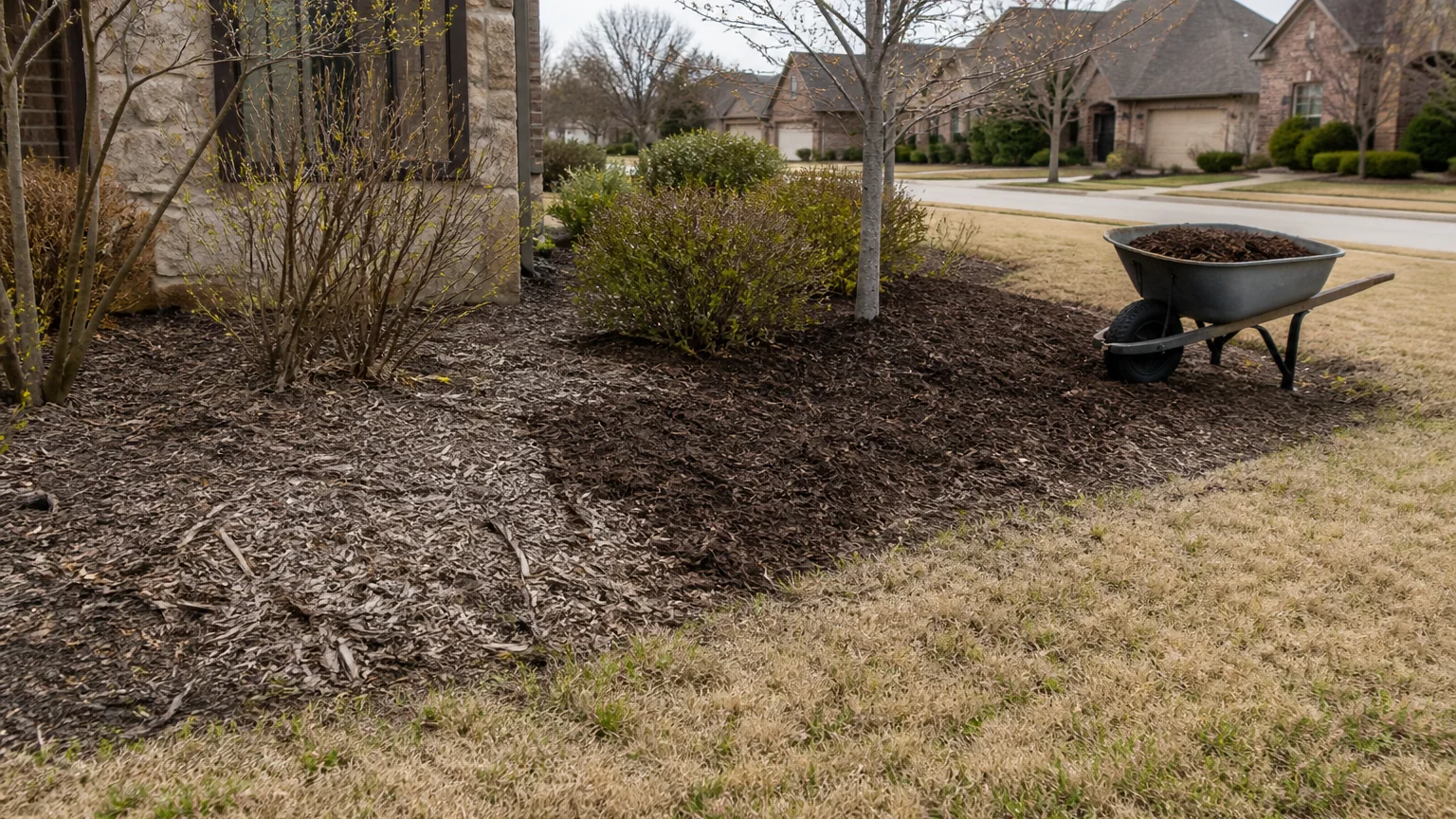
Plan on refreshing about once a year. Wood mulch slowly breaks down into the soil over a season. The layer thins and fades on its own. For most yards, the spring application is that yearly refresh. The fall top-off is a lighter add when a bed needs it.
The calendar is the starting point. But your beds give you the real signal. It's time to top off when you see:
- Bare soil showing through. Once you can see dirt between the mulch, the layer is too thin to block weeds or hold moisture.
- Weeds coming up through the surface. When weeds push through, the layer is too thin to shade their seeds out.
- Faded, grayed-out color. Fresh mulch is dark. Once it's gone pale and gray, most of its protective life is spent.
When you refresh, you're usually adding to what's there, not stripping it out. The installation guide covers when to just add fresh mulch on top versus pull the old layer first. One timing rule matters most: more often is not better. Pile a fresh load on a deep old one, year after year, and you smother the roots. Keep a steady, modest layer instead of building it higher every season.
When not to mulch
Timing has a wrong end, too. A few moves to skip:
- Don't lay a heavy fresh layer in the dead of summer. Say a bed went into July bare. A light top-off helps it limp through, but a thick pile in peak heat over dry soil does more harm than good. The real fix is to be ready next spring, ahead of the heat.
- Don't mulch right before you plant. If you've got new plants or bulbs going in, plant first, then mulch around them. Mulch first and you just rake it all back to dig.
- Don't rush it over cold, soggy ground in deep winter. Outside the late-fall window, a fresh layer on cold wet soil traps the cold and damp. Let the fall top-off do the winter job. Miss that window? Skip it and wait for spring rather than mulching onto cold, soggy ground. And let spring soil warm before the main layer goes on.
What makes the timing local
Mulch-timing advice written for the whole country misses what makes North Texas its own case. A few local realities set both windows:
- Our summer is long and punishing. That's what makes the spring layer the main event here, more than in a cooler climate. The beds head into a four-month heat run, and they need to be protected before it starts. So the deadline that matters is before the heat, not an exact date in spring.
- Our winter swings instead of staying cold. A steady-cold climate barely needs a fall layer. Ours does. That freeze-and-thaw swing is exactly what heaves and stresses shallow roots. The fall top-off is a North Texas move.
- The clay bakes and cracks. Heavy clay soil dries into a hard, cracked crust under summer sun. Cracked soil pulls moisture away from roots fast. A spring layer down before that starts keeps the surface shaded and softer. (Why clay loves wood mulch, and which type feeds it, is in the installation guide.)
- The freeze dates are your triggers. The last hard freeze usually clears by mid-March here, with the latest on record reaching into mid-April. That's your green light for the spring layer. The first freeze usually lands in late November, so aim to have the fall layer down by mid-November.
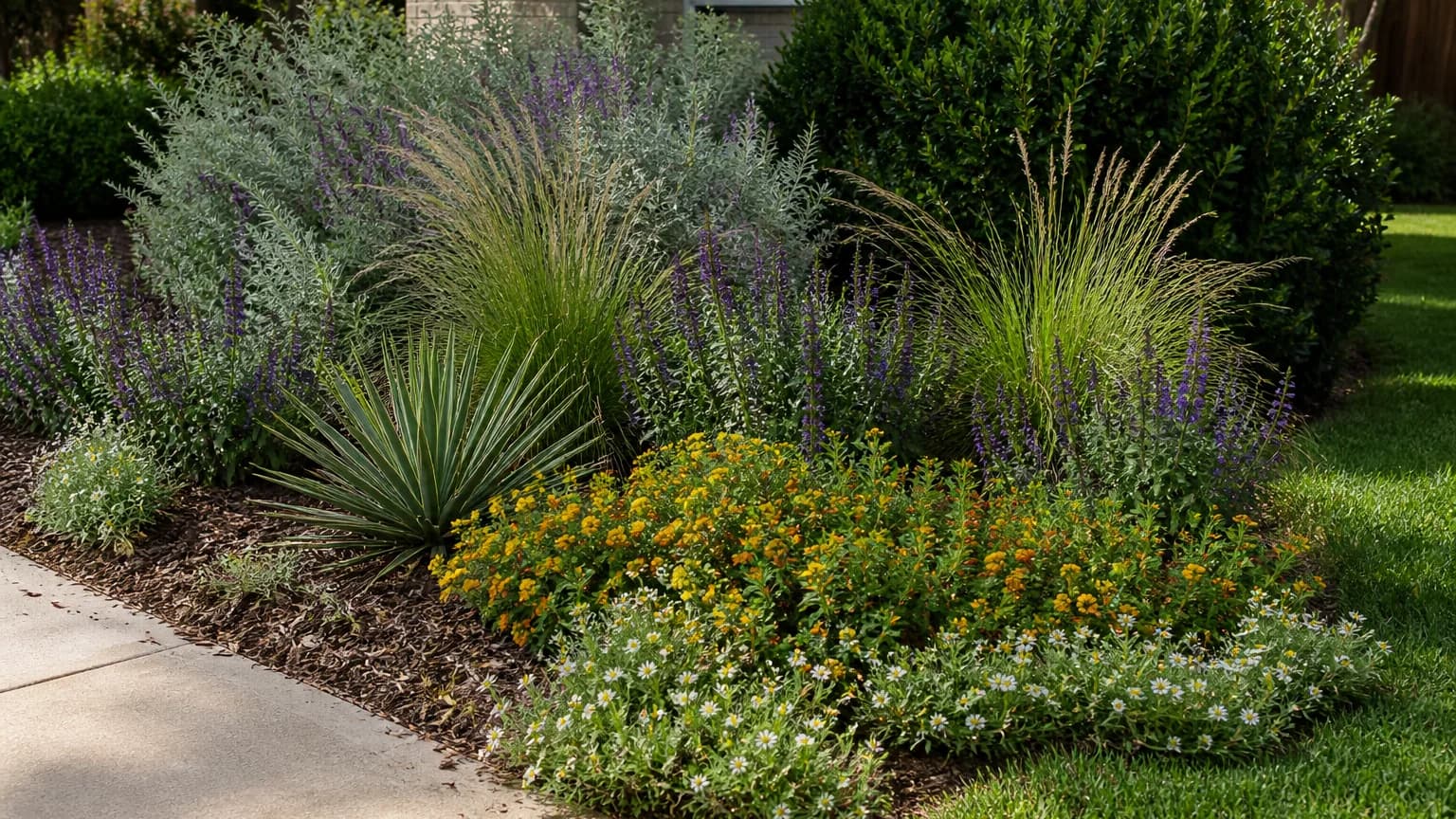
Timing mulch around drought-tolerant plants or other low-water beds? The spring window is the one that carries them through summer. Get that layer down before the heat and you water less all season.
When to hand off the timing
Tracking two windows a year is easy to plan and easy to let slip. A few cases where handing it off pays:
- You'd rather it just happen on schedule. The whole point of the two windows is hitting them on time. If the spring layer keeps going down in May, or the fall one never happens, you lose the protection you mulched for.
- It's the whole property, twice a year. Two seasonal passes across a full yard is real, repeated work. That's hauling and spreading, every spring and fall.
- The beds are new, and timing is part of a bigger plan. When you're planting and building beds, the first mulch is the last step of that job. The schedule for keeping it up starts from there.
Building beds from scratch is part of landscape design, with the mulch and its schedule set up from day one — and the two dates above are all it takes to keep them covered through both hard seasons. Get a free quote or call (817) 701-8920.