
What drives landscape lighting cost
A lighting system is sold by the fixture, and a handful of choices set that per-fixture number. Here's what moves it:
- How many fixtures. The biggest lever. Lighting one entry is one thing. Lighting the paths, the trees, and the patio is another. Ten lights cover a front yard, and twenty-five or more do a whole property. As a rough gauge, plan a path light every six to eight feet and one or two uplights per tree.
- The metal. This is the largest swing per light. Cast brass and copper cost more up front, but they shrug off our sun and last for decades. Budget fixtures made of thin aluminum or plastic are cheap, but they fog, yellow, and corrode in a few seasons. So the same fixture count can price out very differently.
- The fixture type. A simple path light is the low end. Uplights, downlights tucked in a tree, well lights, and post lights each cost more. Path lighting cost is usually the cheapest line on the plan.
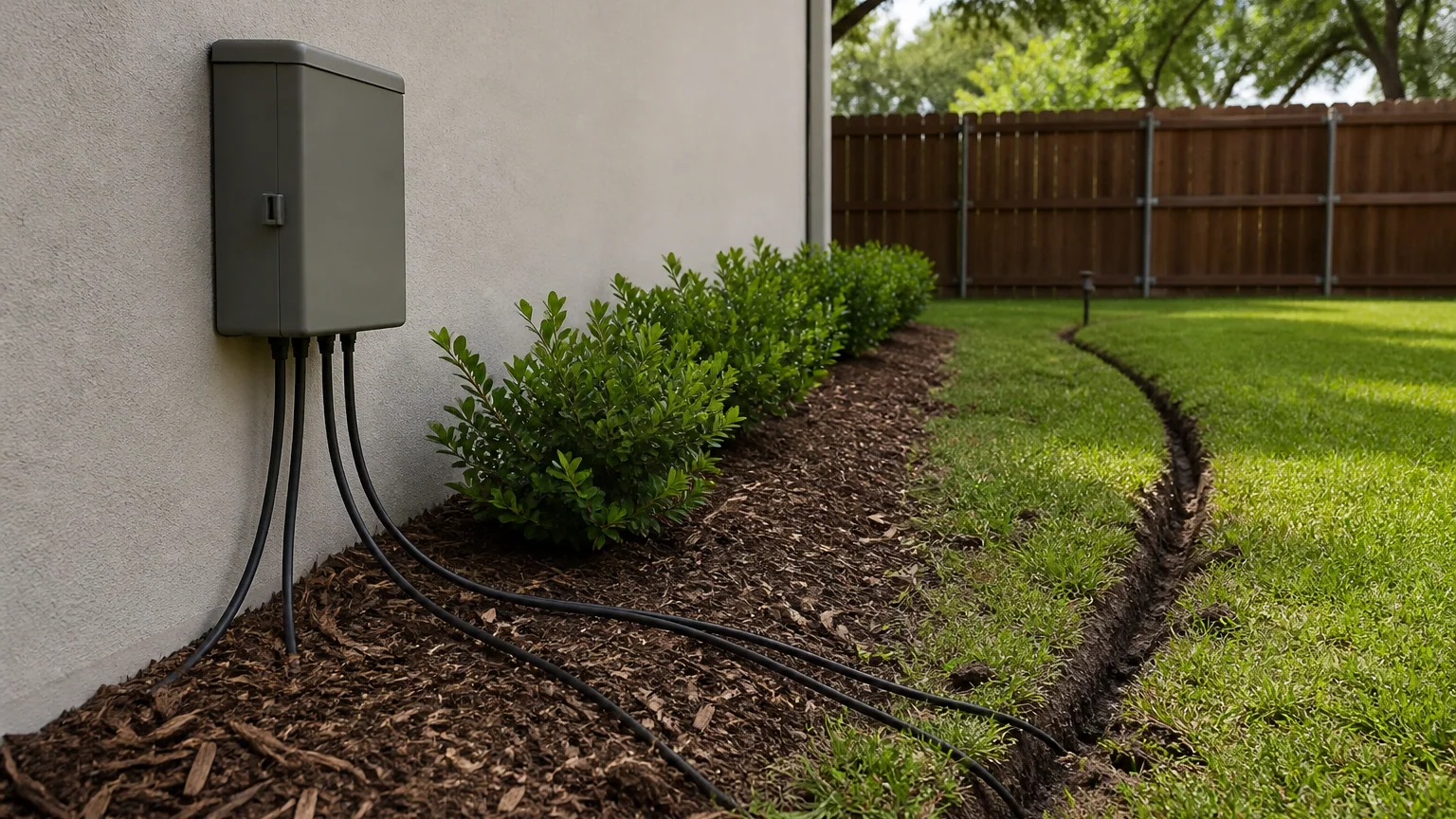
- The system. Every fixture plugs into a buried low-voltage system run by a transformer. A bigger yard needs a bigger transformer and longer wire runs, and that wire goes in the ground by hand. It's a real part of the bill, even though you never see it.
- Smart controls. A basic timer is cheap. A Wi-Fi controller that runs zones from your phone and turns on at dusk on its own costs more.
- Your yard. Trees, beds, and a long run to the back of the lot all add wire and labor. Going under an existing patio or driveway costs more than open ground.
- Install or do it yourself. Labor is roughly 40 to 60 percent of a professional job. A box-store kit skips that, but you're wiring, sizing, and aiming it yourself, and the kit parts are usually the first to fail.
Why our weather sets part of the price
A light here lives a hard life, and that's built into the better quotes. We covered the fixtures above. Our sun is just as hard on the rest of the system. The transformer takes a beating. Heat all summer, then a hard freeze, can crack a cheap plastic-housed unit. A heavier metal-housed transformer handles the freeze and thaw. It runs for fifteen to twenty years. Our clay matters as well. It swells when wet and shrinks when it bakes. So wire buried shallow and connectors that aren't sealed are right where a budget system fails. Sealed connections and proper burial cost a little more and save the call-back. The good news is the bill. LED fixtures sip power, and a timer only runs them the hours you pick. A full system barely moves the electric bill. Low-voltage lighting usually needs no permit either. The transformer just plugs into an existing outdoor outlet.
How to pay for lighting once, not twice
Here's the part that saves the most money over time. Because lighting is priced by the fixture, you have two moves most people miss.
- Buy the metal once. A brass or copper fixture costs more than a plastic one up front, but it lasts fifteen to twenty-five years out in our sun. The cheap fixture fogs and corrodes in three to five, and then you pay to replace it and pay the labor again. Quality fixtures cost more on day one and less by year five.
- Design the whole yard now, light it in stages. You don't have to do every fixture at once. Have the full plan drawn and the transformer sized with room to spare, then run the wire for the zones you'll want later. Add fixtures down the road and they tap right in. Per-fixture pricing is what makes staging cheap, so a starter system never boxes you in.
- Fewer good lights beat a lot of cheap ones. A handful of well-placed fixtures on the right trees and paths does more than a yard full of dim, scattered ones. Start where you walk and where the house reads from the street, then build out.
A box-store kit has its place, and low voltage is safe to wire yourself. To light one tree or a short walk, a kit is a fine weekend project. Just know what the low price buys: the cheap metal, an undersized transformer, and the aiming left to you. The gap between a kit and a system built to last is mostly those three things. You can also split the difference. Have a pro design the plan, set the transformer, and run the wire, then add fixtures yourself over time.
Ready for a real number on your yard?
Ranges only get you so far. The only price that counts is the one designed to your actual yard and fixture count. We design and install low-voltage landscape lighting across the DFW area. Planning a bigger refresh at the same time? We cover the whole picture in landscape design. Most home systems go in over a day or two. When you're ready for a number, any good installer should walk the property with you, plan it zone by zone, and hand you a written price, not a phone guess. A fair quote spells out the fixtures by type and metal, the count, the transformer size, the wire, the warranty, and the labor. That's how you compare two bids that look far apart, and it's how we quote. The quote is free.