
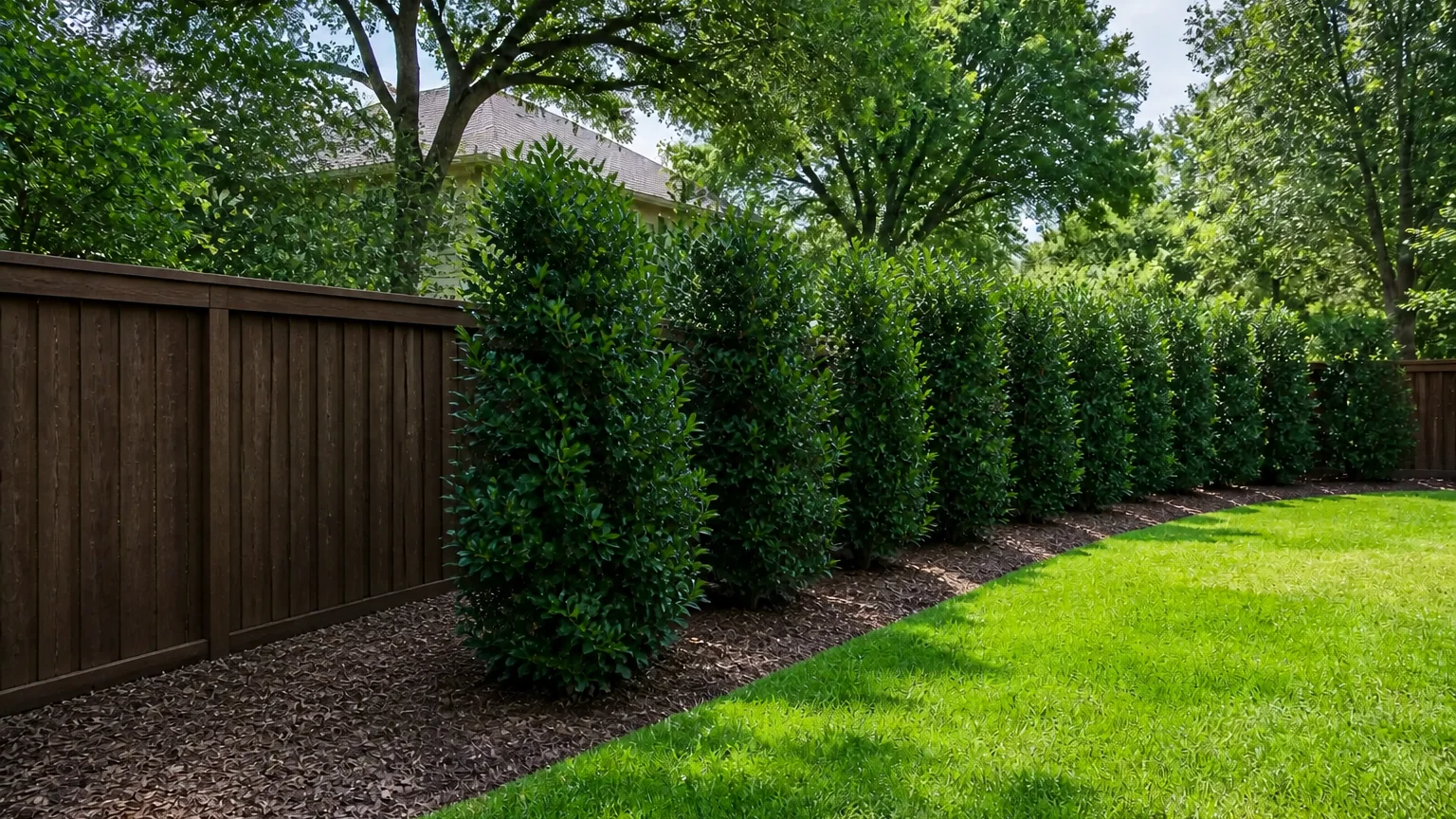
Privacy in three layers
A fence alone tops out around six feet. That blocks the view from the ground, but it does nothing about the window looking down from next door, and a bare wall doesn't quiet much. So the strongest privacy yards stack three layers, each doing one job.
Layer one: the base. This is usually the fence. A solid fence gives you instant ground-level privacy on day one, while the plants behind it are still filling in. If you've already got one, good — it becomes the backdrop for everything else. Where an HOA caps the fence at six feet, that's fine. The plants handle the height from here.
Layer two: hedges for eye level. Hedges fill the wall of space from about four to twelve feet up, where most of the looking-in happens. Planted in a row, the right shrub becomes a living fence that's denser and better-looking than the wood one. Strong picks for North Texas:
- Nellie R. Stevens holly — the one to start with. Dark, dense, evergreen, and fast (two to three feet a year). Handles our heat and clay. Plant them five to six feet apart and they close into a solid wall in a few years.
- Wax myrtle — a fast native that even takes the wet, heavy clay spots most plants hate. Great for a looser, natural screen.
- Cherry laurel — glossy and evergreen, and it takes a trim, so you can hold it to a clean eight-to-twelve-foot hedge. Give it decent drainage and amended soil; in raw, high-pH clay its leaves tend to yellow.
- Boxwood keeps a low, formal clipped line out front, where you want neat more than tall.
Layer three: trees for the upstairs view. This is the layer a fence can't give you. A few tall evergreens along the back line block the second-story sightlines for good. Nellie Stevens holly is the safe default here too. Eastern red cedar is a tough, fast Texas native — just know it sheds pollen in winter, so an allergy-prone household may prefer holly or wax myrtle. Live oak is the long game: slow, but its high canopy eventually shades the yard and blocks the view from above. A common move is to plant a slow live oak for later and a fast holly in front of it for now.
At a glance — privacy plants for North Texas:
| Plant | Mature height | Growth speed | Evergreen |
|---|---|---|---|
| Nellie R. Stevens holly | 20–25 ft | Fast (2–3 ft/yr) | Yes |
| Wax myrtle | 15–20 ft | Fast | Yes |
| Eastern red cedar | 30–40 ft | Medium–fast | Yes |
| Cherry laurel | 15–25 ft | Medium–fast | Yes |
| Italian cypress | 30–40 ft (narrow) | Medium | Yes |
| Dwarf yaupon holly | 2–3 ft | Slow–medium | Yes |
| Live oak | 40–60 ft | Slow | Yes |
Italian cypress is handy for a tight side yard, but it can pick up fungal problems in humid stretches, so use it sparingly.
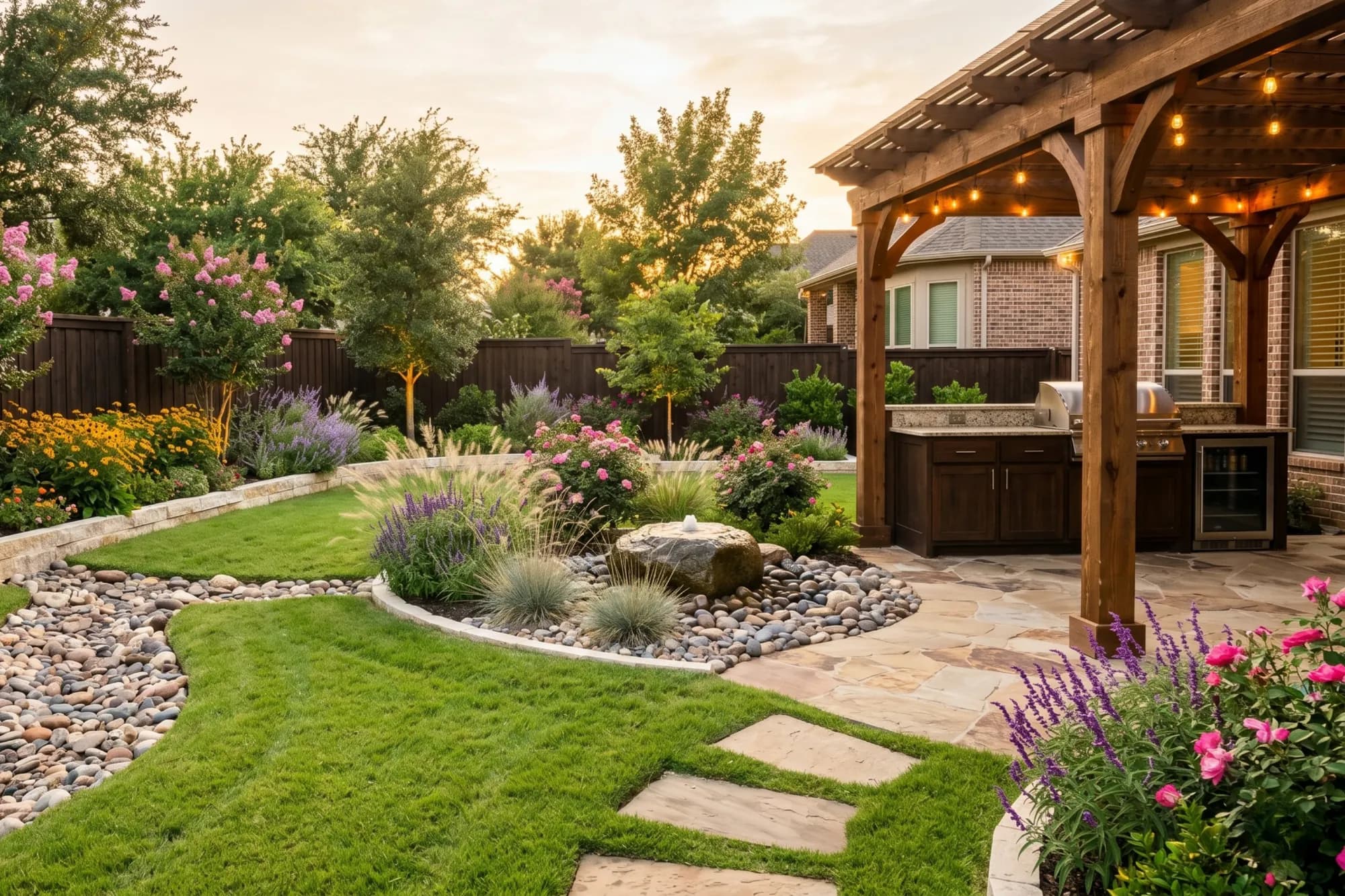
A few finishing touches pull it together. A row of shrubs planted three to four feet inside an old fence hides the wood and adds height. A pergola with a climbing vine throws an overhead screen against that upstairs window. And a small water feature covers road or pool-pump noise — privacy for your ears, not just your eyes. To keep the screen dense and tidy as it grows, put a yearly prune and feed on the calendar — a screen only works as well as it's kept.
What North Texas yards need to get right
Privacy planting here lives or dies on a few local rules. Get these right and the screen lasts; miss them and you're replanting.
- Keep it mostly evergreen. Aim for around 70 percent evergreen. Save the deciduous trees — crape myrtle, redbud — for color, not for screening. They go bare in winter, right when you can see straight through to the neighbors.
- Plant for the mature size. That five-gallon holly is a 20-foot tree in seven to ten years. Space and place it for full size, or you'll be digging it up later.
- Clumping bamboo only. Bamboo screens fast and looks great, but only the clumping kind stays put. Running bamboo spreads underground into your neighbor's yard, your foundation, and your irrigation lines. It's a genuine nightmare to remove. If you're not sure which kind it is, don't plant it.
- Skip Leyland cypress. It's sold everywhere as a fast privacy screen, but it fails often in our heat. Wax myrtle or holly does the same job and lasts.
- Plant inside the fence line, not against it. Set hedges three to four feet in. Plants jammed against a fence rot the wood and leave no room to trim. Check your setback and HOA rules before planting near the property line, too.
- Water the first couple of years. A new hedge needs steady water to root deep. After two or three years, most of these evergreens get by on a summer soak. A simple drip line makes that easy.
When to get a designer involved
A privacy mistake hides for a while. The wrong tree in the wrong spot looks fine the first year. Three years later it's at full size in the wrong place, and now you have to dig out a mature tree and start over. That slow reveal is why a real plan is worth it. Bring in a pro when:
- The exposure is coming from several directions at once — upstairs windows, the road, and an open pool.
- You're matching fast and slow growers, or working around an HOA fence cap, and want it right the first time.
- You want privacy and curb appeal out front, where the screen can't turn into a wall.
That's what landscape design handles: reading the real sightlines, picking plants for the soil and the spot, and spacing them for the size they'll reach — so the screen fills in instead of fighting you. Want a privacy plan for your yard? Get a free quote.
Backyard living areas and the front yard
Two spots deserve their own thought: the backyard you actually live in, and the front yard you can't wall off.
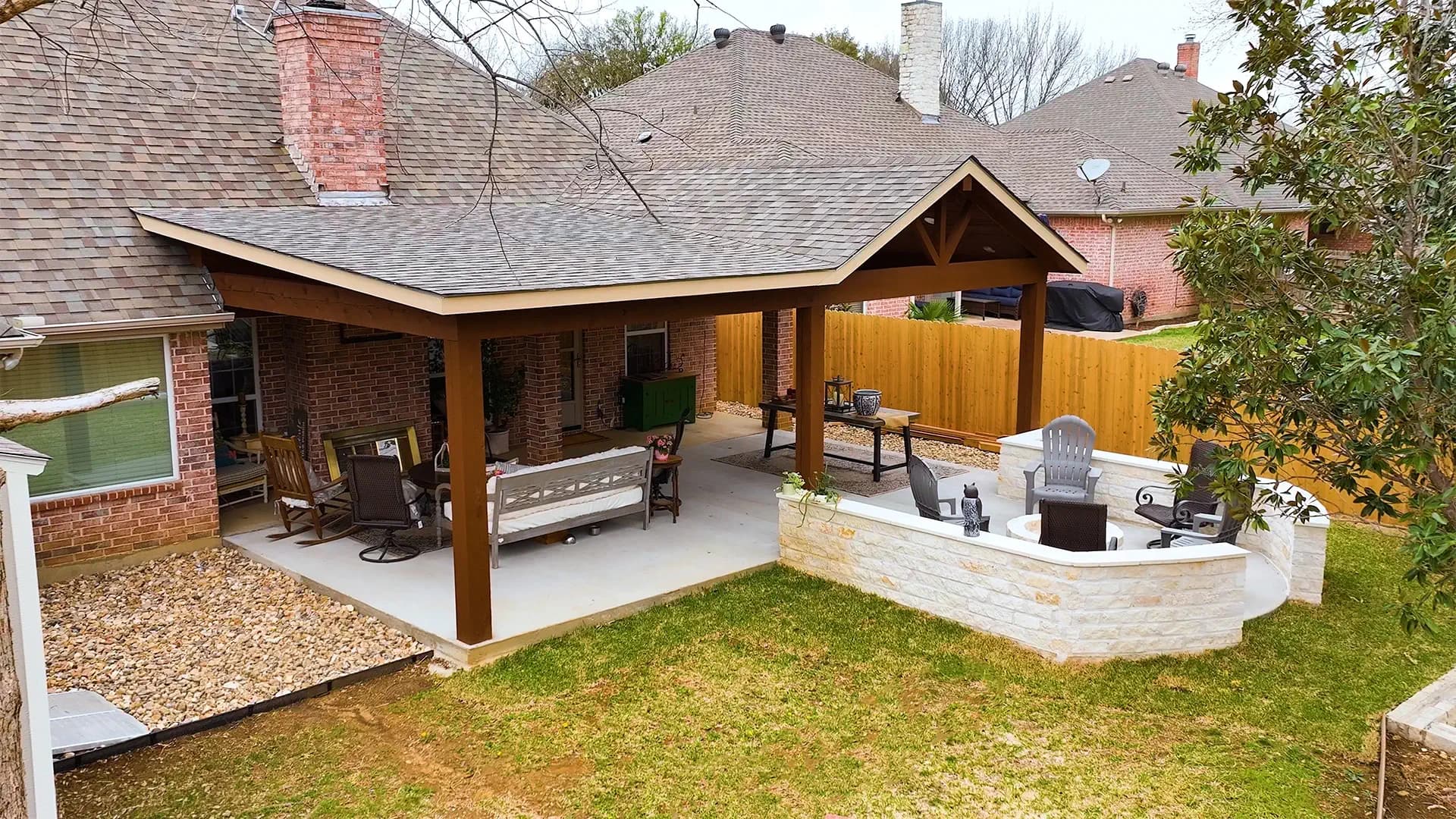
- Pools, patios, and seating. These are the most-used and most-exposed corners of the yard, so they're worth screening first. Tall containers planted with columnar holly or clumping bamboo make a movable wall on a patio or pool deck. A pergola with a vine blocks the view from above. Screen panels give you instant cover in a spot where a hedge would take years. For pulling all of it into one cohesive plan, see our guide to creating a backyard oasis.
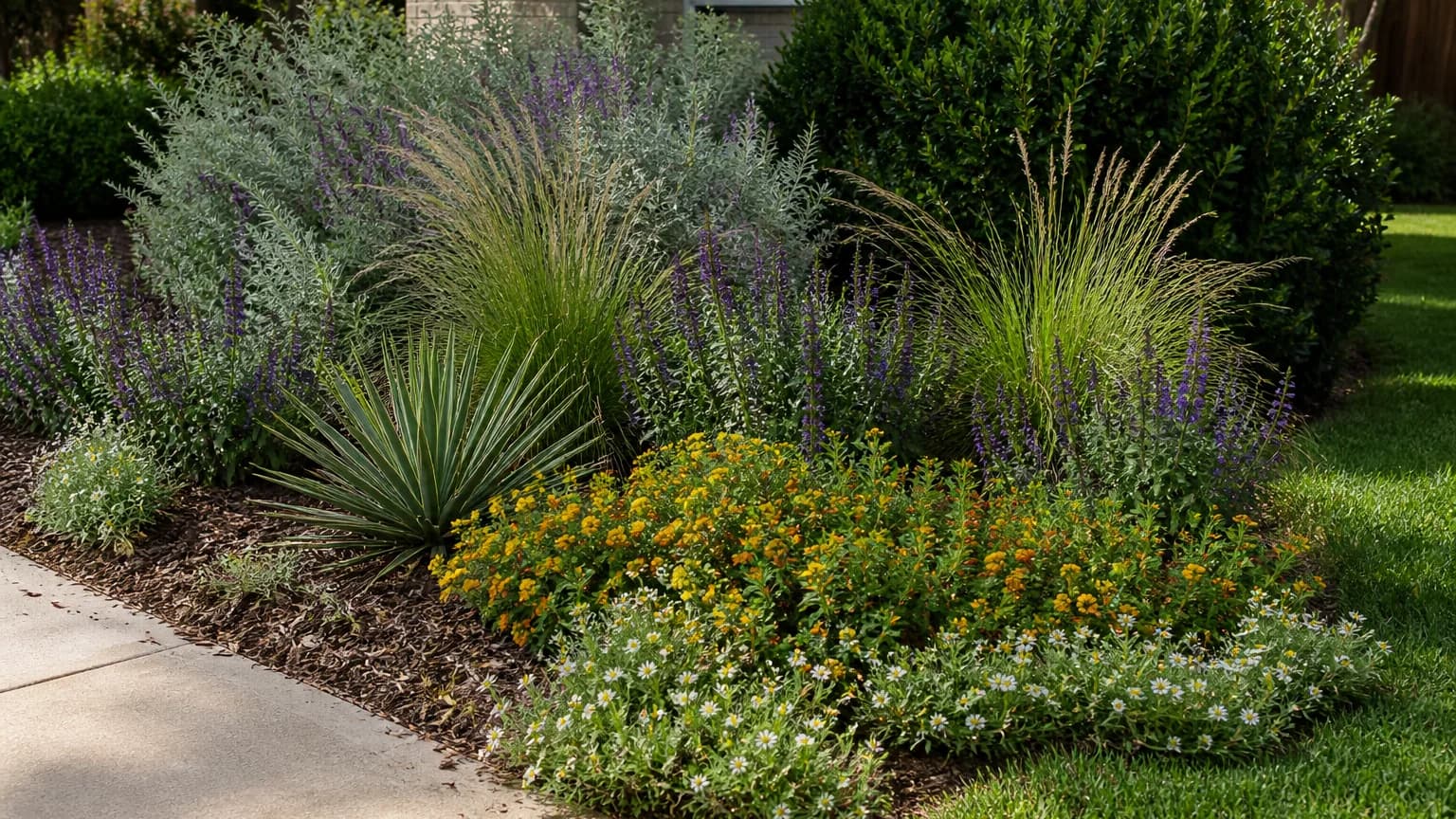
- The front yard, without the fortress look. Out front the goal is selective screening — hide the front windows, not the whole house. Mid-height shrubs along the foundation cover ground-floor windows. A single ornamental tree, like a crape myrtle, throws dappled screening between the street and the window without blocking the house. A short decorative fence within HOA rules, paired with planted beds, marks off space without boxing it in. For tight runs down the side of the house, our side yard landscaping ideas cover those narrow zones.