
Why side yards fail, and the one move that fixes them
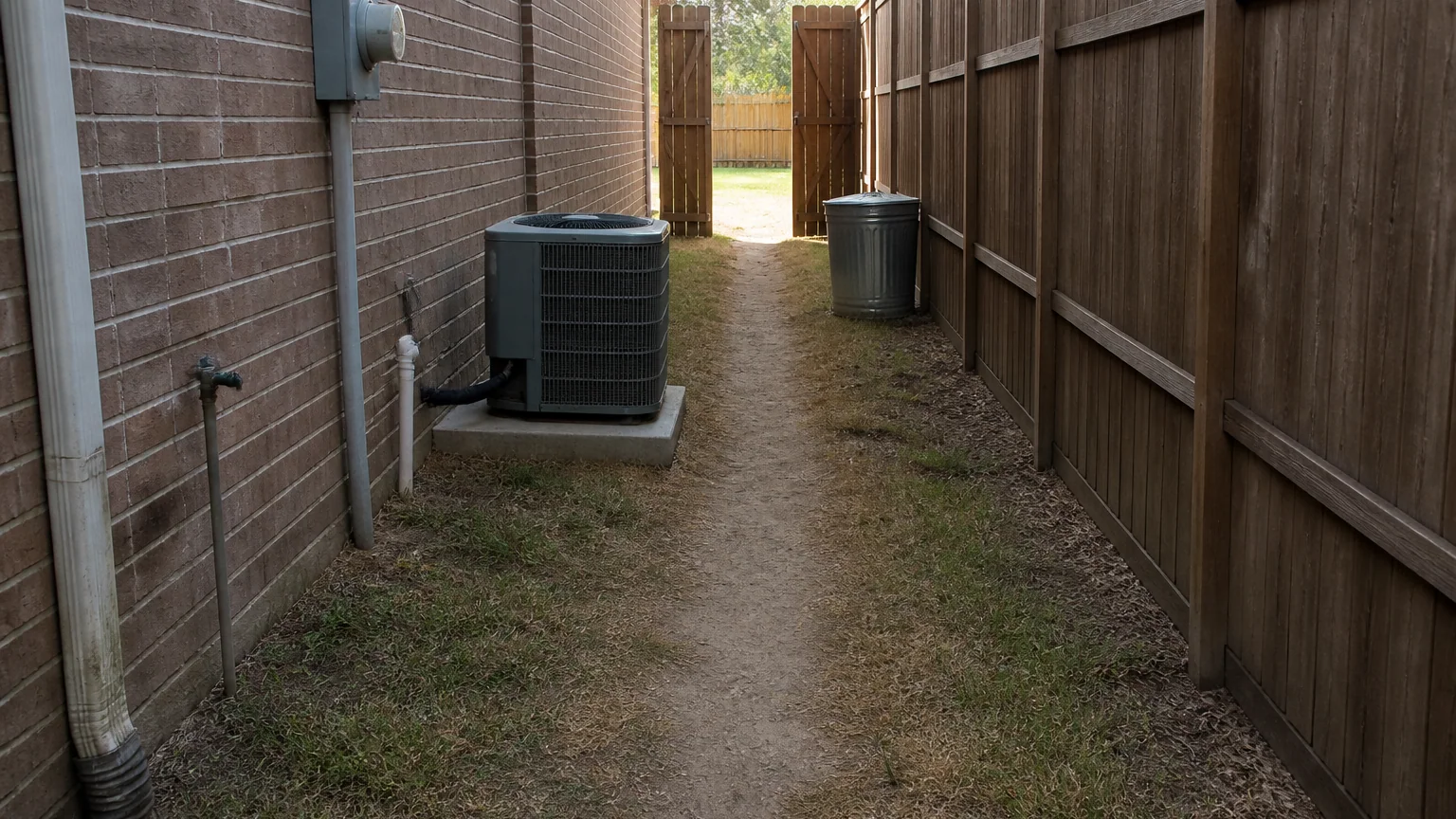
A side yard is hard for reasons the front and back yard never deal with. It helps to name them, because each one points at the fix:
- It's narrow. Most run four to ten feet wide. Grass gets trampled into a bare path, and full-size shrubs crowd the walkway.
- It's shady. The house blocks the sun for much of the day, especially on the north side. Sun-loving plants slowly give up there.
- It's full of equipment. AC units, the electrical meter, irrigation valves, trash cans — all of it needs to stay reachable, even if the strip looks finished.
- It's wet in the wrong places. Roof runoff, the AC drain line, and water off the neighbor's lot all funnel into one tight strip. With nowhere to spread, it pools.
- It gets packed down. Foot traffic and pets compact the soil until grass can't root. Bare dirt is what's left.
Here's the move that fixes all of it: stop asking the strip to do everything, and give it one job. A side yard that tries to be five things is a mess. A side yard with one clear purpose — a path, a screen, a garden, a dog run — tells you what to plant, what to pave, and what to skip. Every other choice flows from that one answer.
Fix the drainage before anything pretty
This is the step people skip, and it's the one that decides whether the rest holds up. If your side yard pools after a storm, water is the first job, not the plants. Standing water rots roots and breeds mosquitoes. It also pushes moisture against the foundation. On North Texas clay, which swells and shrinks with every wet-and-dry swing, that's a real concern.
The fixes are straightforward. Slope the soil away from the house, about a quarter inch of drop per foot. Run the downspouts past the strip instead of into it. And where water still collects, a drainage solution like a French drain, surface drain, or grading correction moves it through and out. A river-rock bed can finish a non-planted strip cleanly, but the drainage has to be solved first.
Then pick the look that matches the job
Once the water's handled, the design is just a match to the job you picked:
- The walkway. A side yard walkway works best as a stone or paver path down the middle, edged with one repeating plant on each side — boxwood, dwarf yaupon holly, or a low ornamental grass. Add path lighting so it's safe and welcoming after dark. For a hard-working route between front and back, a poured or paved walkway takes the daily traffic without wearing in.
- The service-access strip. Keep the AC, meters, and cans reachable, use gravel or pavers where things roll, and leave clearance around equipment so a technician can still work on it.
- The shade garden. On the dim north side, plant what likes it there — cast iron plant, autumn or holly fern, liriope, and coral bells for color. Skip the sun-lovers; they'll only sulk. Our plant guide covers tough North Texas picks for the brighter strips.
- The dog run. Gravel or pavers on the routes the dog already uses, with a hardy groundcover like frogfruit or Asian jasmine in the calmer corners. Keep dog-toxic plants out — no sago palm, oleander, or foxglove.
For the tightest strips — under three feet, or a north side where grass has never filled in — the honest answer is sometimes to stop growing grass there at all. Artificial turf or a clean gravel surface beats a thin, muddy lawn that never works.
What a North Texas side yard deals with
Two local things shape the side yard here. The first is the clay. Our soil holds water and moves with the seasons, so a strip that drains poorly stays soggy and presses moisture against the foundation. That's why drainage comes first in this climate, not last.
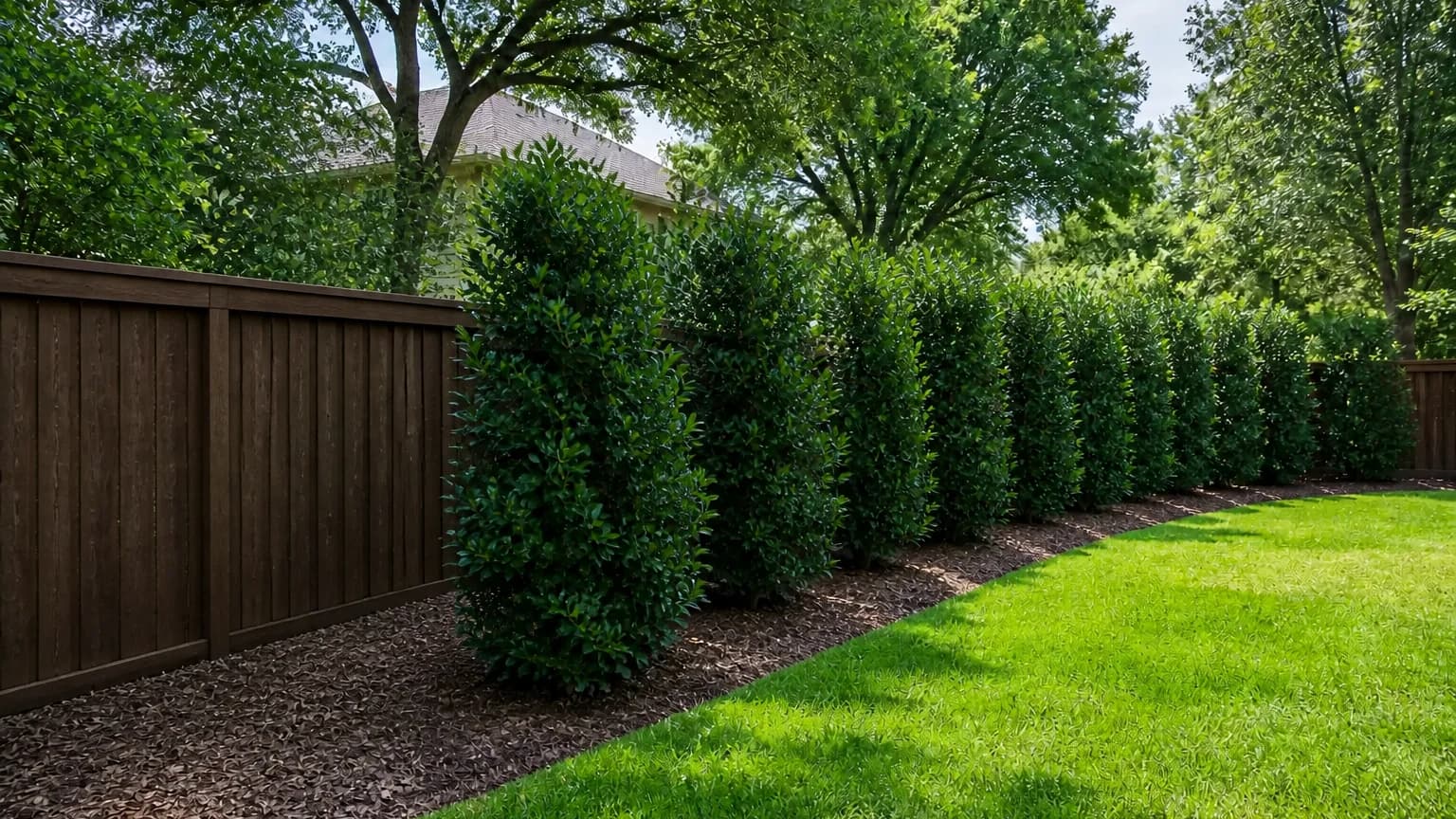
The second is the heat and the shade together. The same narrow strip that bakes on the west side stays cool and dim on the north, where the house throws shade most of the day. One side yard can need drought-tough plants on one wall and shade-lovers on the other. And on the tight strip between the house and the fence, the smart pick is tall and skinny. Upright juniper, 'Will Fleming' yaupon, or columnar boxwood grow up without crowding the walkway. An evergreen vine like crossvine or Carolina jessamine dresses up the fence without taking any floor space at all.
When to hand it off
Planting a few shrubs, spreading gravel, or adding path lights is a fair weekend project. The harder parts of a side yard are worth handing off:
- Drainage. Grading, French drains, and rerouting downspouts have to be done right, or you've buried the problem instead of fixing it.
- Hardscape. A paver or flagstone path in a tight strip has no room for error — a crooked or sunken run shows from the first step.
- Full redesigns. Laying out the whole strip is where a plan saves you from a side yard that still doesn't work.
A side yard is unforgiving — it's narrow, you walk through it daily, and every mistake is right at eye level. That's why a landscape design plan pays off here more than almost anywhere on the property. Want one crew to plan it and build it? Get a free quote.