
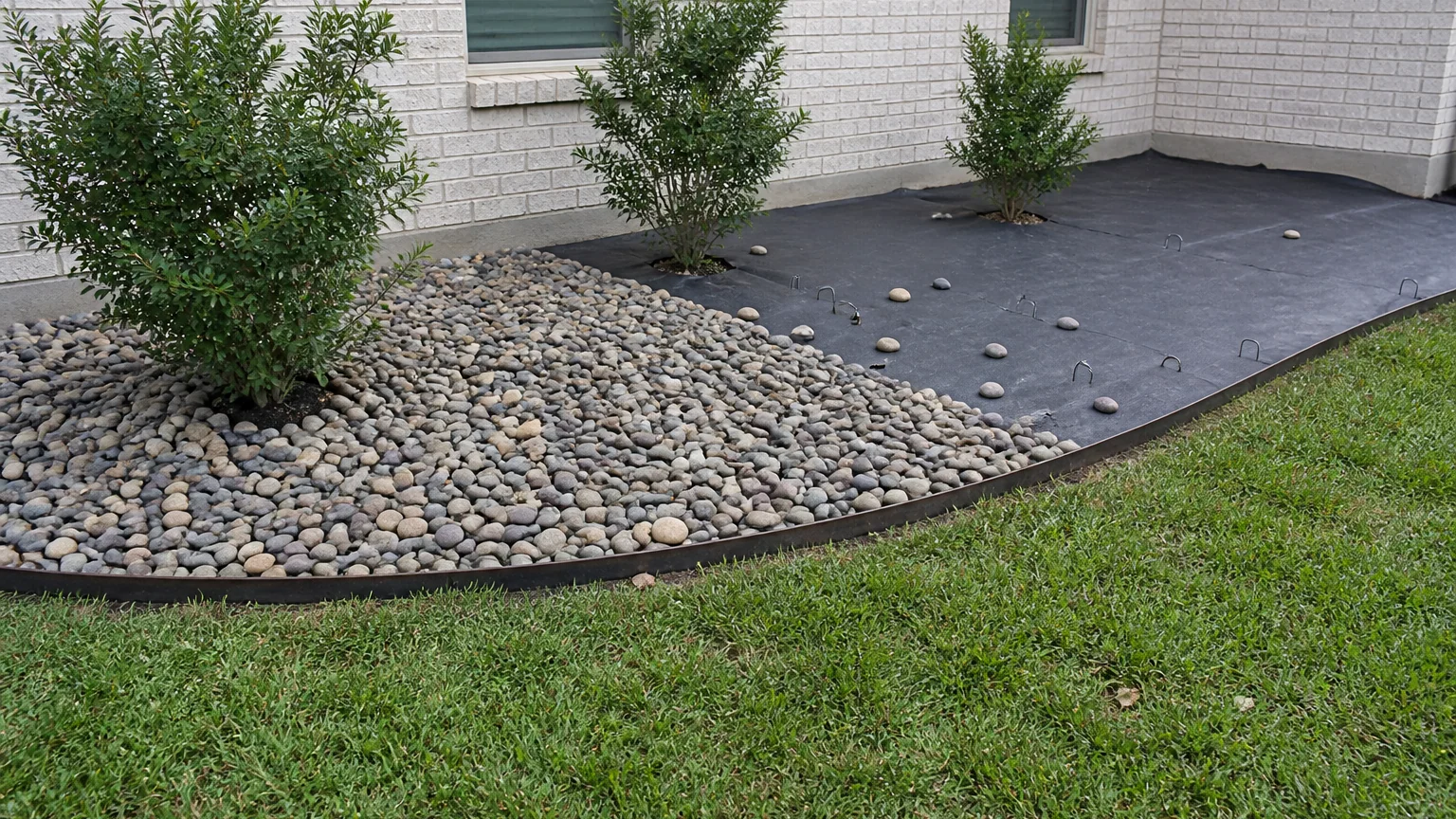
Where river rock works best
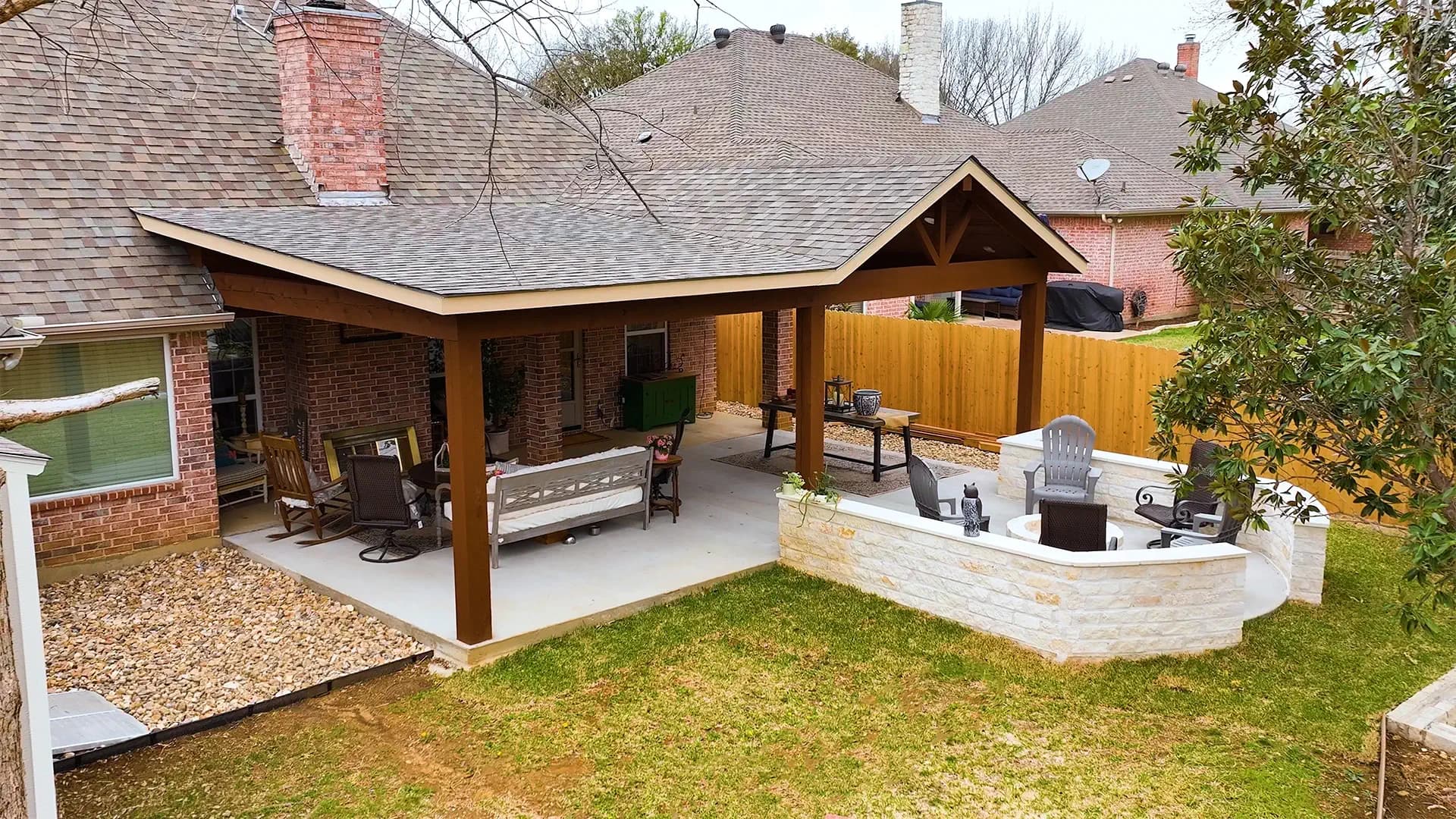
River rock is versatile, but it isn't for everywhere. If you're after river rock landscaping ideas, start with where it actually performs — dry, low-traffic spots where grass or mulch struggles.
- Foundation beds. Swap the mulch ring around the house for rock. It won't wash out in a storm or need topping off every spring.
- Borders and bed edges. A band of rock along a walkway or a bed draws a clean line and cuts your edging chores.
- Slopes and hillsides. Rock holds the soil on a grade where mowing is a chore and mulch just slides off.
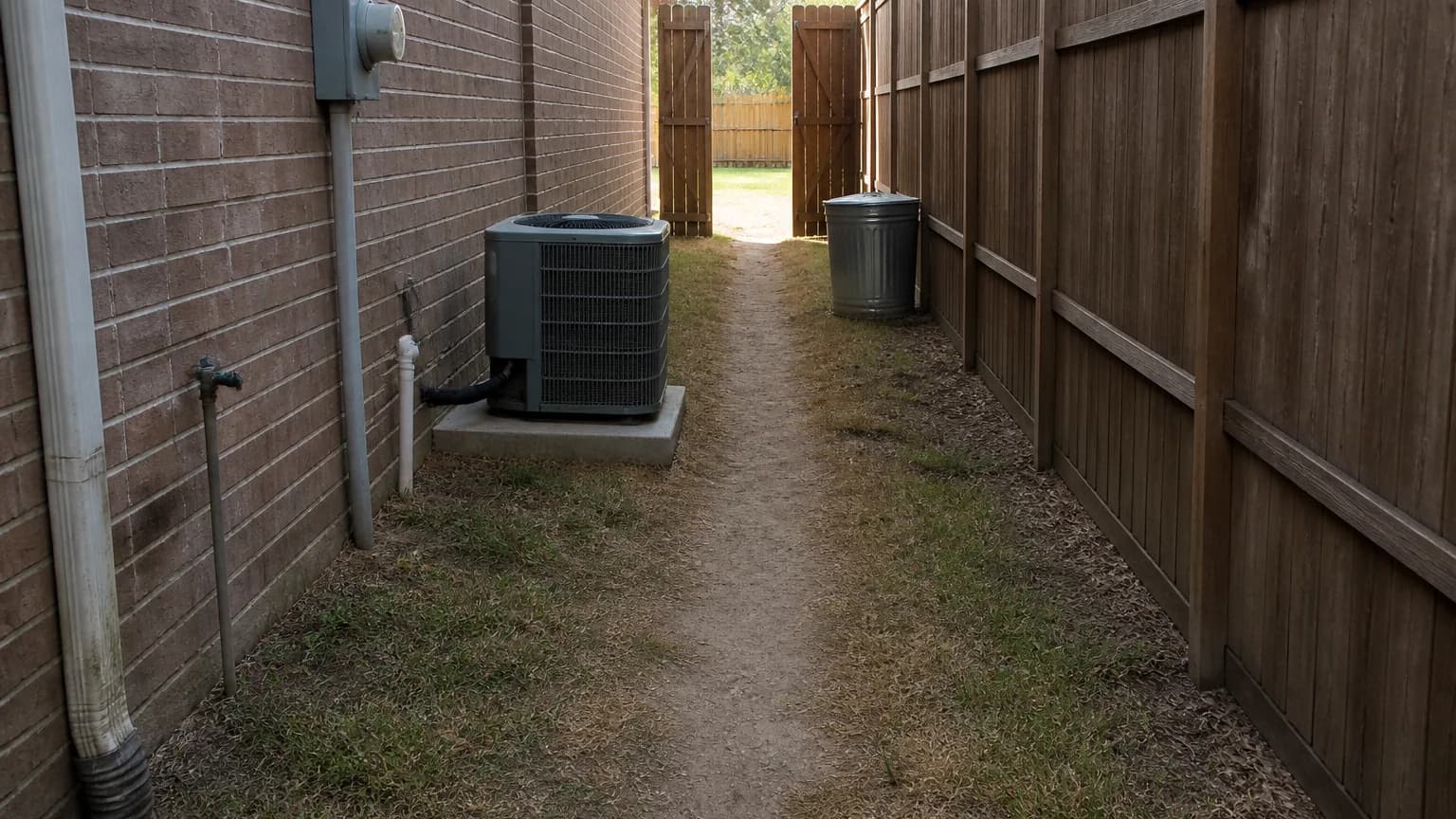
- Side-yard and service-path edges. A neat rock strip can keep mud down where grass will not fill in.
- Patio and pool surrounds. Rock gives a clean, slip-resistant edge that takes heat and foot traffic in stride.
One spot to skip: thick around thirsty plants. Rock holds the summer sun and bakes their roots. For planted beds, mulch is the better call — our mulch guide covers when and how.
Why it fits North Texas yards
Rock suits our climate better than most ground covers. A few local reasons:
- Our summers are brutal. By July, 100-degree afternoons are routine. Rock doesn't wilt, brown, or dry out the way turf and bedding plants do.
- Water gets restricted. Many DFW cities cap lawn watering to set days. Rock needs none, so a rock bed never counts against your watering days.
- It holds up in the heat. Mulch fades, rots, and needs topping off each year. Rock looks the same in year five as it did on day one.
- It works around drainage problems. Heavy clay sheds water instead of soaking it in, so storms pool and run. Rock may be the finish after a drainage repair, but grading, drains, and proper outlets do the water-moving work.
One catch: our clay. Rock laid straight on bare clay sinks into it over a few wet seasons. That's why the bed under it matters — which is the next section.
The rock is the easy part
Anybody can pour rock on the ground. For a few months it even looks great. Then weeds push up through it and the stones sink into the clay. A rock bed that stays sharp for years is built underneath. Here's what a proper install includes.
- Clear and grade. Strip the old grass, weeds, and roots. Shape the ground so water drains away from the house, not toward it.
- Lay landscape fabric. Down goes commercial-grade fabric first, the heavy contractor's kind, not the thin hardware-store roll. It blocks weeds from below and keeps the rock from sinking into the clay.
- Set the edging. Steel or heavy plastic edging rings the bed. It holds the rock in its lines instead of letting it spread into the lawn.
- Place the rock. Spread it to depth — usually 2 to 3 inches for ground cover, sometimes deeper for larger stone or slopes. Too thin and the fabric shows and weeds win.
- Rake and clean up. Level the surface, finish the edges, and clear the leftover stone.
Skip any of these and the bed ages fast. The fabric and the edging do the quiet work for years. That's the whole difference between a rock bed and a rock pile.
A note on the fabric: it earns its place under rock, even though we usually skip it under mulch. Rock doesn't feed the soil as it sits there, so the fabric's only job is to keep the bed clean and keep the stone from disappearing into the clay.
Is river rock right for your yard?
Rock isn't the answer for every yard. Here's the honest read.
It's a good fit if:
- You've got a problem strip where grass never fills in: a shady patch, a slope, a tight side yard.
- You want less mowing, less watering, and no more buying mulch every spring.
- You're after a clean, low-water look, and you'll keep plants out of the rock zone.
- You want a clean finish for a dry, low-traffic strip or a bed edge.
You may want to wait if:
- You want a soft, green, planted bed. Rock and thirsty plants don't mix — mulch is the move there.
- The spot is high-traffic for bare feet in summer. Rock holds heat.
- The real problem is drainage. Decorative rock will not fix standing water by itself. Fix the water first, then decide whether rock belongs in the finish.
For a dry, sunny problem area, rock landscaping is one of the smarter low-upkeep fixes a Colleyville homeowner can make. For a lush planted bed, it's the wrong tool.