
What's behind a wall that lasts
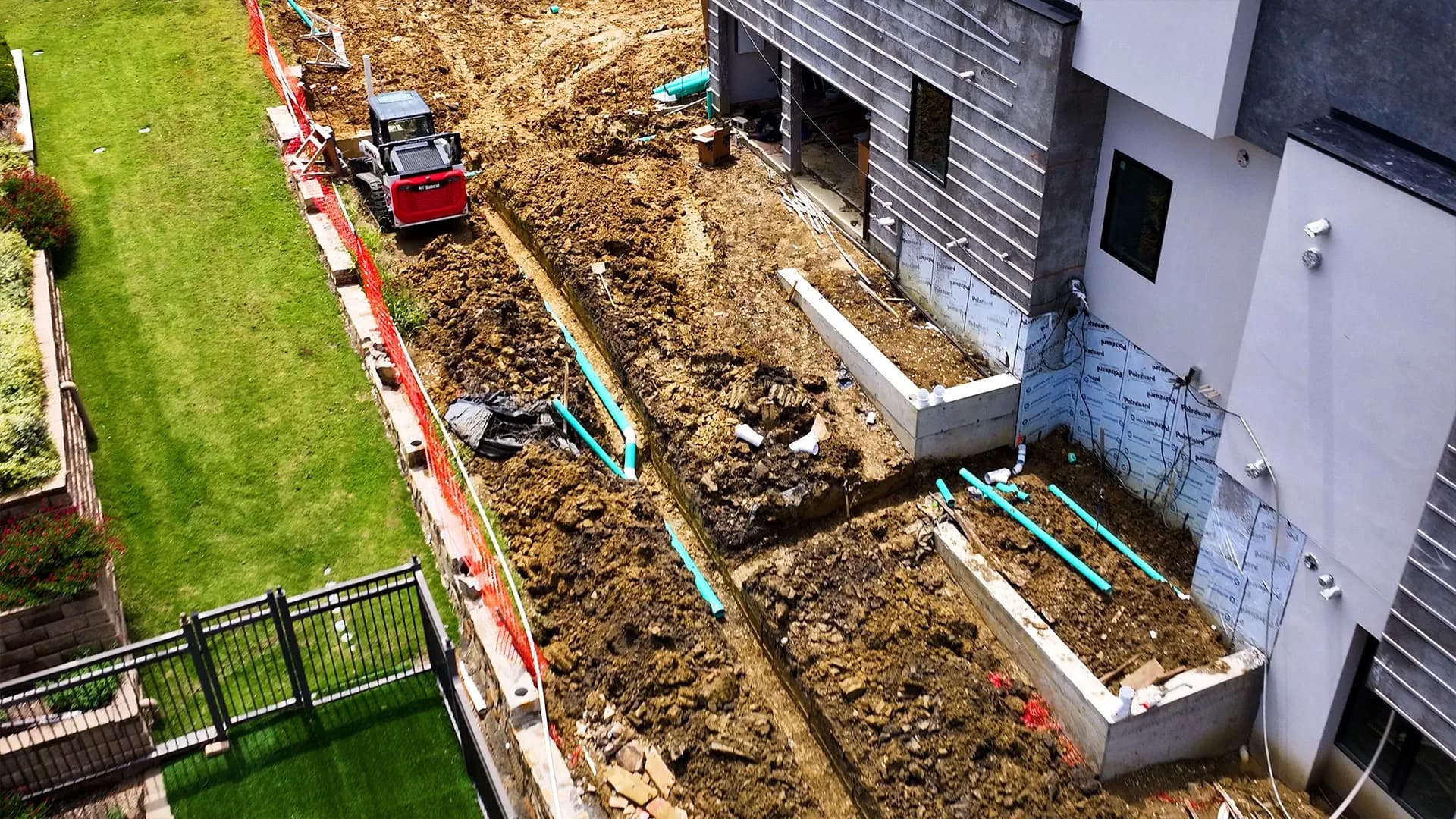
Drainage isn't one part. It's a few pieces that only work as a set:
- Gravel backfill. Behind a good wall sits a column of crushed gravel, not packed dirt. Water runs through gravel fast, so it can't pool and push.
- A drain pipe. A perforated pipe runs along the base, down in that gravel. It catches the water and carries it off to the side. This is a French drain behind the retaining wall, and it's the retaining wall drain doing most of the work.
- Weep holes. Small gaps in a solid concrete or mortared wall that let trapped water out through the face. Stacked-block walls usually drain through their open joints instead, so they lean on the gravel and pipe, not weep holes.
- Filter fabric. A cloth wrap around the gravel and pipe. It keeps soil and silt from washing in and clogging everything over time.
- An outlet. The pipe has to end somewhere lower and open, where the water can run free. A drain with nowhere to go is just a buried pipe.
Leave out any one piece, and the rest can't carry the load for long.
Why it matters more here
Our clay soil makes all of this worse. Clay barely drains. It grabs onto water and gets heavy, and it holds that water for days. So the bank behind a wall stays soaked far longer here than it would in sandy ground. That's more weight, pushing for more of the year. A wall that might scrape by without drainage somewhere else won't get away with it in North Texas. Around here, the drainage isn't a nice extra. It's the part keeping the wall standing.
Signs your wall's drainage has failed
You can usually spot trouble before a wall comes down. Walk out and look for these:
- It's leaning or bulging. The face tilts out, or it bellies in the middle. That's the pressure winning.
- Cracks running through it. Stair-step or vertical cracks mean the wall is being pushed harder than it was built to take.
- White stains or damp patches on the face. Water is moving through the wall instead of around it. The white crust it leaves behind is called efflorescence.
- Soggy ground at the base. Water is dumping out at the bottom because it has no proper exit.
- Mud or silt weeping through the joints. The gravel or fabric behind the wall has clogged or washed out.
Catch it early and you may save the wall. Wait too long, and the fix is usually a rebuild.
Building or fixing a wall?
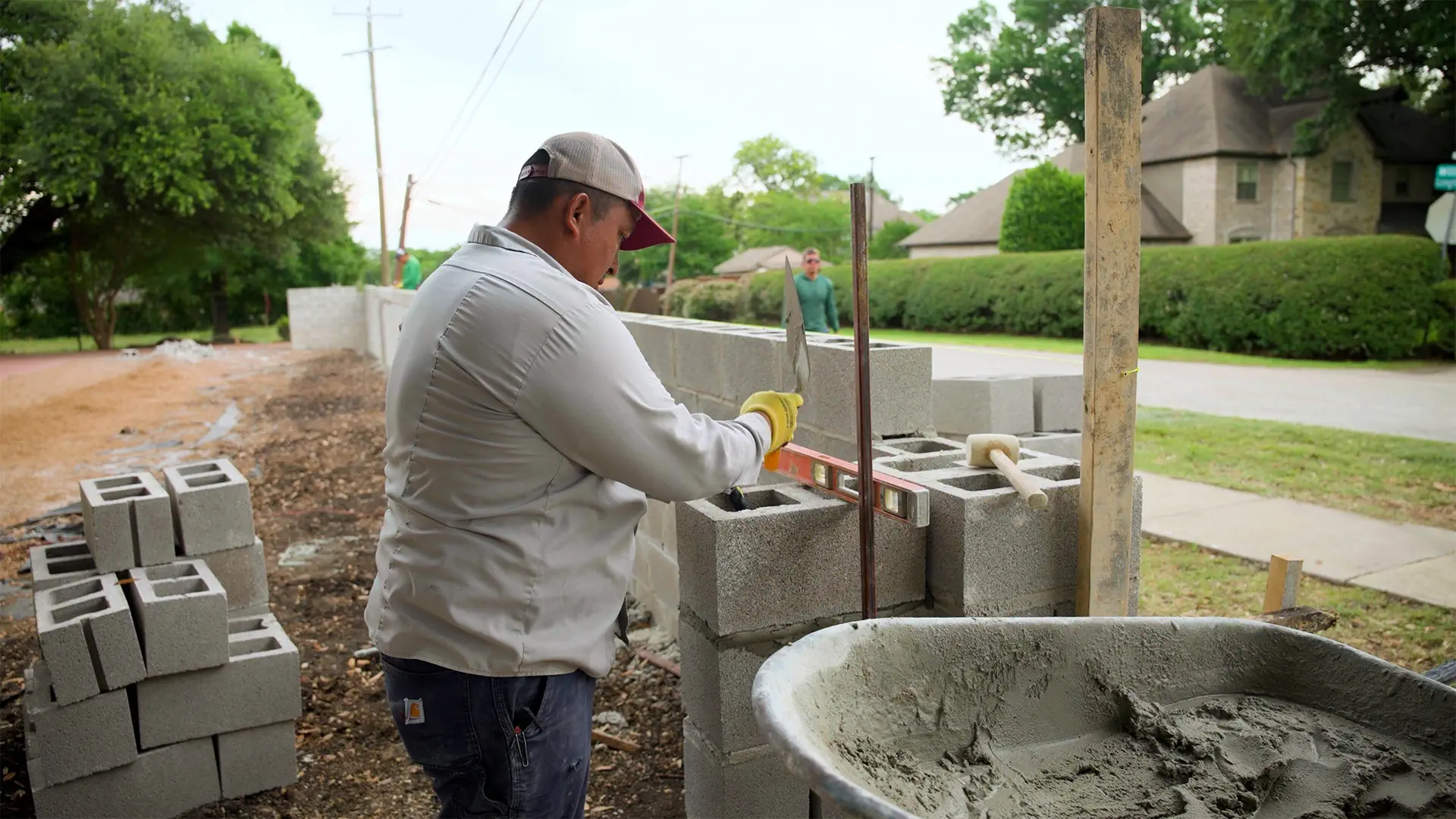
The core drainage, the gravel and the pipe, sits behind the wall. So the clean way to get it is to build it in from the start. We build retaining walls with the gravel, pipe, fabric, and outlet done right the first time. On a wall that's already up, you can sometimes buy time: drill weep holes through a solid wall, or regrade the bank above it and steer downspouts away. Those ease the load, but they don't relieve the pressure behind a wall that's already moving.
Already have a wall that's leaning or leaking? How bad it is decides the fix. A wall that's just started to lean or stain may be saveable, by easing the pressure and fixing the drainage. A wall that's badly bulged, cracked, or shifted off its base has usually moved too far, and a rebuild with proper drainage is what lasts. We'll tell you which one yours is, and we'd rather it be the cheaper one.
Is the water bigger than one wall? A soggy yard, standing water, or a slope washing out is a yard-drainage job.