
Where it pools tells you why
Look at the spot that stays wet. The location is the clue.
- Right against the house. Your gutters likely dump at the base of the wall, and the ground slopes back toward you. Water is meant to run away from the foundation, not pool on it.
- A low spot in the middle of the lawn. The yard dips there. Clay won't let the water soak in, so it collects and waits.
- A shady patch that stays soft. The soil is packed hard, and there's not enough sun to dry it out. Foot traffic and mowers press clay down over time.
- A back corner or along the fence. Water is running in from higher ground next door, then stalling at your line with nowhere to go.
- A wet strip beside the patio or driveway. Hard surfaces shed every drop onto the soil at their edge, and that soil floods.
Match your spot to the cause, and the fix gets obvious.
Why it's so common here
It's not that we get more rain. It's that our ground can't take it. North Texas sits on heavy clay. When it's dry, that clay cracks and pulls apart. When it's wet, it seals up tight and sheds the rain like a tarp. So a normal storm pools on the surface instead of soaking away. A flat lot makes it worse, because the water has no slope to follow. Water that sits against the slab is the one to act on fast. Soak that soil long enough and it can move, and a shifting foundation is a costly repair. We cover that fix on drainage services.
Three yards we see all the time
Here's how the fix plays out in three yards we see a lot:
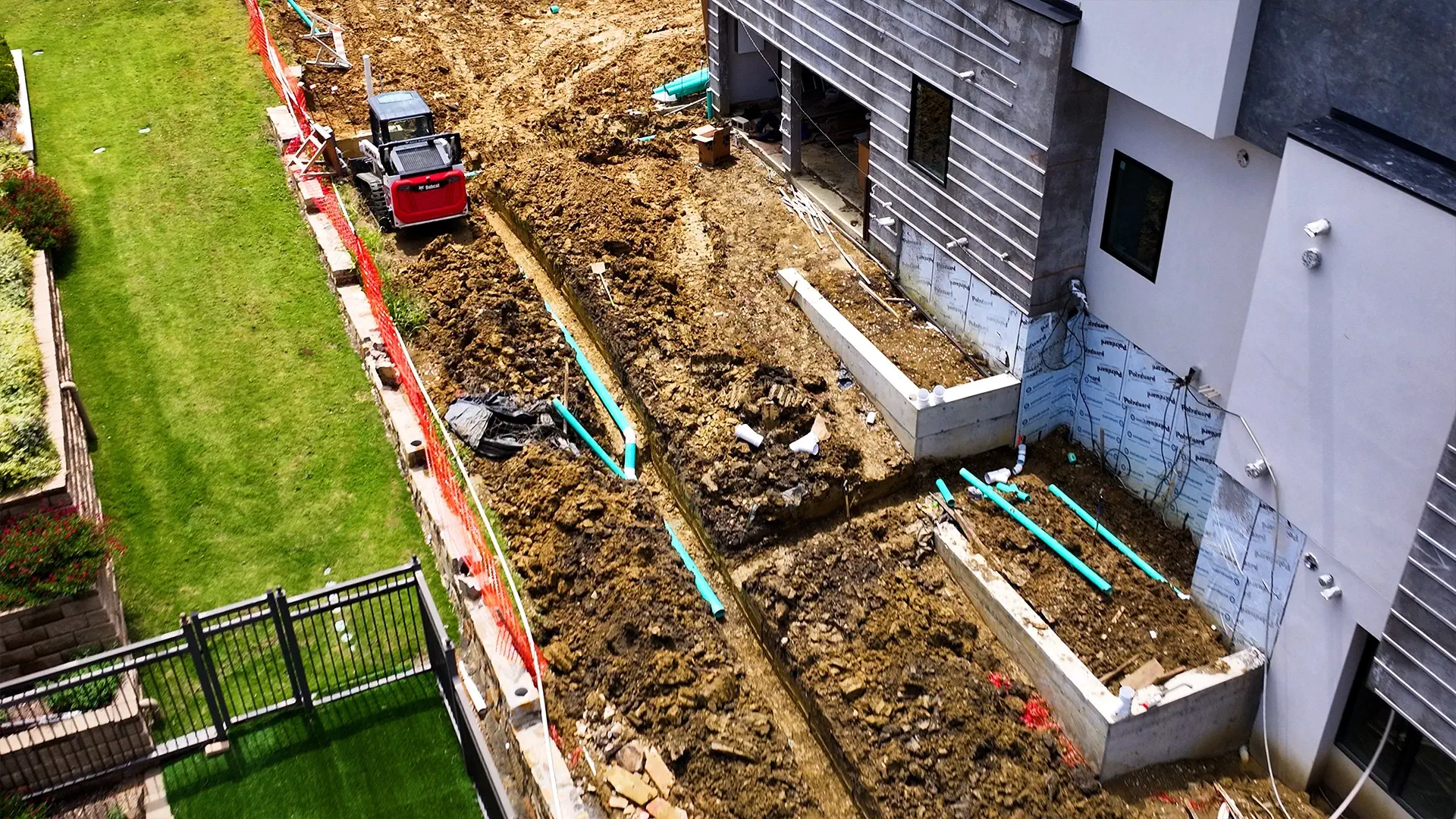
- The soggy back lawn. This is the classic soggy yard drainage case. Water collects mid-yard after every storm and takes days to clear. The fix is usually a swale or a French drain. A swale is a shallow, shaped channel that carries water off. A French drain is a gravel-filled trench with a pipe inside. Both send the water to a lower spot where it can drain. That spot is the outlet.
- The wet front foundation. Gutters drain right at the wall and the bed slopes inward. Piping the downspouts away and re-grading the bed sends the water out front instead.
- The corner that floods from next door. Runoff pours in from a higher yard. A drain along the property line catches it and routes it out, without pushing it onto anyone else.
See more of our drainage work in the gallery.
When it's time to call
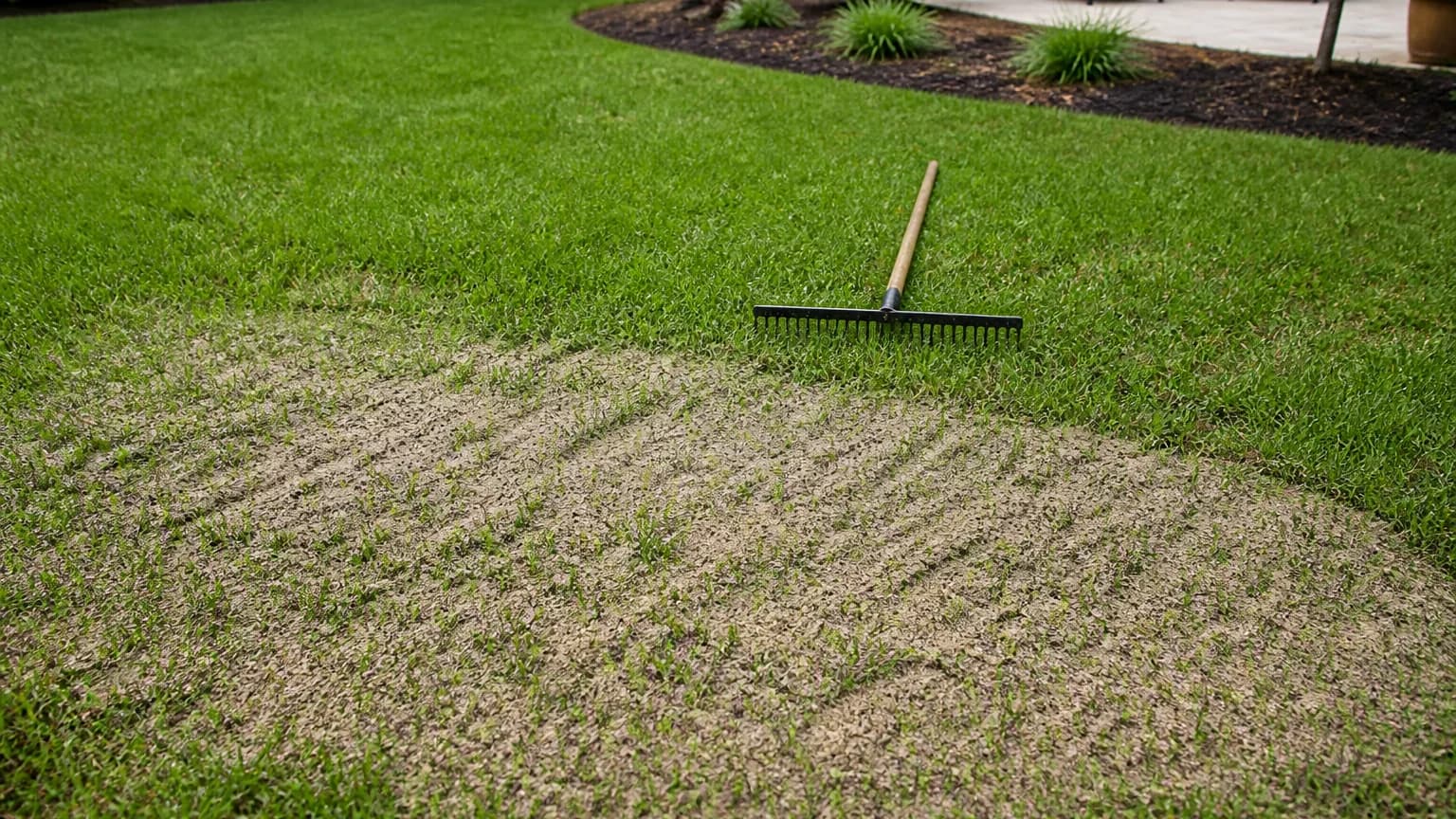
Some of this you can try yourself first. Clean out your gutters so they don't spill over the side. Snap a four-to-six-foot extension onto the downspout, so it dumps water past the bed instead of right at the wall. Got a small dip? Fill it with screened topsoil, a couple of inches at a time, then tamp it down and reseed. That's worth a shot if the low spot is small and away from the house.
But if the water keeps coming back, or it's sitting near the house, the slope of the ground needs a real fix. That's what we do. We read the slope, find where the water should go, and build the path to get it there. The right yard drainage solutions depend on where the water sits. Drains, grading, downspout lines, and outlets that actually carry the water off.