
What drives artificial turf cost
With turf, four things set the number: the grade of turf, the base, the infill, and your soil. Get a handle on those and the rest of the bill makes sense. These are the levers:
- Size. The biggest one. More square feet means more turf, more base, and more labor. It's the first number we measure.
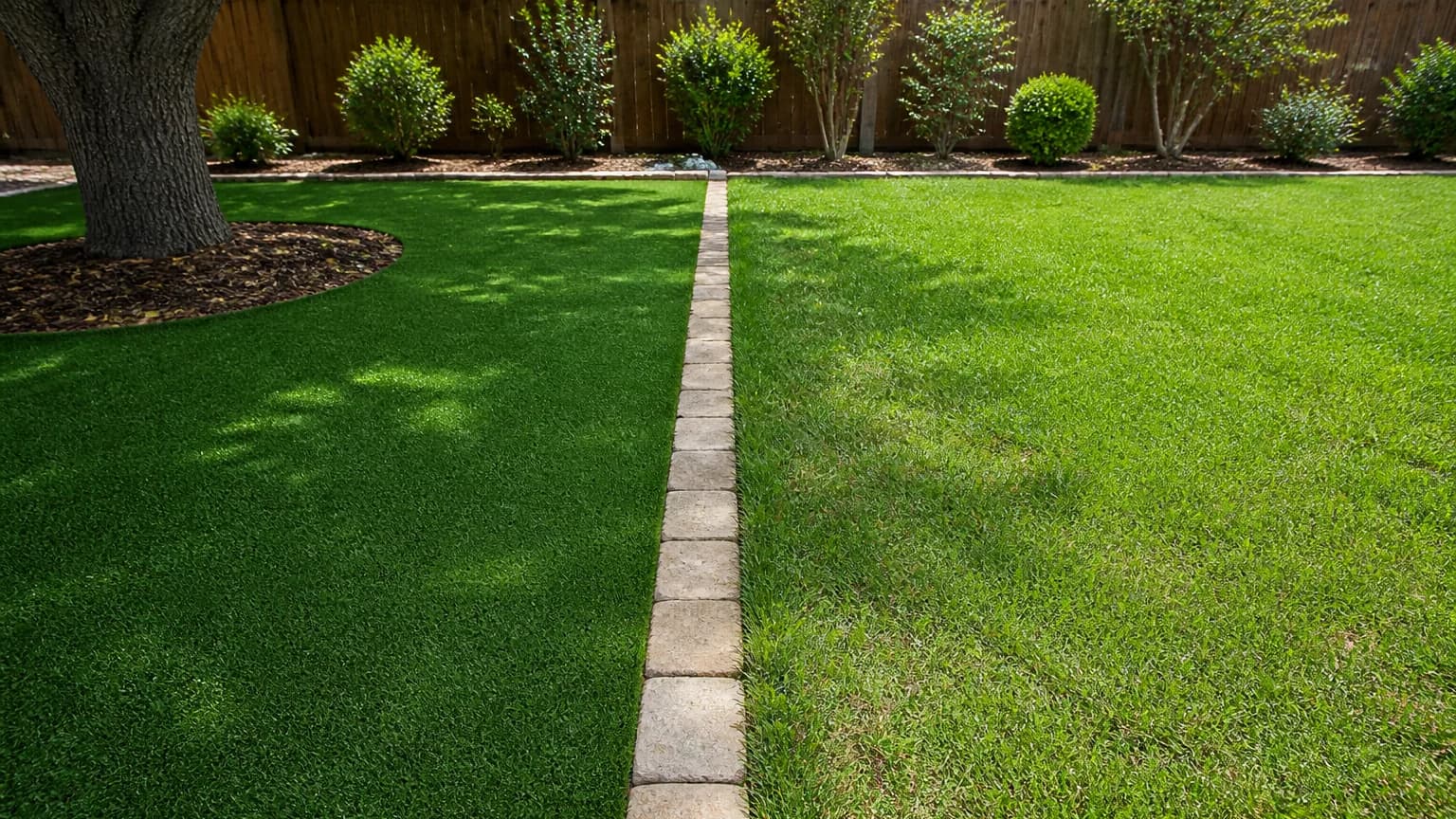
- The turf you pick. Synthetic grass cost is the part you can shop, and it's the single biggest line on the bill. The turf carpet alone runs about $2 to $5.50 a square foot, depending on the fiber and how tall and dense it is. A thin builder-grade turf and a soft, lush lawn turf are not the same product, and the price says so.
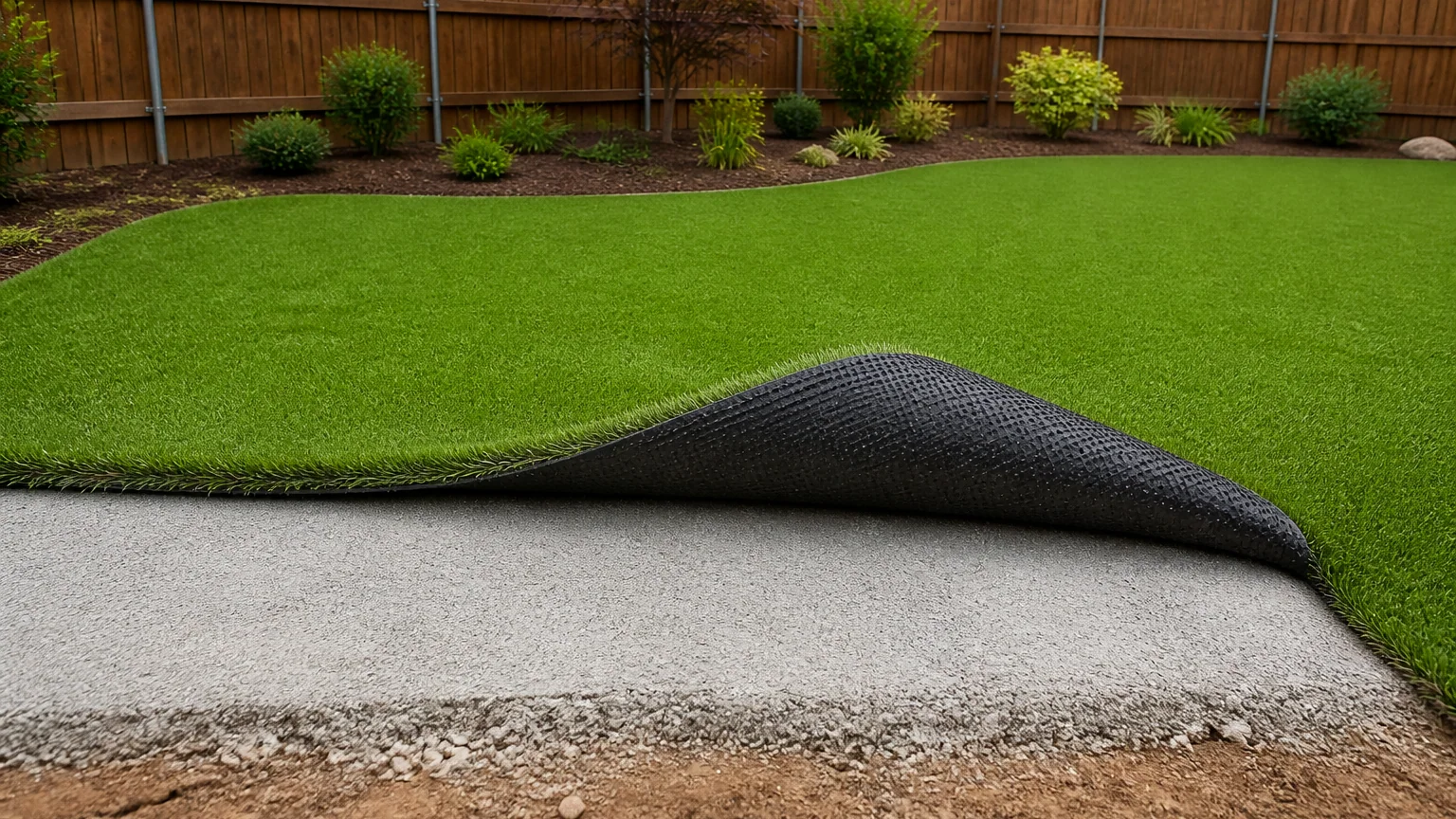
- The base. Under the turf sits a few inches of crushed rock, graded and compacted. That base is what keeps the lawn flat and draining for years. A skimped base is the cheapest way to win a bid and the fastest way to a rippled lawn.
- The infill. This is the sand or granule brushed down between the blades. It holds the fibers up and sets how hot the lawn gets. Standard crumb rubber is cheapest and runs the hottest. Silica sand is cooler. Cork and other organic blends are coolest and cost the most. In Texas heat, that's a real decision, not a detail.
- Drainage. The turf drains through its backing, but the water still has to go somewhere. On a flat clay yard, a drain line to a real outlet can add a few hundred to a couple thousand dollars. A short run to a low spot in the yard sits at the low end; a long run to a new catch basin is the high end.
- Tear-out. Pulling up live grass and hauling it off runs about $1 to $2.50 a square foot. Bermuda is stubborn, so it adds a little more prep.
- The use. A pet turf install needs tougher fiber, a faster-draining base, and odor-control infill, so pet turf cost runs above a plain front lawn. Putting greens cost more too, and a pool surround can run 15 to 25 percent above a standard lawn.
- Shape and access. A simple rectangle lays fast. Curves, tight side yards, and spots the equipment can't reach all add labor.
Why clay and heat set the price here
Two North Texas conditions push the number, and they're worth understanding before you compare quotes. The first is our clay. It swells when it's wet and shrinks when it bakes, so the ground under the turf is always moving a little. A deep, compacted base rides over that movement. On bad clay, an installer may also till in lime to steady the soil first. That runs about $0.25 to $0.75 a square foot, and it stops the lawn from rippling later. A thin base skips it, and you feel that in a couple of years. The second is the heat. Turf in full August sun gets hotter than real grass underfoot, and the infill you choose changes that by a lot. The cheap crumb rubber bakes; cooler infills cost more. So in Texas, two of the four price levers are really about surviving our weather. That's also why a quote built for a cooler state doesn't fit here.
Four things to check in a turf quote
When one bid comes in well under another, the gap is almost always hiding in the spec. Before you sign, ask every installer to put these four in writing. They're how you tell two quotes apart:
- The turf weight and warranty. Ask for the face weight (in ounces) and the warranty in years. A heavier, UV-rated turf with a real warranty costs more and lasts longer. A bargain turf can go brittle in the Texas sun in well under ten years. A good installer also stands behind the labor with their own workmanship warranty, separate from the turf maker's.
- The base depth. Ask how many inches of base, and whether it's compacted in layers. On our clay, look for at least three to four inches. This is the part you can't see once the turf is down.
- The infill. Ask what infill and how it handles heat. If bare feet in summer matter to you, say so. The answer changes the price.
- The drainage plan. Ask where the water goes in a hard rain. "It drains through the turf" is only half the answer on a flat clay yard. A full answer names where the water ends up, like a drain line to a low spot or a catch basin.
A quote that won't commit to these on paper is telling you something. Ask for all four in writing, and the bids you're weighing start to line up against each other honestly.