
Turf vs grass, point by point
Here's how synthetic turf vs natural grass stacks up on the things homeowners actually ask about. We line up artificial turf vs grass on every point that matters, from looks to cost.
Look and feel
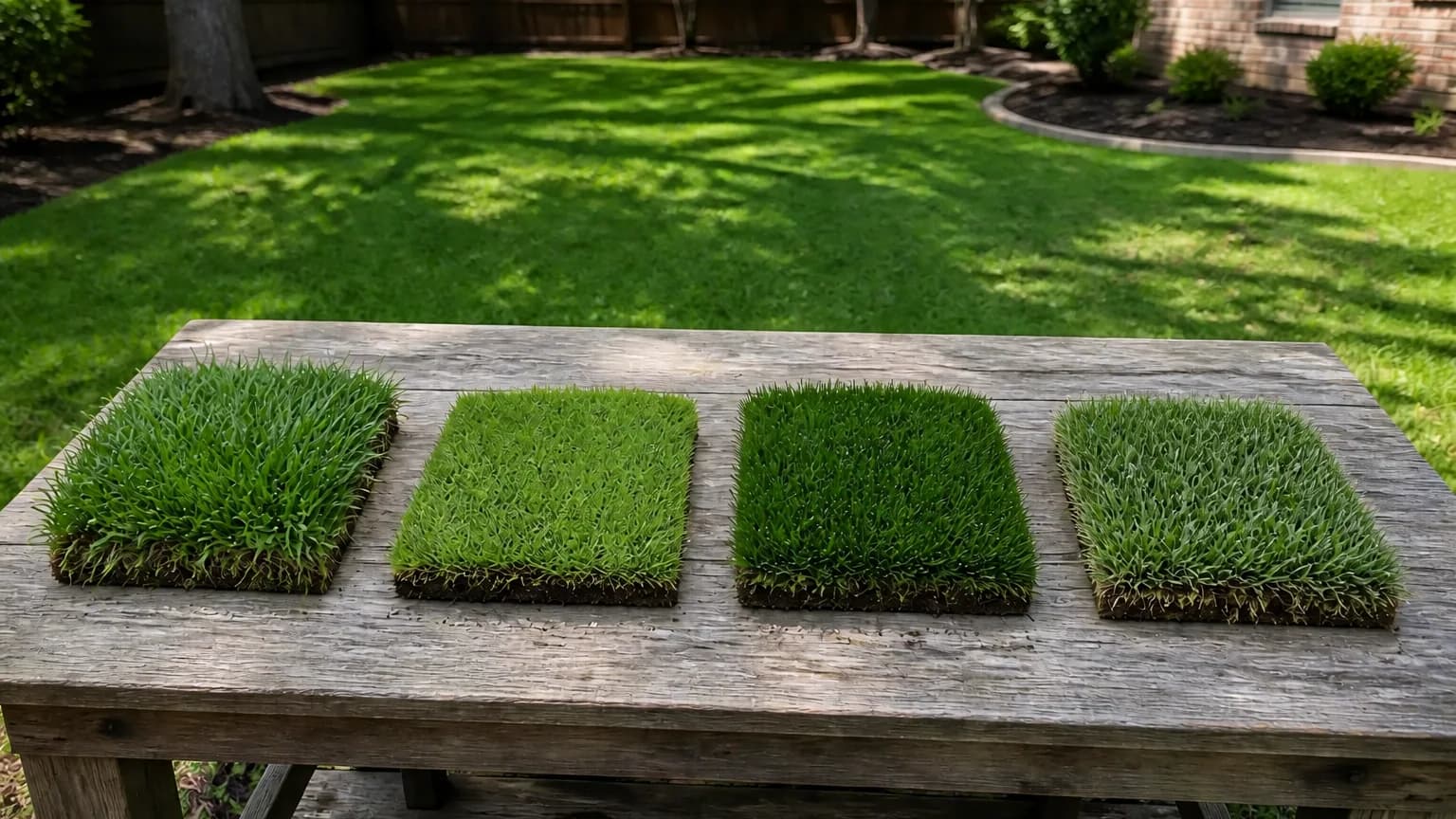
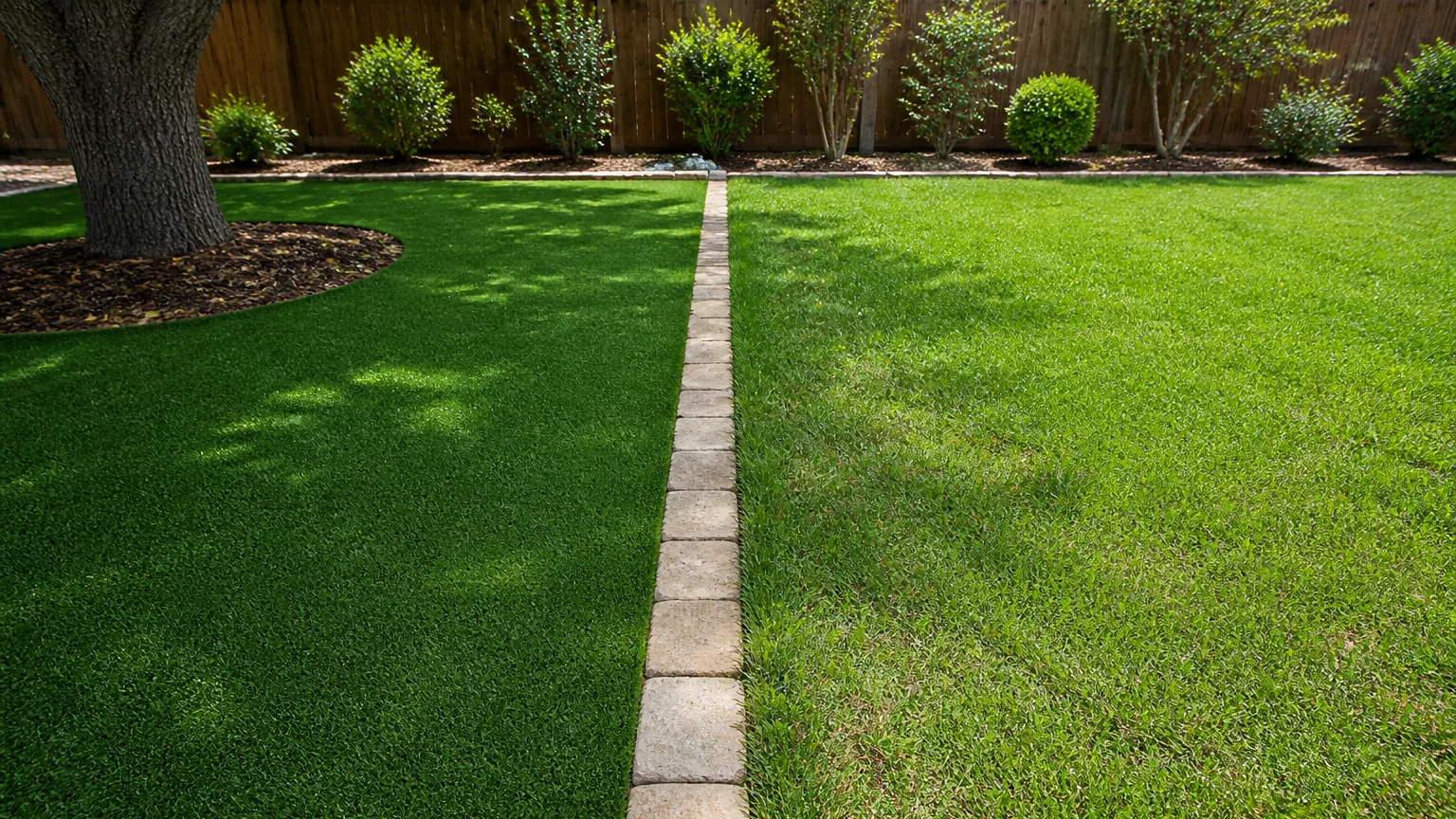
Real grass has a living look that shifts with the seasons. It's soft and cool on bare feet, and a lot of people just prefer the real thing. The catch is that a living lawn only looks its best when it's healthy. Let it slip and you get brown patches and thin spots.
Today's artificial turf looks far better than the plastic stuff from years ago. It stays an even green every day of the year. Up close, a cheap turf can read as fake, while a good one is hard to spot. It's firmer underfoot than grass, and that feel isn't for everyone.
Upkeep
This is the biggest day-to-day difference. Real grass is a standing chore. It needs mowing through the growing season, regular water in the heat, feeding, and weed control. Skip those and it shows.
Turf nearly ends that list. You brush the fibers now and then, rinse pet spots, and blow off leaves. There's no mowing, watering, or feeding. For a lot of people, that's the whole reason they switch. If the weekend yard work is wearing thin, hiring a mowing service can take the grass off your plate too. Turf takes the chore away for good.
Water use
Real grass drinks, especially a thirsty type through a Texas July. Most North Texas cities cap summer watering, often to about two days a week, so keeping a lawn green on a limited schedule takes planning. Turf needs no routine water at all. In a dry summer with tight restrictions, that gap is hard to ignore.
Pets, kids, and heavy use
This is where turf shines and grass struggles. A dog run, a busy backyard, or a worn path opens up bare tracks in real grass that never fully heal. Turf takes that traffic without thinning. Built right for dogs, it drains fast, so the mud and the dead strip along the fence go away. It does need a rinse now and then to stay fresh. But it won't turn into a muddy track. Real grass is the softer landing for a play area, though, and it doesn't heat up the way turf can.
Heat in the sun
Be straight about this one. Turf in full August sun gets hotter underfoot than real grass. A living lawn cools itself; a synthetic one can't. Lighter colors and cooler infills help, shade helps, and a quick rinse drops the temperature fast. Still, if a patch of yard is barefoot territory in the heat of summer, that's a real point for grass.
What they cost over ten years
Up front, real grass wins. Laying sod costs less than installing turf. The numbers swap places after that. Grass keeps costing money every year. Turf mostly stops. Here's how to run the math for an area you'd convert:
- Price the turf. Installed artificial turf runs about $8 to $15 a square foot in Texas. A 1,000-square-foot front lawn lands near $8,000 to $15,000, one time. The artificial turf cost guide breaks down what moves that number.
- Price a year of keeping that lawn. Add up water, feeding, weed control, and mowing. Mowing it yourself runs a few hundred dollars a year. Paying a service to mow and feed runs closer to $1,500 to $3,000.
- Multiply by the years you'll stay. At $2,000 a year paid out, ten years comes to $20,000. That's past the turf cost. At a few hundred a year doing it yourself, ten years stays well under it.
So turf pays back fastest on the areas you spend the most to keep alive. A shady spot you reseed every year, or a lawn you pay a service to mow, crosses over sooner. A patch that thrives on a little of your own time may never cross at all. A note on these numbers: they're general market ranges, not a quote from us.
How long each one lasts
A healthy natural lawn can last as long as you keep caring for it. It repairs itself and fills back in season after season. Turf has a shelf life. A quality, UV-rated product holds up about 15 to 20 years in the Texas sun before it fades and needs replacing. A bargain turf can go brittle in well under ten years, which is part of why the cheapest option isn't really the cheapest.
The environment
Both have trade-offs here. Turf saves a lot of water. It also skips the fertilizer and weed killer a lawn needs, which is easier on the soil and storm drains. The downsides: it runs hot in summer, and it gets thrown out at the end of its life. It also doesn't feed pollinators or soak up rain the way living grass does. Real grass cools the air and soaks up rain. But it leans on water and chemicals to stay that way. Neither is clearly greener. They're just green in different ways.
Turf vs grass at a glance
| What matters | Artificial turf | Natural grass |
|---|---|---|
| Look | Even green year-round; firmer feel | Living look; soft and cool |
| Upkeep | Very low: brush and rinse | Ongoing: mow, water, feed, weed |
| Water | None needed | Regular, especially in summer |
| Pets & heavy traffic | Excellent; no bare tracks | Wears down; slow to heal |
| Heat underfoot | Hotter in full sun | Stays cooler |
| Upfront cost | Higher to install | Lower to lay sod |
| Cost after install | Very low | Steady, every year |
| Lifespan | ~15–20 years, then replace | Lasts as long as you care for it |
| Shade tolerance | Doesn't need sun | Needs the right grass and enough sun |
Where each one belongs
Put the two side by side and the choice usually sorts itself by location:
- Lean turf for deep shade under big trees, dog runs, narrow side yards, steep or hard-to-mow strips, and any patch you've reseeded more than once.
- Lean grass for open, sunny areas, play spaces where a soft cool surface matters, and yards where the lawn already does well without a fight.
A lot of homes land on both. Turf the problem corners, keep real grass where it's happy. You stop fighting the spots that never worked and keep the living lawn where it earns its place.
What North Texas does to this choice
When you weigh turf vs grass in Texas, a few local facts push the decision. They're worth thinking through before you commit.
Our heat is the first. A Texas summer is hard on a living lawn, and it's the main reason people look at turf. But that same sun is what heats turf up underfoot, so the heat cuts both ways.
Then there's the clay. North Texas sits on Blackland clay. It swells when it's wet and shrinks when it bakes. Real grass has to root through that. Turf has to sit on a base built to ride over it. Skip that base and the lawn ripples within a couple of years. Either way, the ground underneath matters as much as what's on top.
Watering rules matter too. Most cities here limit summer watering to set days. A thirsty lawn is harder to keep happy on that schedule, which nudges some homeowners toward turf or toward a tougher, lower-water grass.
One more local note: check your HOA before you switch. Some North Texas neighborhoods limit artificial turf, especially in front yards. It's a quick read of the rules now versus a letter later.
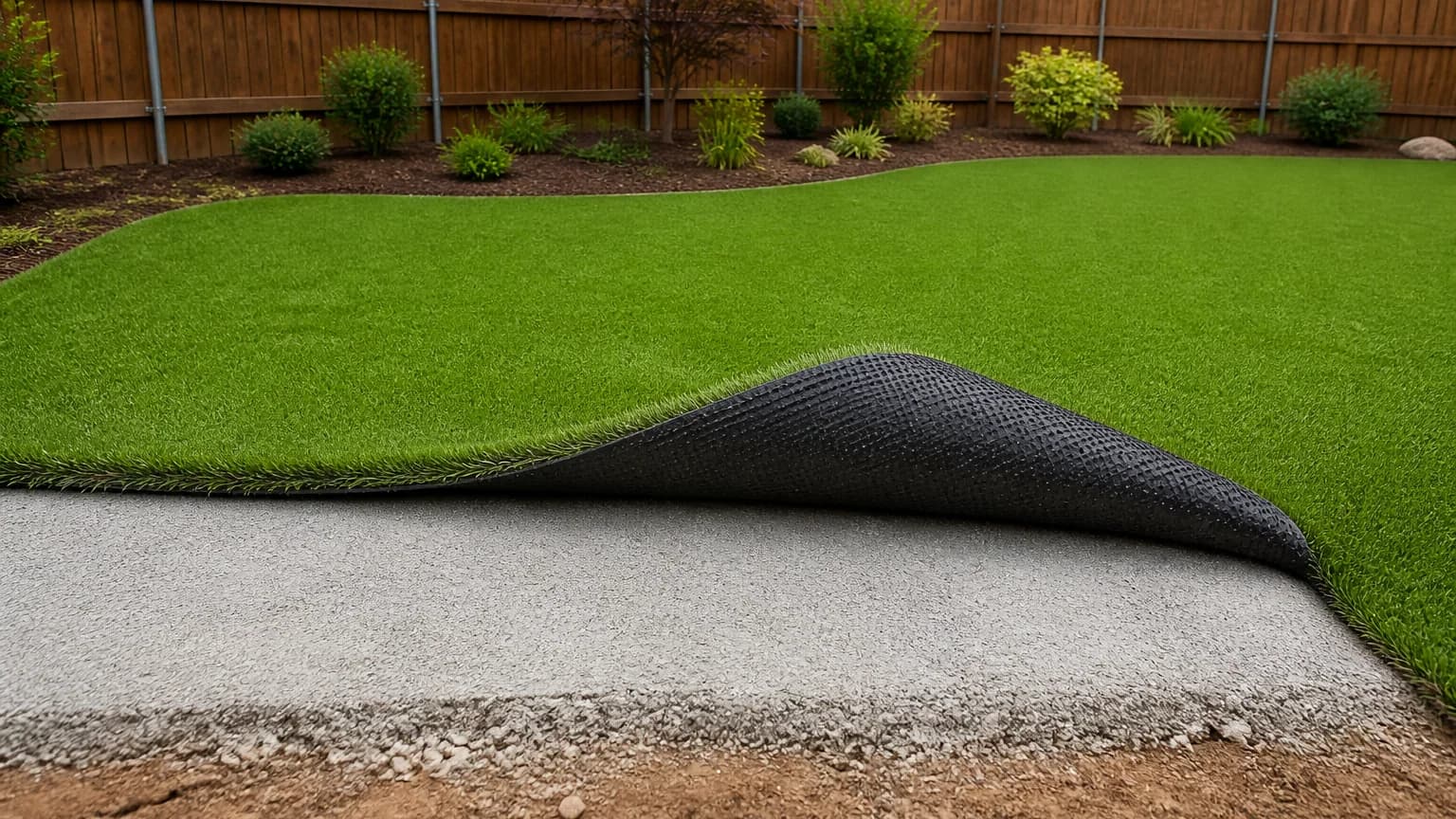
And if a spot stays soggy or shady because water collects there, that may be a drainage problem, not a grass-or-turf problem. Turf laid over standing water still has wet, mucky ground beneath it. Fixing the water first can save the grass you already have — see our drainage services.
When it pays to have someone look
You can make most of this call yourself with the points above. Where a pro earns their keep is the part that's expensive to redo.
- Reading the yard right. A yard that's sunny out front and shaded in back doesn't have one answer. Someone can tell you where grass will thrive and where turf is the smarter bet, instead of forcing one across the whole property.
- Installing turf so it lasts. The look depends on what you don't see: the grading, the compacted base, and the drainage underneath. Done thin, it ripples and holds water. A typical install wraps in a few days. That's the artificial turf installation work, base and drainage included.
- Bringing real grass back. If a sunny lawn is just struggling, it often doesn't need replacing at all. The right water, mowing height, feeding, and weed control can turn it around. Mowing and feeding are a lawn-care company's work, not ours. Getting the watering right is a job on its own, and it's usually the biggest lever of the four.
Not sure which spots want which? That's exactly the kind of thing worth a free walk-through — see the next section.