
Skip to content
Streamline Landscape

What Does an Outdoor Kitchen Cost in North Texas?

An outdoor kitchen sounds like it's priced by the size, so a bigger counter must cost a lot more. It doesn't work that way. The price is set by two things instead: what you cook on, and what you have to run out to it. The grill and the appliances are one big swing. The gas, water, and power lines are the other, and they're the cost most people forget. Here's what an outdoor kitchen really costs in the DFW area, what sets the number, and the cheapest way to bring it down.

By Streamline LandscapePublished Jul 2026

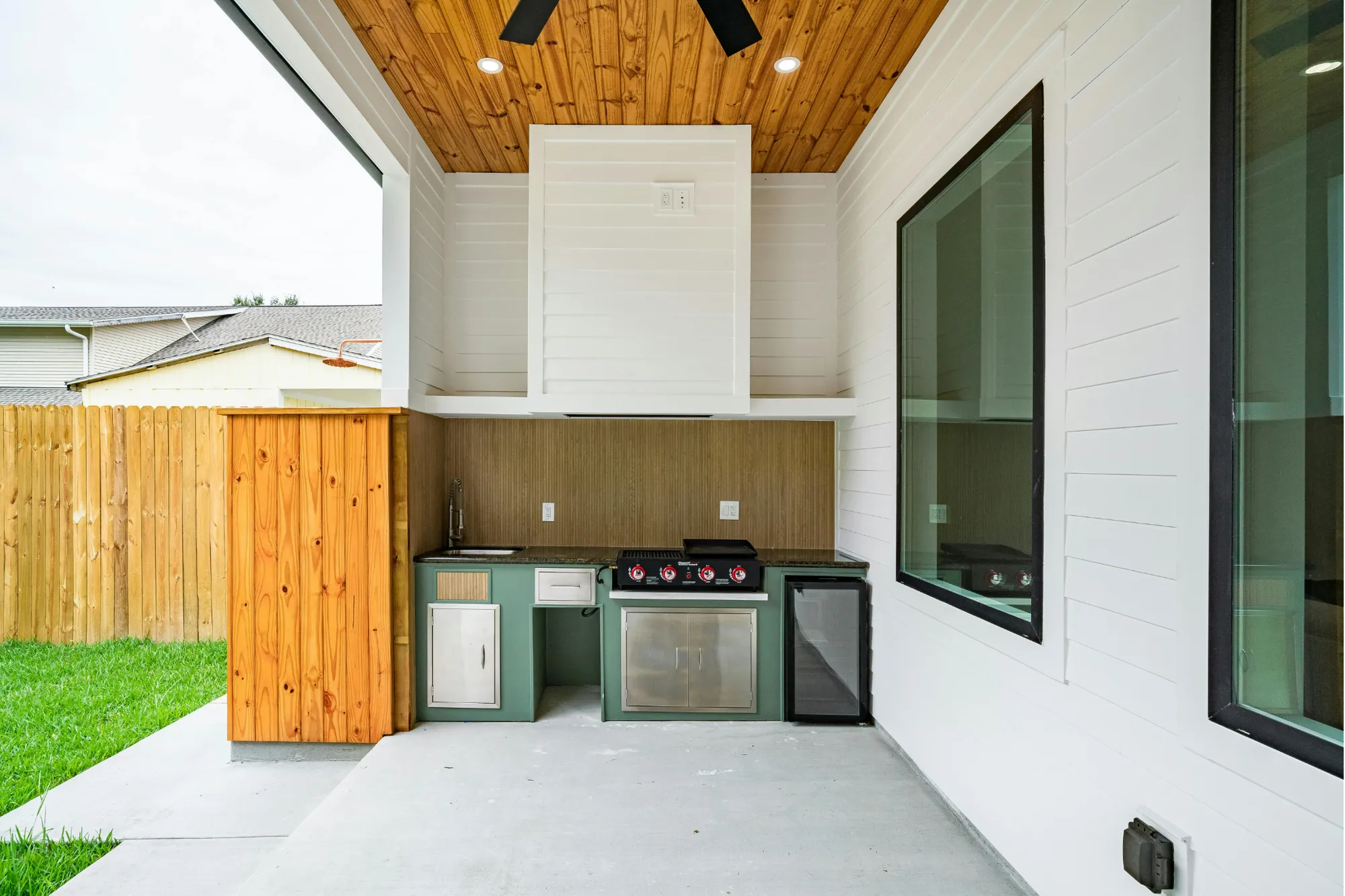
A built-in outdoor kitchen under a covered patio with a grill, sink, beverage fridge, and stone countertop

What drives outdoor kitchen cost

A handful of choices set the number, and size isn't the main one. Here's what moves it:

  • The appliances. The biggest swing. One built-in grill is one thing. A grill plus a side burner, a fridge, a pizza oven, a smoker, and an ice maker is another. Built in grill cost alone runs about $1,000 to $5,000, and premium brands cost more. Each add-on stacks on top.
  • The utility runs. Gas, water, and power have to reach the kitchen, and this is the cost people forget. Build near the house and you can often tap existing lines for about $500 to $2,000. Put the kitchen out in the yard and the utility work alone can run $2,000 to $5,000 or more. Distance is the lever you control.
  • Whether you want a sink. A grill needs gas and power. A sink adds plumbing, about $1,000 to $5,000, plus freeze protection here. Skipping the sink is a real way to save.
  • The counters. Outdoor countertops run about $40 to $200 a square foot, depending on the stone. Granite and concrete take the heat and weather well.
  • The structure. The island goes up in block, brick, or stone, or a steel frame with a stone face. Storage doors and drawers add about $900 to $4,000.
  • The size. More counter and more cabinets cost more, but size moves the price less than the appliance list. A longer counter is cheap next to another appliance.
  • The site. A kitchen on an existing patio that can carry the weight is the easy case. A new footing, a slope, or a long run from the house all add labor.
  • Labor. An outdoor kitchen contractor cost, meaning the labor, usually runs 30 to 50 percent of the build.

Why building here sets part of the price

A kitchen here works hard, and that's built into the better quotes. You can cook outside most of the year, so it has to take real heat, real sun, and the odd hard freeze. Weather-rated appliances and sealed counters cost a little more and last longer. The water line needs freeze protection for the cold snaps, because a cracked line in January is the expensive kind of cheap. The structure is heavy, and our clay soil shifts, so it sits on a solid footing, not bare dirt. That footing is part of the price. The trades are regulated too. In Texas, gas, plumbing, and electrical work has to be done by state-licensed pros, and every DFW city requires permits for it. Permit fees run about $150 to $800. The real cost there is time, since inspections can add weeks to the build. Many neighborhoods want HOA approval on top of that. One break goes your way: Texas labor runs lower than the coasts, so a build that's $20,000 here can cost $30,000 or more in California.

The cheapest ways to lower the bill

Because the appliances and the utility runs drive the price, that's where the savings live. A few moves most people miss:

  • Build it near the house. This is the cheapest lever you control. The closer the kitchen sits to your gas, water, and power, the shorter the runs and the smaller that bill. Moving it across the yard for the view can add thousands in trenching alone.
  • Rough in for later, now. If you might add a side burner or a sink down the road, have the extra gas line and circuit run during the build. It's cheap to add while the ground is open, and expensive to retrofit once it's closed.
  • Buy the appliances you'll actually use. A pizza oven and an ice maker are great if you'll use them. If you mostly grill and chill a few drinks, a grill and a fridge may be all you need. Put the appliance budget where you really cook.
  • A grill-only island is a real option. Not every kitchen needs plumbing. A built-in grill with counters and storage skips the sink and the water line, and it still covers most of what people use a kitchen for.

A modular or prefab island is the other way to trim it. A pre-built kit runs less than a full custom build, and it goes in faster. The trade-off is fit and finish: custom matches your house and your patio exactly, and a kit gets you cooking for less.
Ready for a real number on your kitchen?

We design and build outdoor kitchens across the DFW area

Frequently asked questions

Get your free quote
  • In the DFW area, a built-in grill station runs about $8,000 to $15,000. A typical mid-range kitchen with a fridge or side burner and more counter runs $15,000 to $35,000. A large, high-end build with premium appliances, a sink, and a cover runs $35,000 and up. These are general market ranges, not a quote, so your number depends on your appliances and your yard.

  • A built-in grill is usually the biggest single appliance, about $1,000 to $5,000 on its own. Premium brands and larger grills cost more. The grill is the heart of the kitchen, so most people start the budget there and build the rest around it.

  • It depends on distance. If the kitchen sits near the house, you can often tap existing lines for about $500 to $2,000. A kitchen out in the yard can run $2,000 to $5,000 or more in utility work alone. This is why building close to the house is the cheapest way to save real money.

  • Outdoor kitchen installation cost covers the island and the labor. The structure runs about $200 to $700 a linear foot on its own. Counters add about $40 to $200 a square foot, storage runs $900 to $4,000, and labor is usually 30 to 50 percent of the build. Permits add about $150 to $800.

  • Keep it close to the house so the utility runs are short. Go grill-only and skip the sink, which drops the plumbing. A modular or prefab island costs less than full custom and goes in faster. Then buy only the appliances you'll really use, and rough in for the rest later.

  • Usually, yes. A prefab or modular island runs less than a full custom build and installs faster, often in the $7,000 to $16,000 range with appliances. A custom build costs more, commonly $10,000 to $35,000 or up, but it matches your house and patio exactly and fits any layout. The right pick depends on your budget and how exact you want the fit.

  • It can be, depending on how you build. On a custom build, $10,000 usually covers the island and the counters, so you'd still budget for the grill and the appliances on top. A prefab or modular island in that range can get you a grill, counters, and storage ready to cook. Keep it close to the house and grill-only, and $10,000 goes further.

  • A simple grill station can go in within a week or two. A larger custom kitchen with utilities, a sink, and a cover usually runs several weeks. The permit and inspection schedule adds time on top of the build itself. Ask for a timeline in writing along with the price.

  • It can add to a home's appeal, but treat resale as a bonus. Build it because you'll use it, since home projects rarely return every dollar at sale. The kitchen that pays off is the one your family actually cooks and gathers in.

  • Yes, in most cases. Every DFW city requires permits for the gas, electrical, and plumbing work, and in Texas that work must be done by state-licensed trades. Permit fees run about $150 to $800. Many neighborhoods also want HOA approval on the design, so check both before you budget.

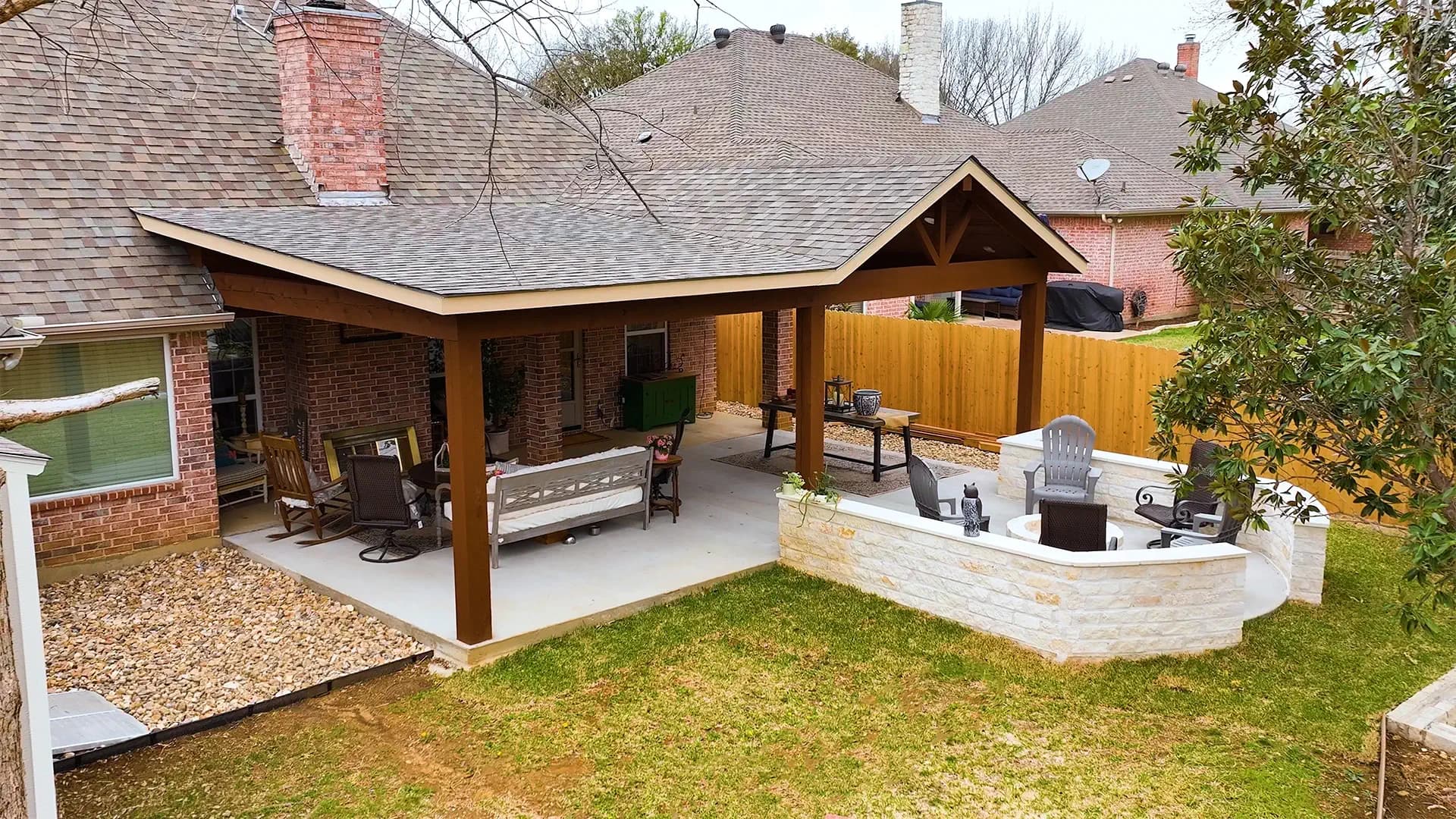
A finished covered backyard patio with a stone fire-pit seating area on a North Texas Streamline Landscape project

Want a price built for your yard?

Tell us what you're picturing, whether it's a built-in grill on the patio or the whole spread with a bar and a sink. We'll stand on the patio with you, map the gas and power, and turn the ranges on this page into one real number. The visit and the quote are free, and there's no pressure to book.