
What drives the price
Here's the part most people get backwards. The pavers themselves are only about a fifth of the bill. The other 80 percent is everything under and around them. That's why a quote can swing so far. These are the levers:
- Size. The biggest one. More square feet means more of every material and more labor. It's the first number we measure.
- The pavers you pick. Patio paver cost is the part you see, and it's the smaller part of the bill. As a rough material guide, concrete pavers run about $3 to $8 a square foot, porcelain about $8 to $15, and natural stone like flagstone or travertine about $10 to $30. Our stone work page goes deeper on the materials.
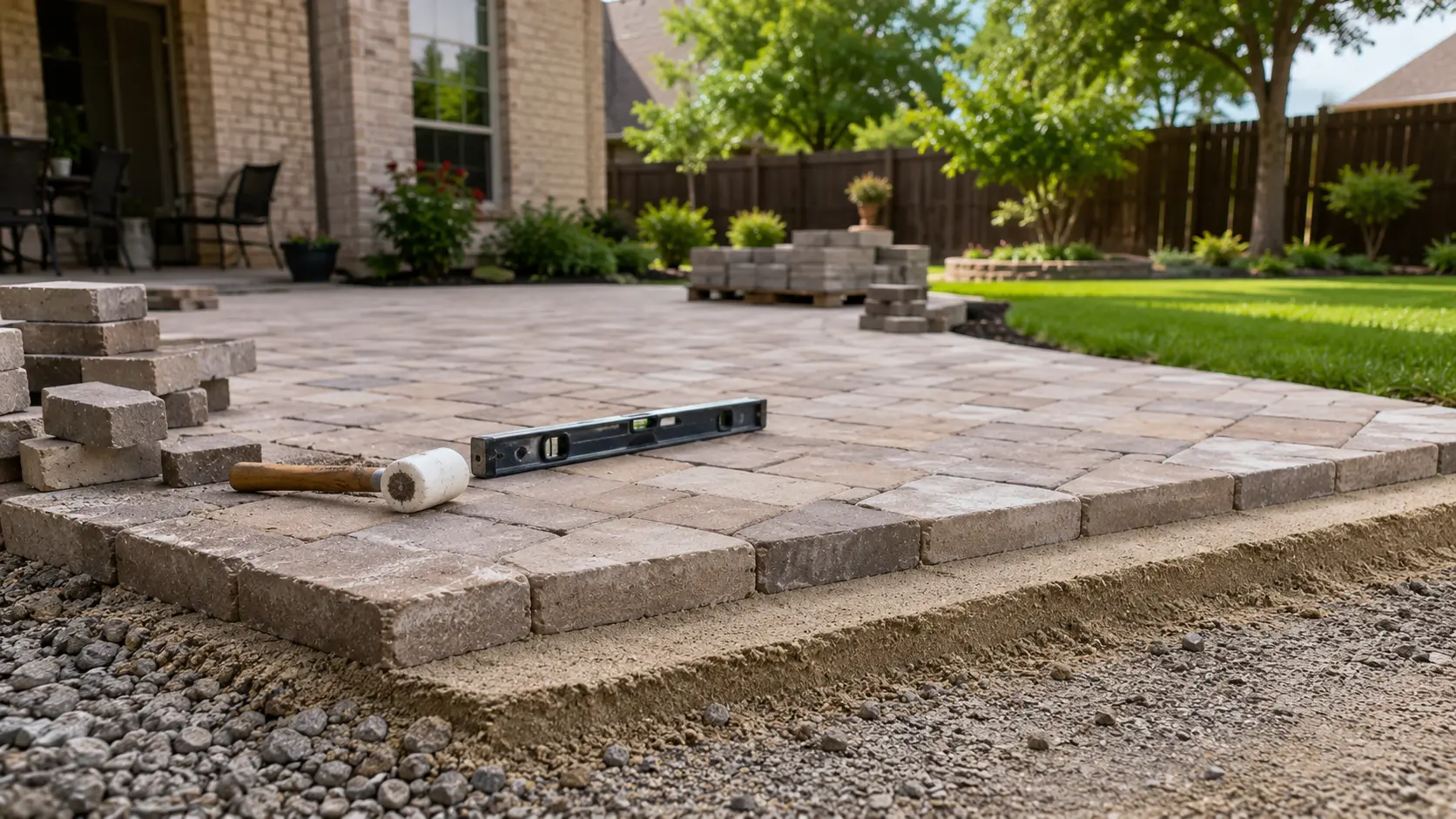
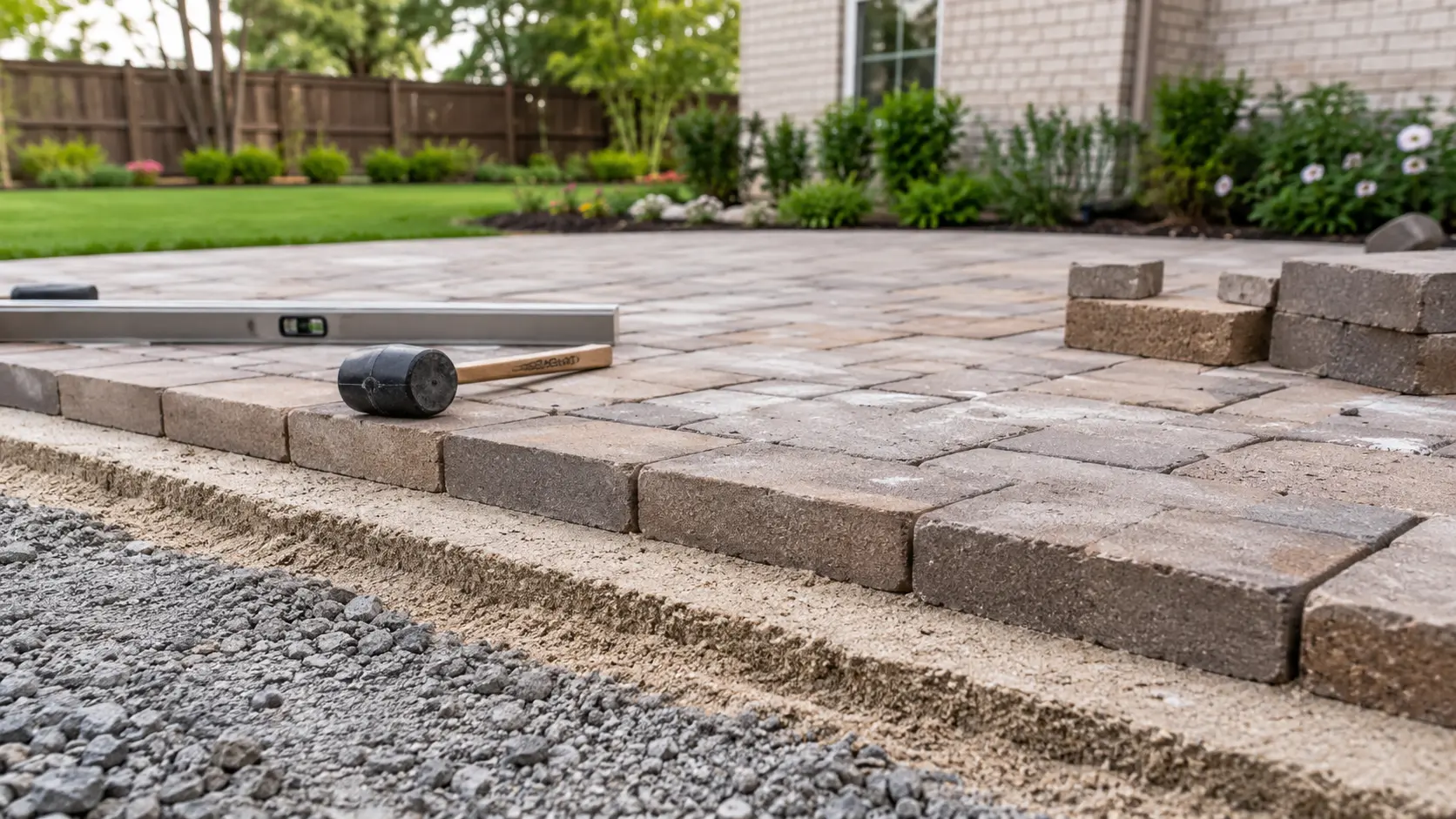
- The base. This is the hidden majority of the job. A good patio sits on several inches of excavated gravel, compacted in layers (called lifts), with fabric and bedding sand on top. That depth is what carries the patio over our moving clay.
- Drainage and grading. The patio has to shed water away from your house. If the yard fights that, it adds prep. A patio that traps water against the foundation is a problem, not a savings.
- Edge restraints. A hidden edge locks the pavers in. Without it, they creep outward and gaps open up. It's small money that protects all the rest.
- The pattern. A simple running bond is quick. Herringbone, basketweave, curves, and a contrasting border all mean more cutting and more labor.
- Steps and levels. A flat patio is one price. Add a step, a raised section, or tiers, and the build can climb another 15 to 25 percent.
- Tear-out. Got a cracked slab there now? Demolition and haul-off get added before the new patio starts.
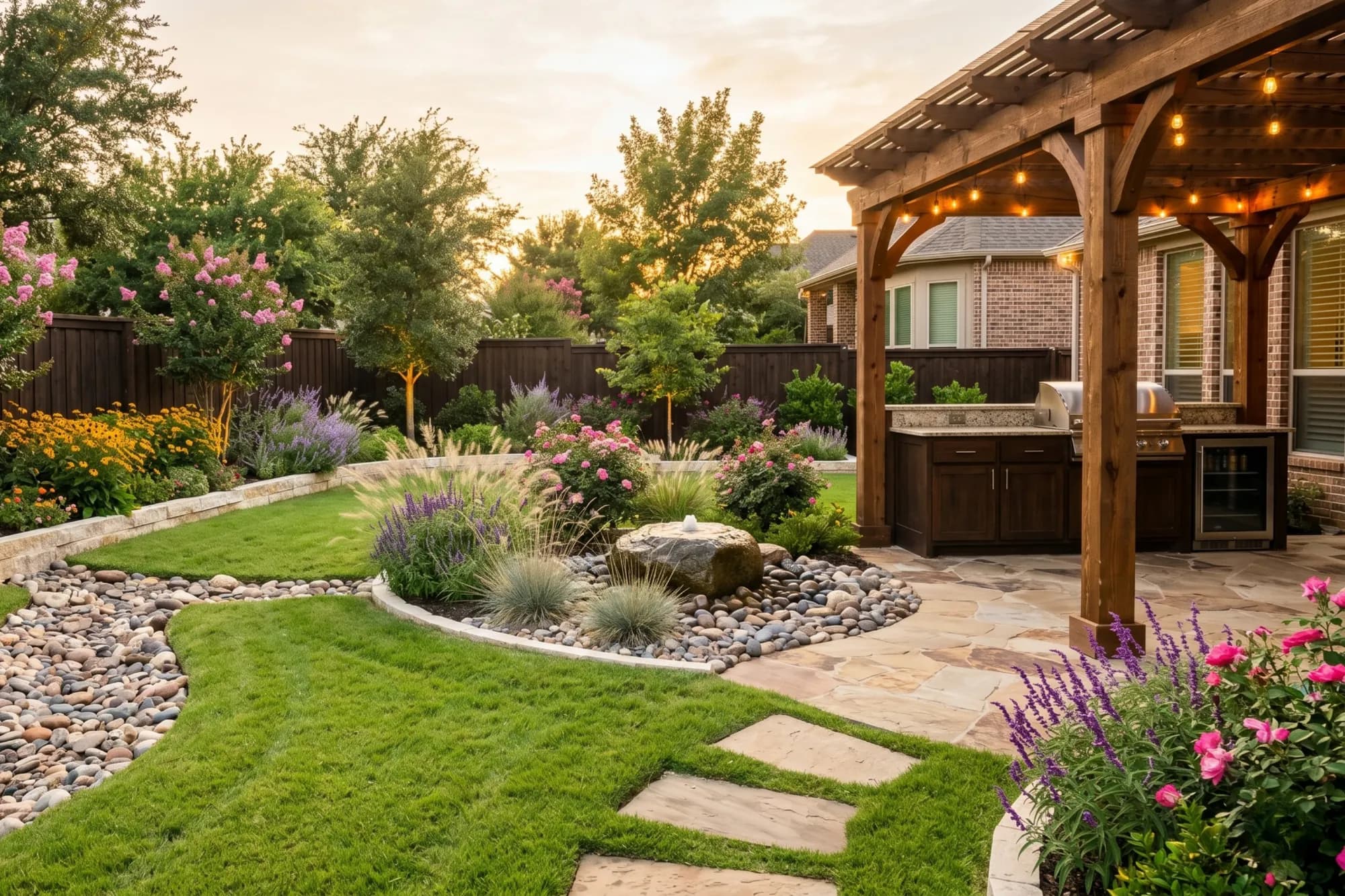
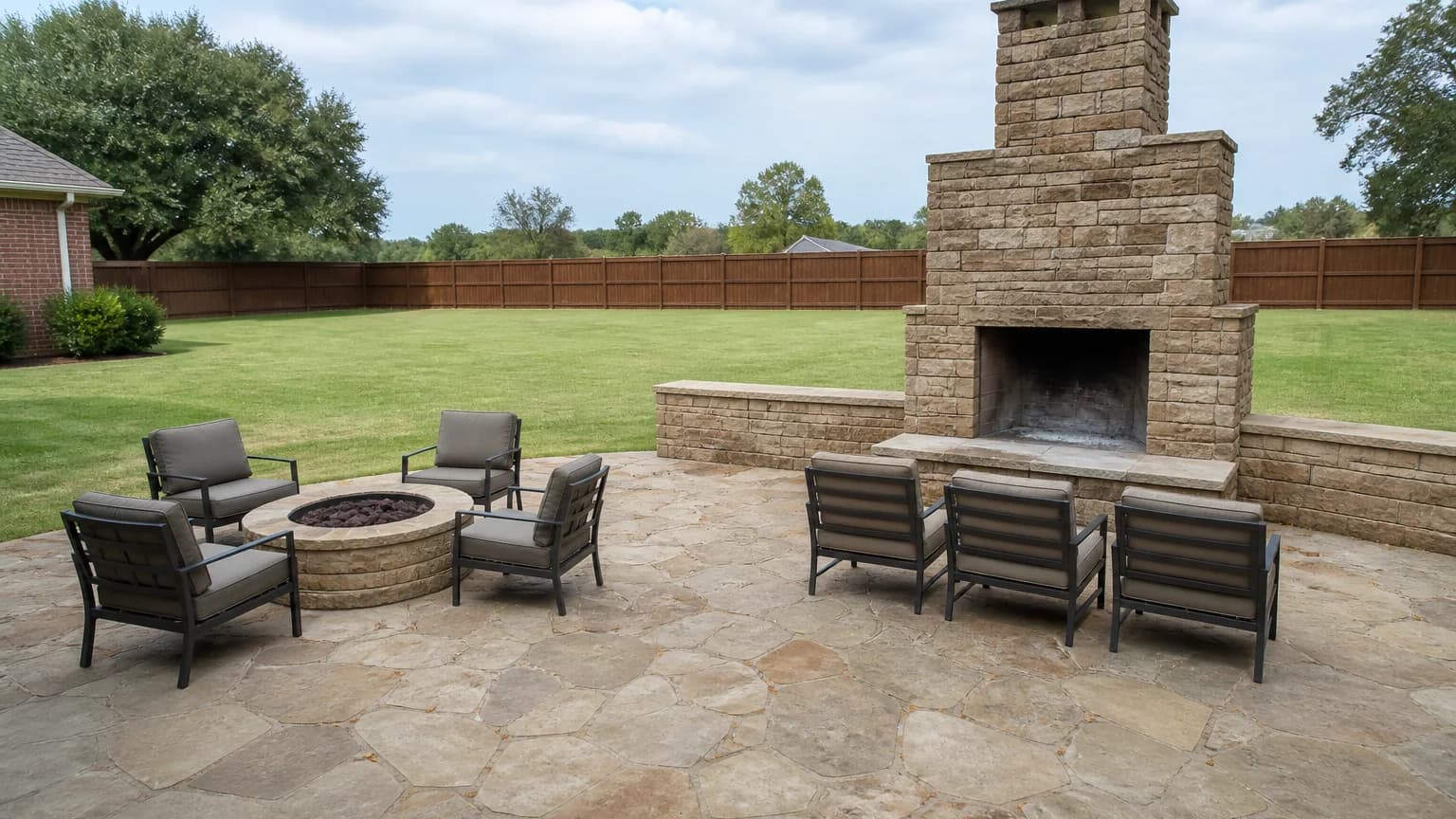
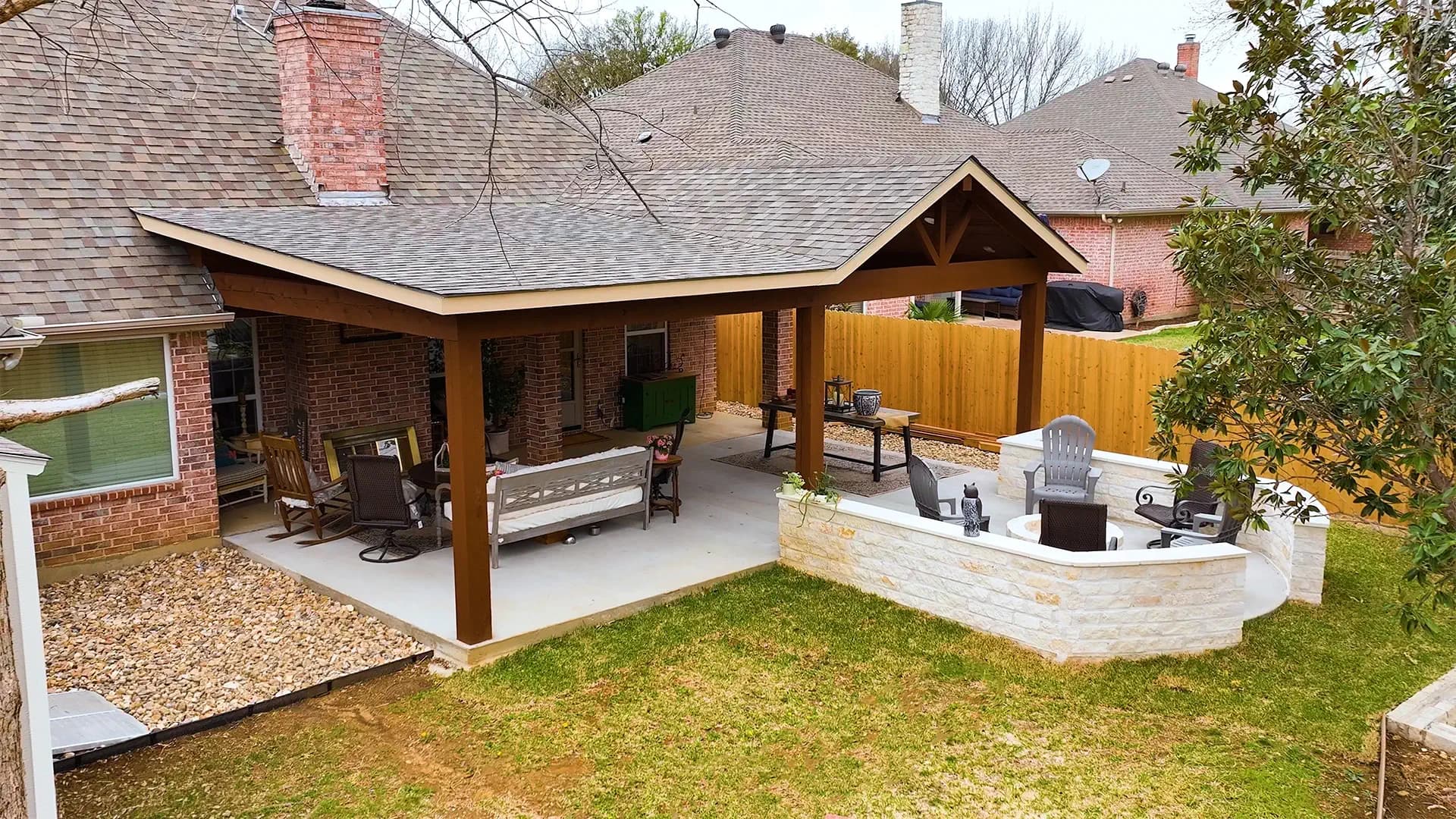
- Add-ons. A seating wall, lighting, or a fire feature build the patio into an outdoor room, and each adds to the total.
Why the base matters more here
Our clay soil is the reason the base is everything in North Texas. Clay swells when it's wet and shrinks when it bakes. The ground under your patio is always moving a little. A deep, well-compacted gravel base rides over that movement. A thin, rushed base does not, and the patio telegraphs every shift as a dip or a lifted edge. This is also where pavers beat a poured slab here. When the ground moves, a slab cracks in a line you can't undo. Pavers flex with the soil, and if one ever settles, we lift that single paver and reset it. So the money goes below the surface for a reason. A well-built paver patio can last for decades, and on our clay a deep base is the difference between one that stays flat and one that's a repair bill in three years.
Two quotes, same patio
Say two contractors bid the same 300-square-foot patio. One comes in thousands under the other. It's tempting to take the low one. Here's what usually hides in that gap:
- The base depth. The cheaper bid often digs a shallower base, or skips the compaction step. You can't see it once the pavers are down. You feel it the first wet season, when the surface starts to move.
- The edge restraint. Leave it out and the bid drops a little. The pavers spread and gap a year later.
- The drainage. Ignoring grade is free today. It's costly when water pools or runs at the house.
- The prep. No tear-out, no haul-off, no leveling in the number, so the day-of "extras" pile on.
The honest version costs more up front because the base, the drainage, and the edges are all in the price. On clay, that's the patio that's still flat when the cheap one has been torn out and redone. Here's how to check before you sign: ask every contractor to put the base depth in writing. A quote that won't commit to it on paper is telling you something.