
Skip to content
Streamline Landscape

What Does a Privacy Fence Cost in North Texas?

A privacy fence is priced by the foot, so it looks easy to compare quotes. Then one bid says $30 a foot and the next says $55, and you wonder what you're missing. Usually it's three choices baked into the price: the wood, the build, and the height. Here's what a privacy fence really costs in the DFW area, what sets the number, and a way to lower it that most people forget.

By Streamline LandscapePublished Jul 2026

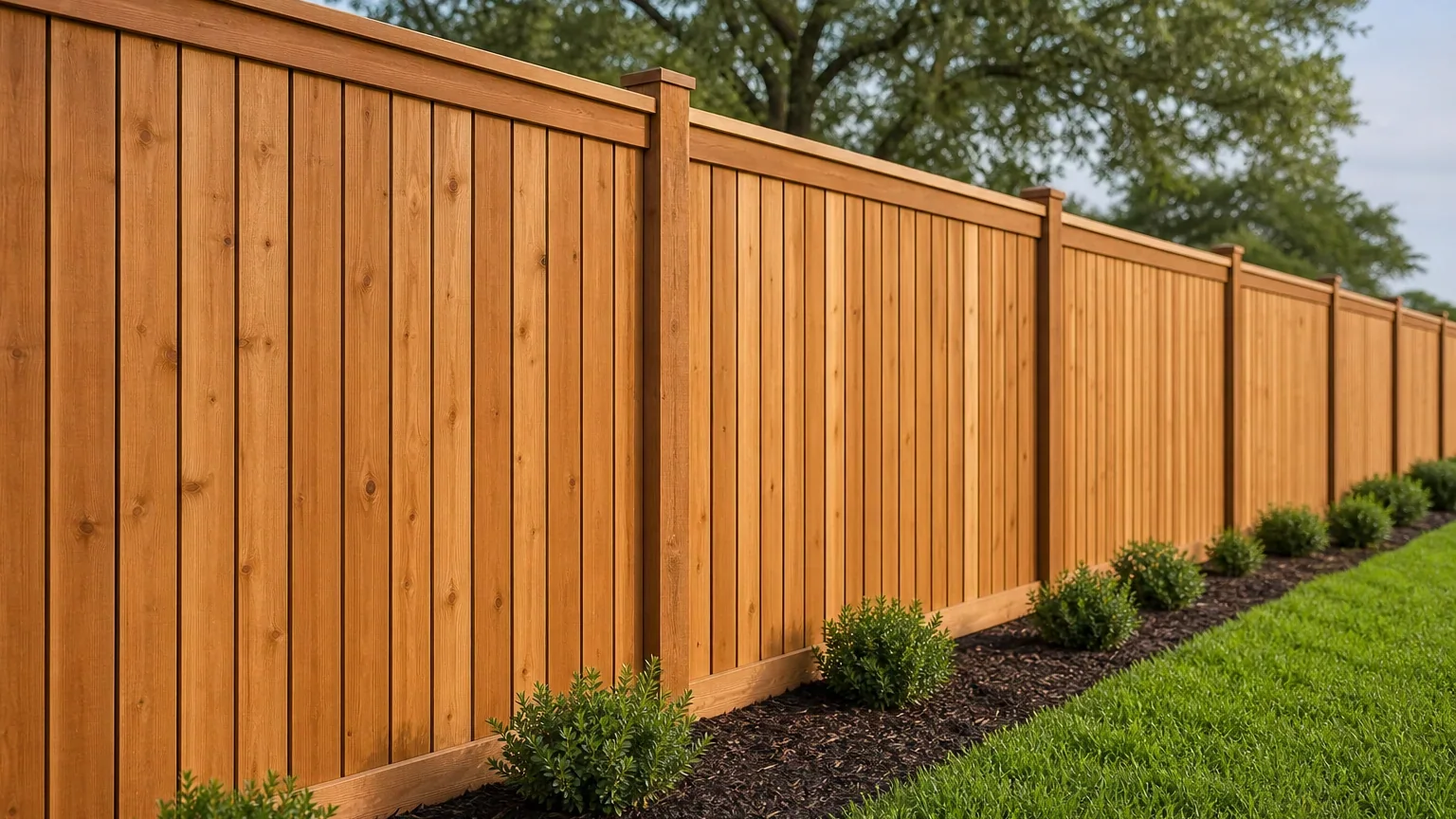
A new wood privacy fence with level boards and plumb posts running beside a mulched bed of shrubs

What drives privacy fence cost

A privacy fence is sold by the linear foot, and a handful of choices set that per-foot number. Here's what moves it:

  • Length. The biggest one. More feet means more posts, more boards, and more labor. It's the first thing we measure.
  • The wood. This is the largest swing. Pressure-treated pine is the budget pick, but it has a shorter life and needs regular sealing. Cedar is the North Texas favorite: its natural oils resist rot and bugs, and it handles our sun. Premium grades like Western red cedar cost the most and last the longest. So wood privacy fence cost can double from one board choice to another.
  • The build. Boards set side by side are the cheaper build, but they shrink and open small gaps as the wood dries. A board-on-board build overlaps the boards so there are no gaps, ever. It uses more wood and more labor, so it costs more. This one choice is a big part of why two quotes split apart.
  • The height. A 6-foot fence is standard here. Going to 8 feet adds wood and labor up the whole run, and it can trip a city permit that a 6-foot fence wouldn't.
  • Gates. A walk gate runs about $150 to $400. A wide drive gate or a double gate costs more. Each one is built and hung separately, so the count matters.
  • Tear-out. Fence replacement cost includes pulling the old fence and hauling it off, usually a few dollars a foot, often $3 to $10. It climbs if the old posts are set in concrete and have to be dug out.
  • The site. A flat, clear line is the easy case. A slope, rocky ground, or trees in the way all add labor. Marking an unclear property line with a survey adds cost too.
  • Staining. Bare cedar can be left to gray, or sealed and stained to hold its color. Staining adds money up front, whether you do it or hire it out.

Why our weather sets part of the price

A fence here lives a hard life, and that's built into the better quotes. The south wind leans on the boards all summer, and our clay soil swells when it's wet and shrinks when it bakes. Posts set shallow start to tilt within a few seasons. That's why a fence built for North Texas sets the posts about two feet deep in concrete and sizes them up at gates and corners. That costs a little more than a rushed job, and the deeper posts are what keep the fence straight for years. The sun matters too. Cedar's oils and a good stain hold up to the UV; a bare budget fence grays and dries out faster. Plan on resealing wood every couple of years to get its full life. That upkeep runs a few hundred dollars a yard, or your weekend if you do it yourself.

The cheapest way to lower the bill

Here's the part people forget. A privacy fence sits on the property line, so it's a shared fence. That means you can split the cost with your neighbor. Nothing forces them to chip in, but plenty will, especially if their side of the old fence is failing too. It's worth a knock on the door before you sign anything. A few things to settle together:

  • Who pays for what. A 50-50 split is common, but it's whatever you both agree to. Get it in writing if you can.
  • The wood and the build. You're both looking at this fence for years, so pick the material and style together.
  • Which side faces out. The smooth, finished side traditionally faces your neighbor and the street. Many HOAs require it, so check your rules before the boards go up.

Even if your neighbor passes, knowing where the line actually runs protects you. A fence built a foot onto the wrong lot is an expensive thing to move later.
Want a real number for your project?

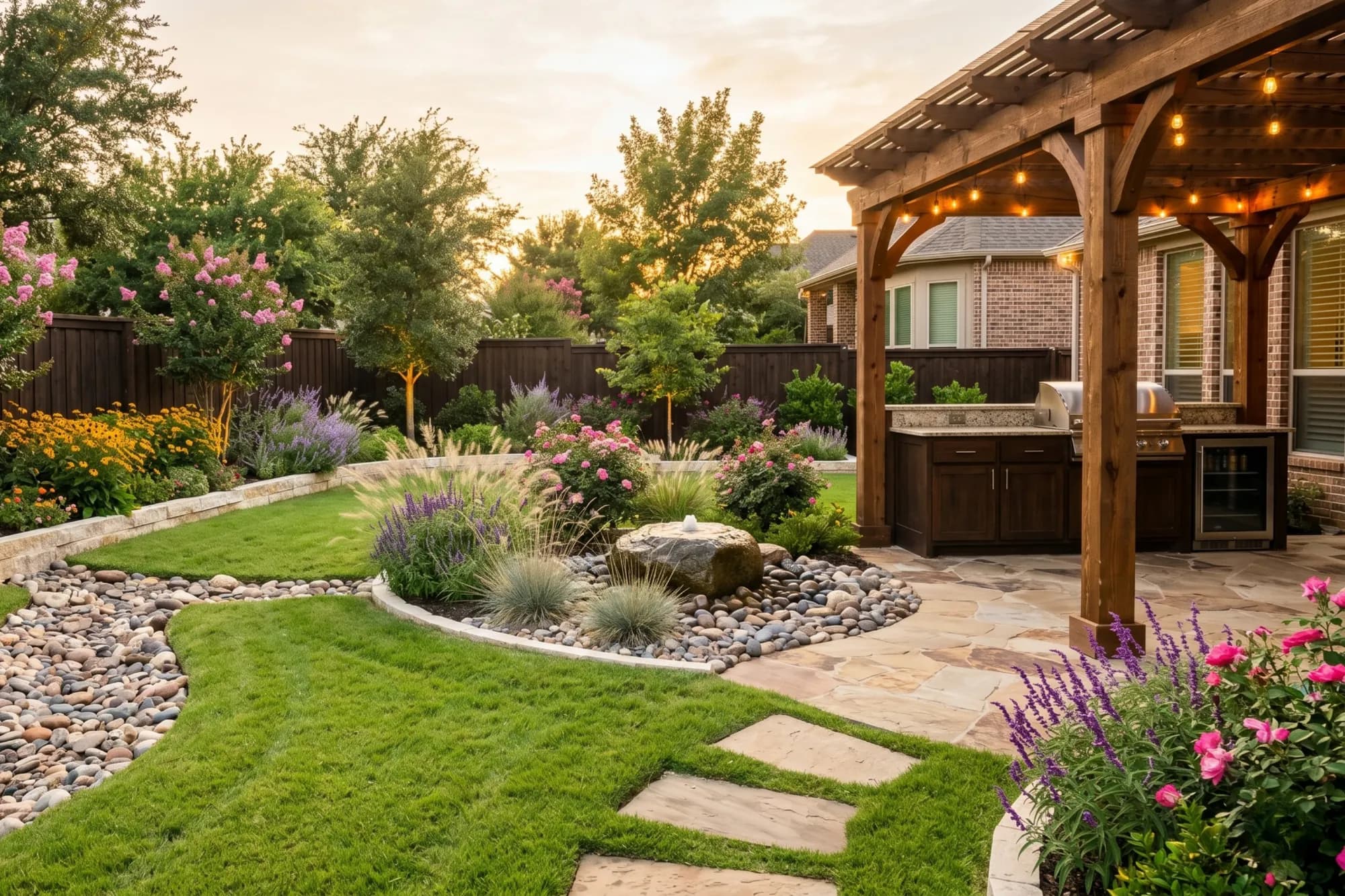
A fence rarely travels alone — beds, drainage, and lighting usually come with it. See everything we build, and get the whole project priced at once.

Frequently asked questions

Get your free quote
  • In the DFW area, a wood privacy fence runs about $25 to $55 per linear foot installed. Pressure-treated pine and a simple side-by-side build sit at the low end. Cedar, a board-on-board build, or an 8-foot height push toward the top. These are general market ranges, not a quote, so your number depends on your fence line.

  • Most backyards run about 150 feet of fence, so a wood privacy fence usually lands around $4,000 to $8,000 installed in the DFW area, with a common job near $5,000 to $6,500. Bigger yards, taller fences, extra gates, or pulling out an old fence push it higher.

  • Pressure-treated pine in a simple side-by-side build is the budget option, usually well under cedar per foot. The trade-off is life span: pine needs regular sealing and won't last as long as cedar in our sun. If you go cheap on the wood, don't go cheap on the posts, because shallow posts are what make a fence lean. Building it yourself saves roughly the labor half of the bill, but setting posts straight and deep is the hard part, and getting it wrong costs more than it saved.

  • Often, yes. Many cities here require a permit once a fence passes a set height, usually six feet, and some want one for a front-yard fence over four feet. The permit itself is small, around $40 to $150, but skipping it can mean tearing the fence out. Your HOA may also need to approve the height, style, and finished side, so check both before you budget.

  • It depends on how much privacy you want. A side-by-side fence is cheaper, but the boards shrink as they dry and small gaps open up. A board-on-board build overlaps the boards, so there are no gaps to see through, now or later. Most people who want true privacy pay the extra for it. If the fence is just marking a line, side-by-side is fine.

  • Often, yes. A fence on the property line is shared, and neighbors commonly split the bill, frequently 50-50. Nothing requires your neighbor to pay, but many will, especially if their side is failing too. Agree on the wood, the build, and the split before the work starts, and put it in writing if you can.

  • Fence replacement cost is the new fence plus tear-out of the old one. The new fence runs the same $25 to $55 a linear foot, and pulling and hauling the old fence usually adds a few dollars a foot, more if the old posts are set in concrete. A good quote lists the tear-out as its own line, so you can see what it's adding.

  • A cedar fence usually lasts about 15 to 20 years here, and premium grades longer. Pressure-treated pine runs shorter. The biggest factor is upkeep: sealing or staining the wood every couple of years keeps water out, and water is what rots the boards. Keeping plants and sprinklers off the fence line helps too.

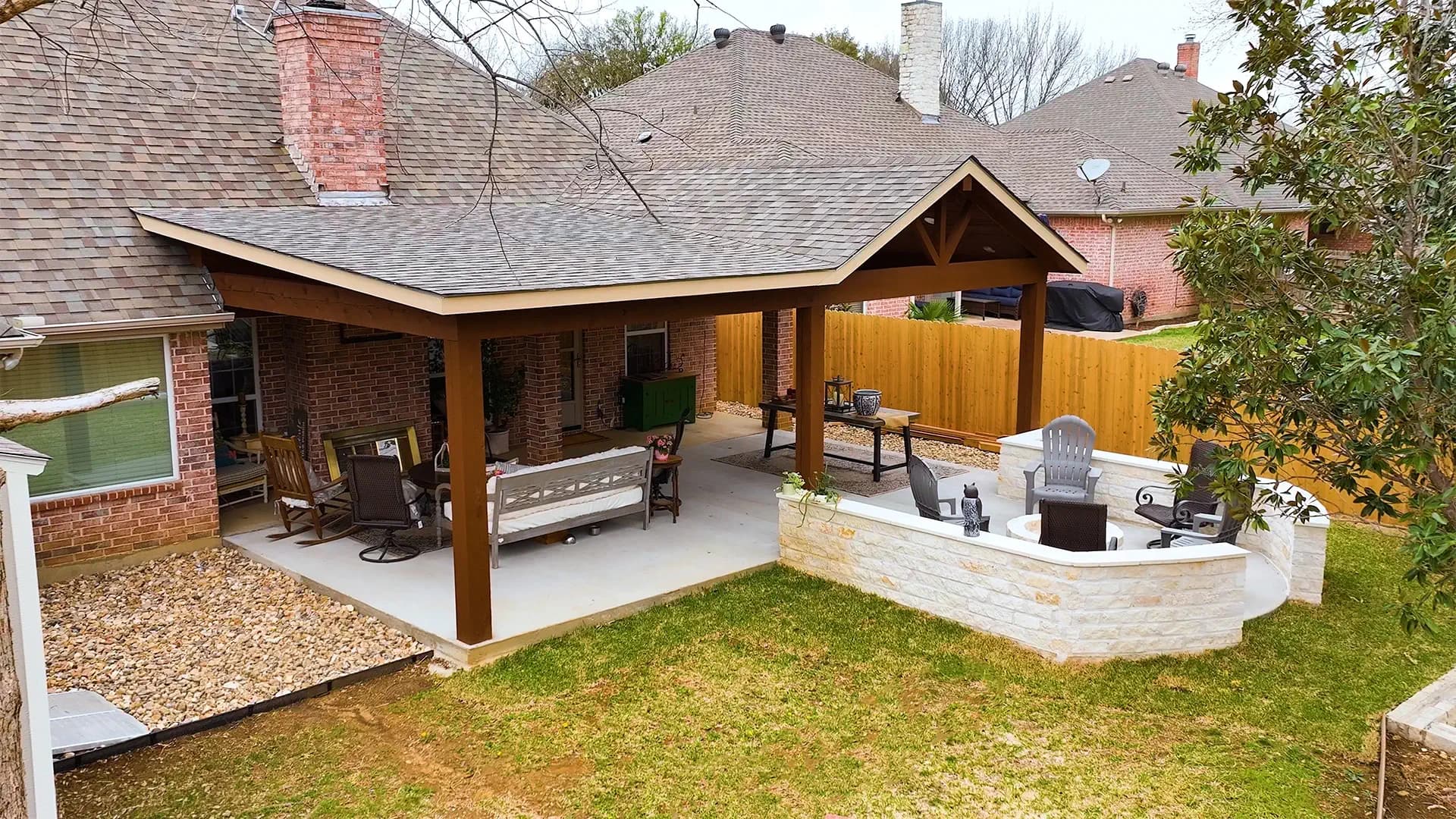
A finished covered backyard patio with a stone fire-pit seating area on a North Texas Streamline Landscape project

Want a price built for your yard?

Send us your fence line and a rough length, and we'll turn the ranges on this page into one real number for your yard. The visit and the quote are free, and there's no pressure to book.