
What you're really buying: consistency
When people ask if a sprinkler system is worth it, they're usually weighing the convenience — no more hoses. That's real, but it undersells the point. The reason a system pays off is that lawns don't reward effort. They reward consistency. Grass that gets a deep, even soak on a steady schedule wins. It beats grass that gets a heavy hand one week and a skipped weekend the next. A hose waters when you have time. A system waters when the lawn needs it. That difference is the whole case, and almost every benefit below comes back to it.
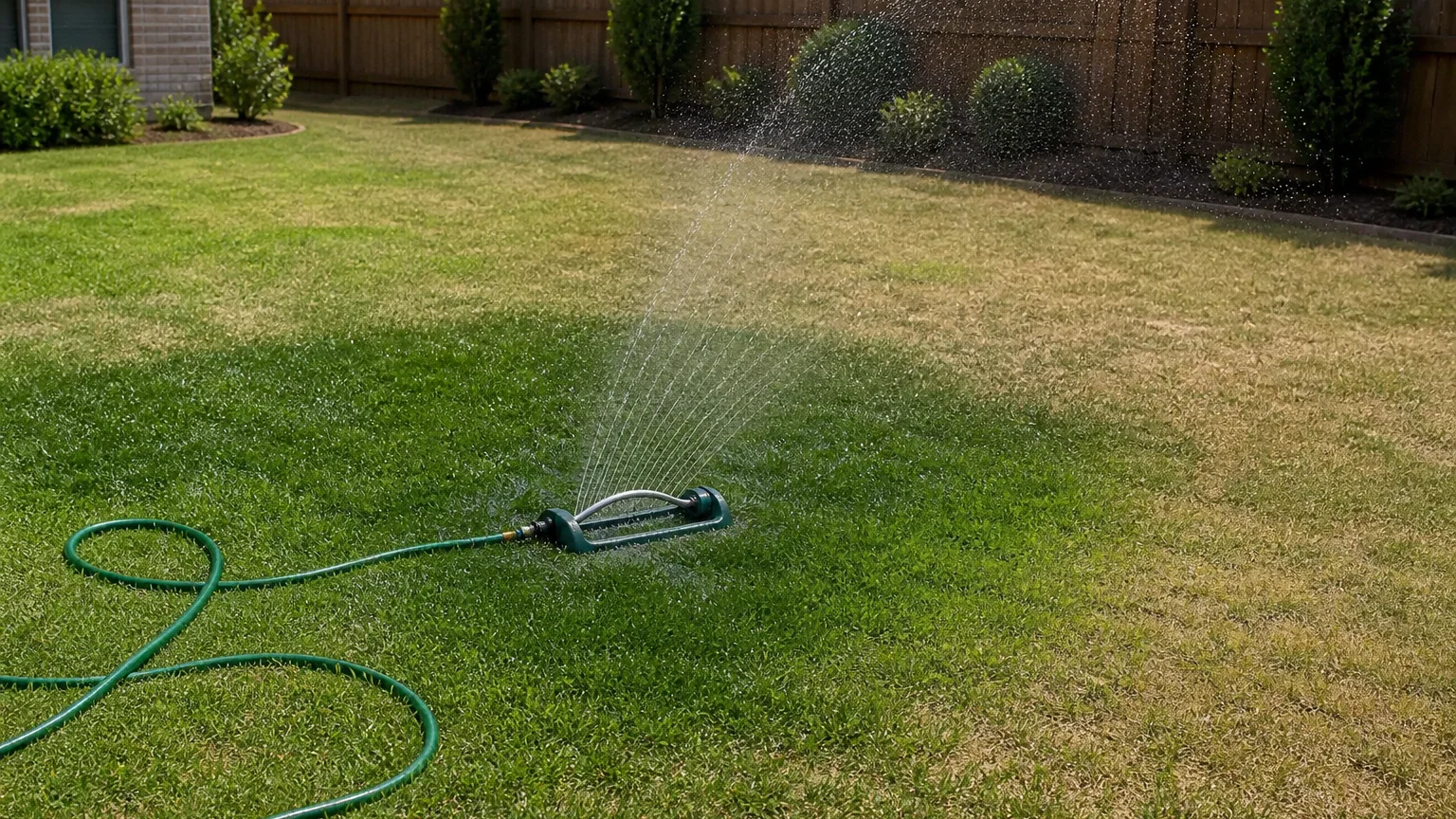
- Even coverage, including the spots you miss. A designed system lays water down evenly — corners, narrow side strips, the odd-shaped bed by the driveway. Those are the places a hose-end sprinkler never quite reaches. They're usually the first to go brown. Over a season, even coverage fills in thin spots and evens out the color.
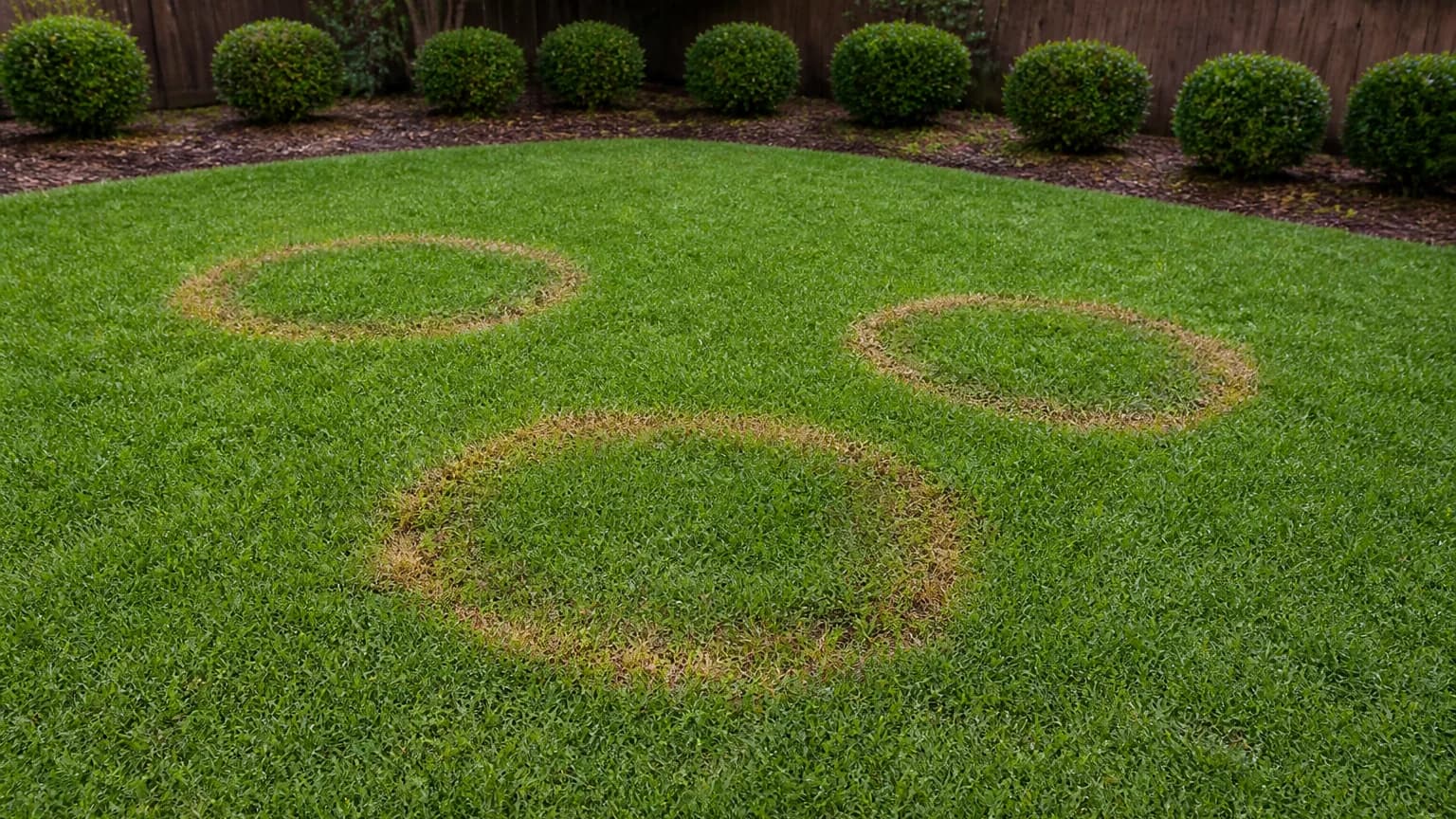
- Water that lands when it counts. A system runs in the early morning. Little is lost to the heat, and the blades dry before nightfall. Watering at noon with a hose wastes a good share of it. Watering in the evening invites lawn fungus. The system just waters at the right hour, every time.
- It often uses less water, not more. Most people expect the opposite. But a well-programmed system usually lands lower than hose watering. It gives each zone the right amount instead of soaking some areas and starving others, and it skips a cycle after rain. The catch is the programming — a system left on factory defaults can waste plenty. Set up right, the savings are real.
- The whole landscape gets watered, not just the lawn. Drip lines for beds and slow bubblers for trees water the expensive parts of your yard, too — older trees, foundation shrubs, seasonal color. A deep, steady drink is exactly what carries them through a North Texas summer.
- Your time back, and a lawn that survives vacation. Hand-watering a real yard in peak summer eats hours a week. A system gives that back, and it means leaving town in July no longer means coming home to a half-dead lawn.
None of this means a hose can't keep a lawn alive. It means a hose makes you the variable. And in a Texas summer, the weeks you're busy or traveling are the weeks the lawn can least afford to be skipped.
Why this matters more in North Texas
Our climate and soil push the decision harder than they would in a milder place.
- The summer is the test. By July, afternoons routinely top 100°F, and even the mornings start hot. A lawn that's watered unevenly shows it fast here — stress zones thin and go patchy, and once Bermuda or St. Augustine burns down under heat, it's slow to come back. Steady water is what keeps a yard ahead of the heat instead of chasing it.
- Watering restrictions favor a system. Many DFW cities limit watering to set days, and sometimes set hours. A system is built for that. It runs on its own before dawn on your assigned day, while you're asleep, and stays within the rules without you tracking the calendar. Doing the same by hand means standing in the yard at sunup.
- Clay soil changes the install. Our heavy clay is slow to soak up water, so it needs a slower, deeper drink. A system gives it that in cycles, better than a hose does. That same clay is also why do-it-yourself installs go sideways here (more on that below).
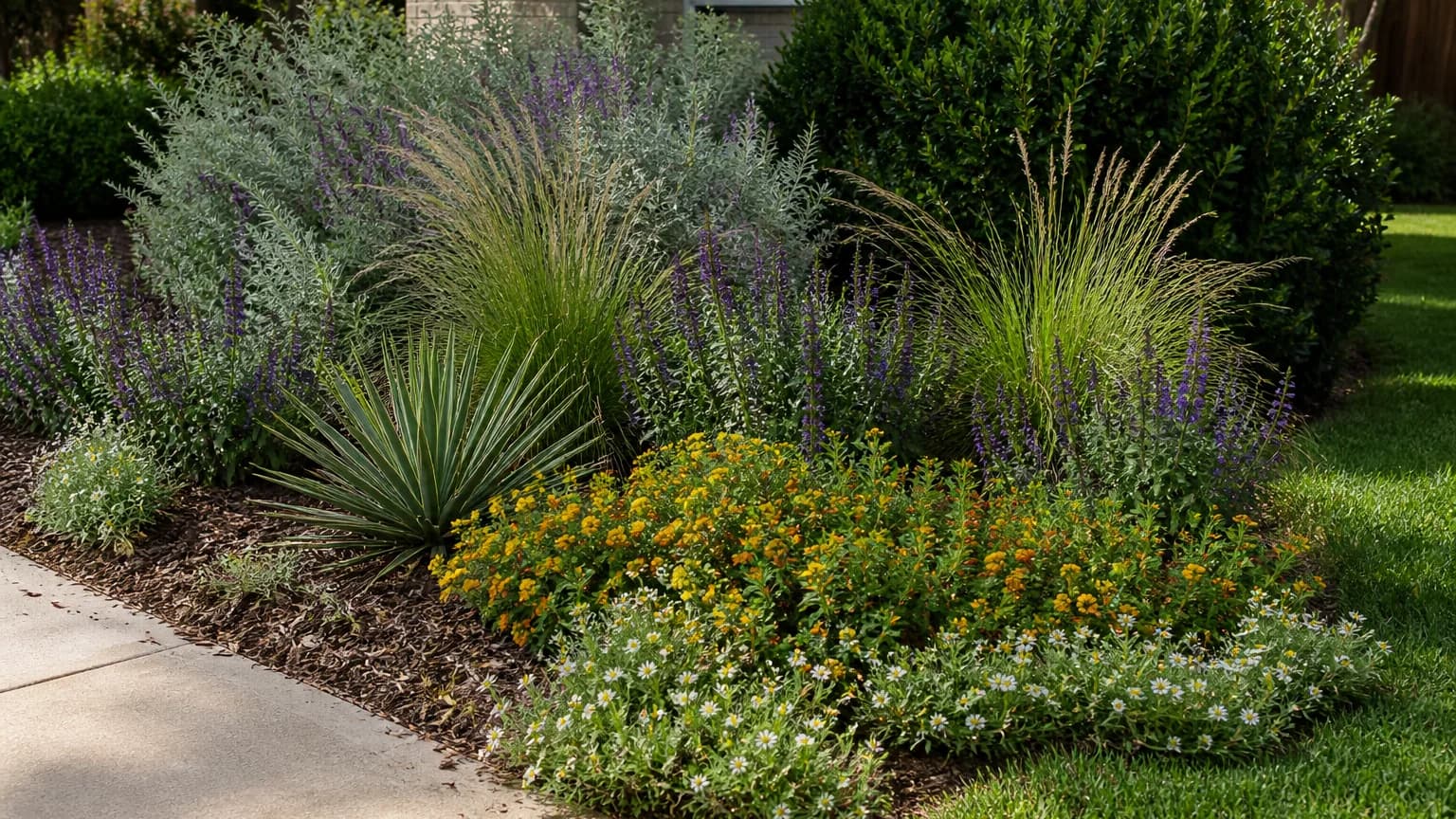
- If you're rethinking the whole yard, less thirsty plantings are the other half of the answer. Pair a system with the right drought-tolerant plants for our area. That's how you get a yard that looks good without a big water bill.
Why this isn't a DIY job here
Some homeowners look at a sprinkler system as a weekend project. In North Texas, that rarely works out, and a poorly installed system can cost more to fix than a good one cost to build. Three reasons it's worth handing off here:
- The clay is brutal on trenching. Burying mainline and lateral pipe through dry North Texas clay is hard, slow work that wears out rented equipment fast.
- Backflow prevention is code, and it's inspected. A backflow preventer keeps irrigation water from getting back into your drinking water. Cities require it and often require testing.
- Coverage and pressure are a design problem. Spacing the heads, grouping zones by water need, and matching it to your water pressure takes calculation, not guesswork. Get it wrong and you get dry stripes and soggy corners — the exact problem you paid to solve.
That's where the irrigation service comes in. It covers the design, the install, the permit-sensitive questions, backflow-test referrals, and the winterization and repairs down the line. That's what makes the system pay off the way it should. Curious what your yard would take? Get a free quote.
Hose vs. in-ground system
Not every yard needs a system. The comparison comes down to lot size, your time, and how much you've invested in the landscape.
| Hose & portable sprinkler | In-ground sprinkler system | |
|---|---|---|
| Coverage | Spotty — depends on you moving it | Even across the whole yard |
| Your time in summer | Hours a week | Almost none, once it's set |
| Water use | Often higher; easy to over- or under-water | Usually lower with smart programming |
| Vacation | Needs a neighbor or a timer | Runs on its own |
| Watering-day rules | Hard to keep up with by hand | Programs to comply automatically |
| Up-front cost | Low (a hose and a sprinkler) | A real cost up front |
| Best for | Small lots, hands-on owners, easy landscapes | Mid-size to large yards, valuable plantings, busy schedules |
The simple read: if your lot is under about a third of an acre and you don't mind the routine, a hose can be enough. Once the yard is bigger than you can cover well, that changes. Add sod, trees, and beds worth protecting, and the system stops being a luxury. It's what keeps the lawn alive.
Modern controllers have also moved on from the old fixed-timer boxes that watered through a downpour. Today's smart sprinkler controllers use weather and soil data to skip cycles and trim the bill — worth a look if you're weighing a system.