
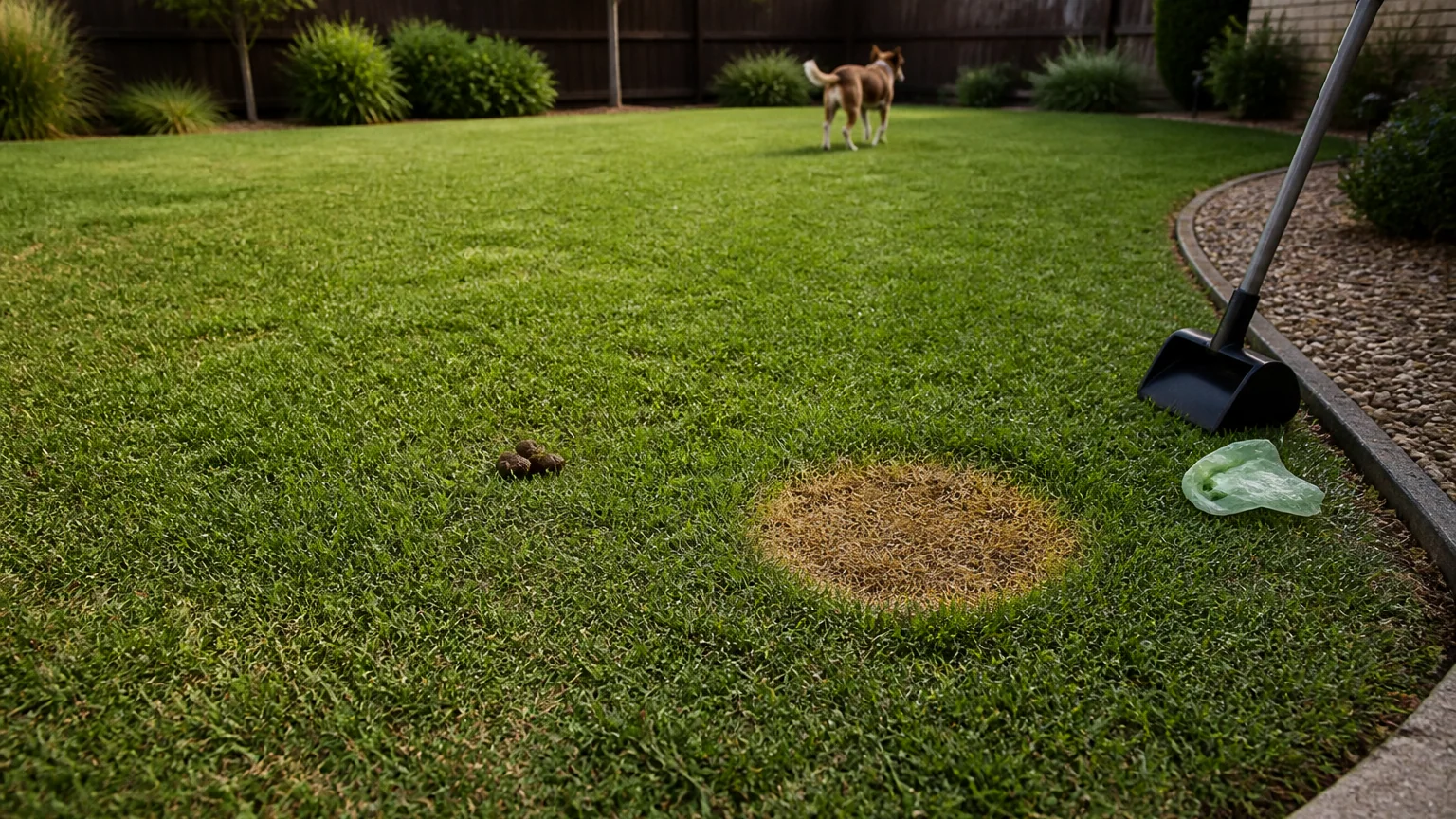
Why dog waste burns grass instead of feeding it
The old idea is that poop is natural, so it must be good for the lawn. It sounds right. It's wrong, and the reason is simple: what the animal eats.
The manures that do feed a garden — cow, horse, chicken — come from animals that eat plants. That waste is mild and balanced, and it breaks down slowly into something grass can use. A dog is different. A dog eats meat. Its waste comes out very high in nitrogen and on the acidic side. Drop that on a lawn and it acts like a pile of spilled fertilizer: too much, too concentrated, right in one spot. The grass burns. This is also why the EPA treats pet waste as a pollutant, not a soil builder — it's closer to a chemical spill than to compost.
Feces and urine damage the lawn in two different ways, and they look different on the ground:
- Poop burns and smothers. Left sitting, it scorches the grass under it and blocks the light. In humid weather it can grow a fungus that spreads to the grass around it. You're left with yellow-brown patches that don't grow back on their own.
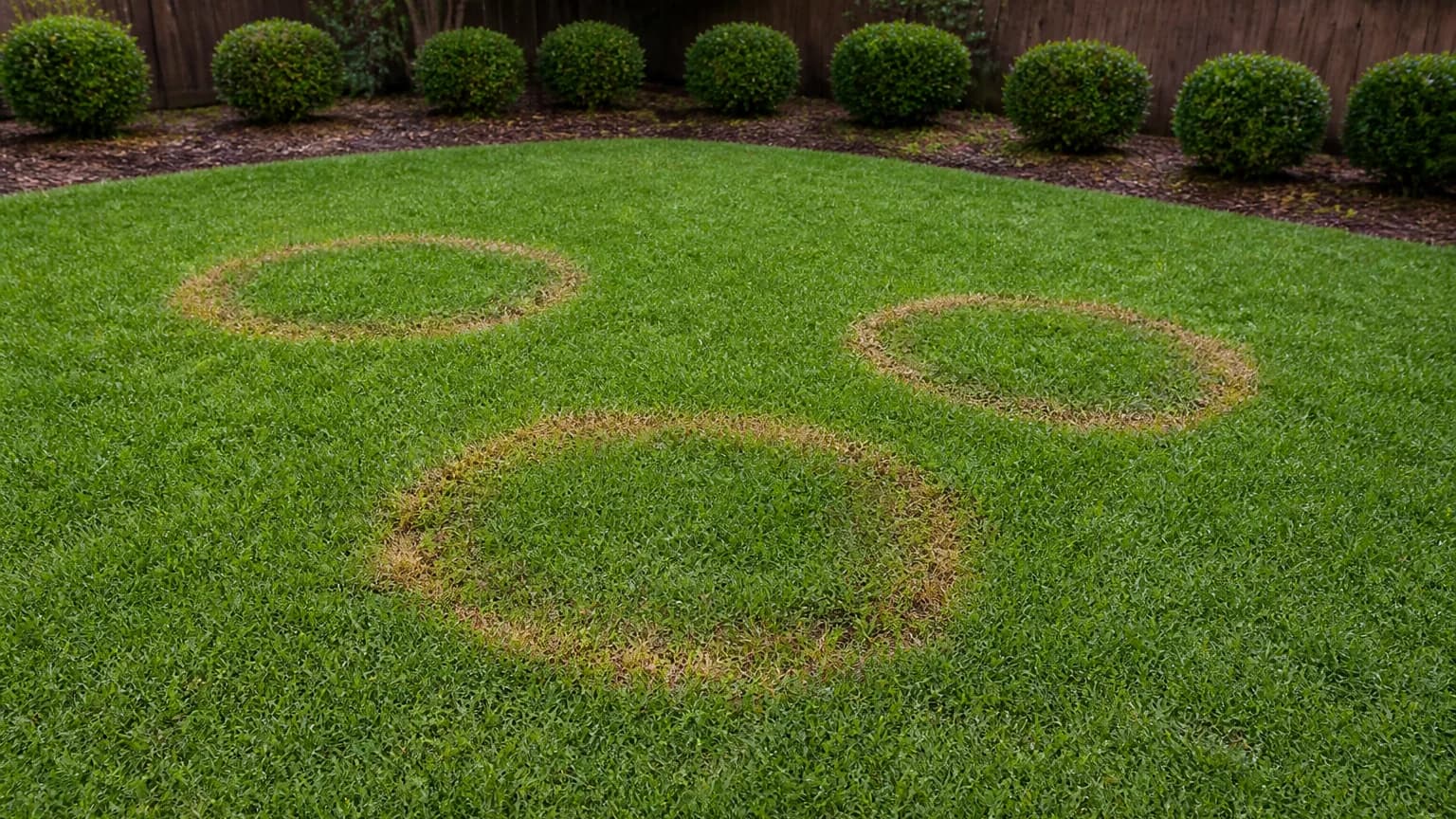
- Urine makes the ring. Dog urine leaves a sharp round dead spot, usually six inches to a foot across, with a bright green ring of fast-growing grass around the edge. That ring is the tell. The watered-down nitrogen at the edge feeds the grass and turns it deep green. The strong nitrogen in the center burns it dead. Female dogs tend to do the most damage, because they go all at once in one place instead of marking in small amounts.
If you're seeing round dead spots and you're not sure it's the dog, our guide to brown patches in your lawn walks through the other things that cause them, so you treat the real problem.
It's not just the lawn — it's a health risk too
This is the part the "it's natural" idea really misses. Dog waste carries germs and parasites that can stay in the soil long after the waste is gone — roundworms, hookworms, giardia, and bacteria like E. coli and salmonella. Kids are most at risk, because they play in the grass and put their hands in their mouths. Your own dog can catch the same parasites again from the yard. Left waste also draws flies and other pests, and when it rains, it washes into the storm drains and out to local creeks. So picking it up isn't only about a nicer lawn. It keeps the yard safe to use.
What this means for a North Texas lawn
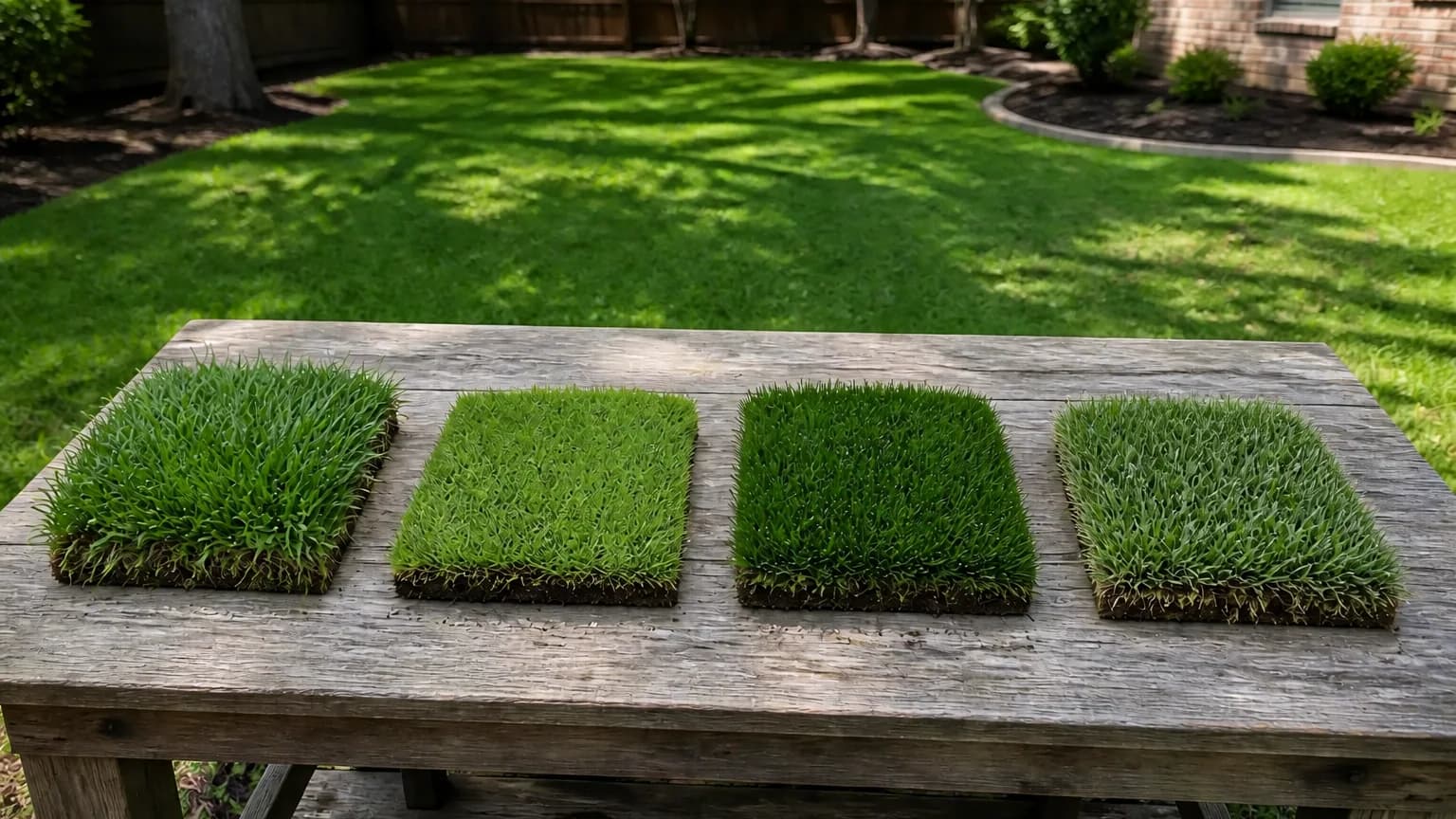
Which grass you have changes how fast the lawn bounces back. In our area, Bermuda recovers the quickest and takes repeat use the best — a good thing to know if you have a couple of dogs. St. Augustine is more tender and slower to fill back in, especially in shade. So the same dog does more lasting harm to a St. Augustine lawn than to a Bermuda one.
Our heat is the other factor. In a Dallas–Fort Worth summer, a burned spot bakes and widens fast, and dry grass is already stressed before the dog adds to it. A lawn that's kept thick and watered right has a real edge. It crowds the damage and grows over the small stuff. And our storms run hard and quick. Waste left on the lawn doesn't just sit there — it rides the runoff straight into the creeks. One more reason the cleanup routine matters here.
When to hand it off
A bag a day and a designated corner go a long way, and most dog owners keep up with it fine on their own. A few situations are worth a pro's help, though:
- The dead spots keep spreading no matter how fast you clean, and the lawn isn't filling back in.
- The yard has thinned out so much that even the clean areas are bare. That open ground is where the next weed or burn takes hold.
- You'd rather have the dead patches fixed and the lawn brought back to full instead of chasing it spot by spot.
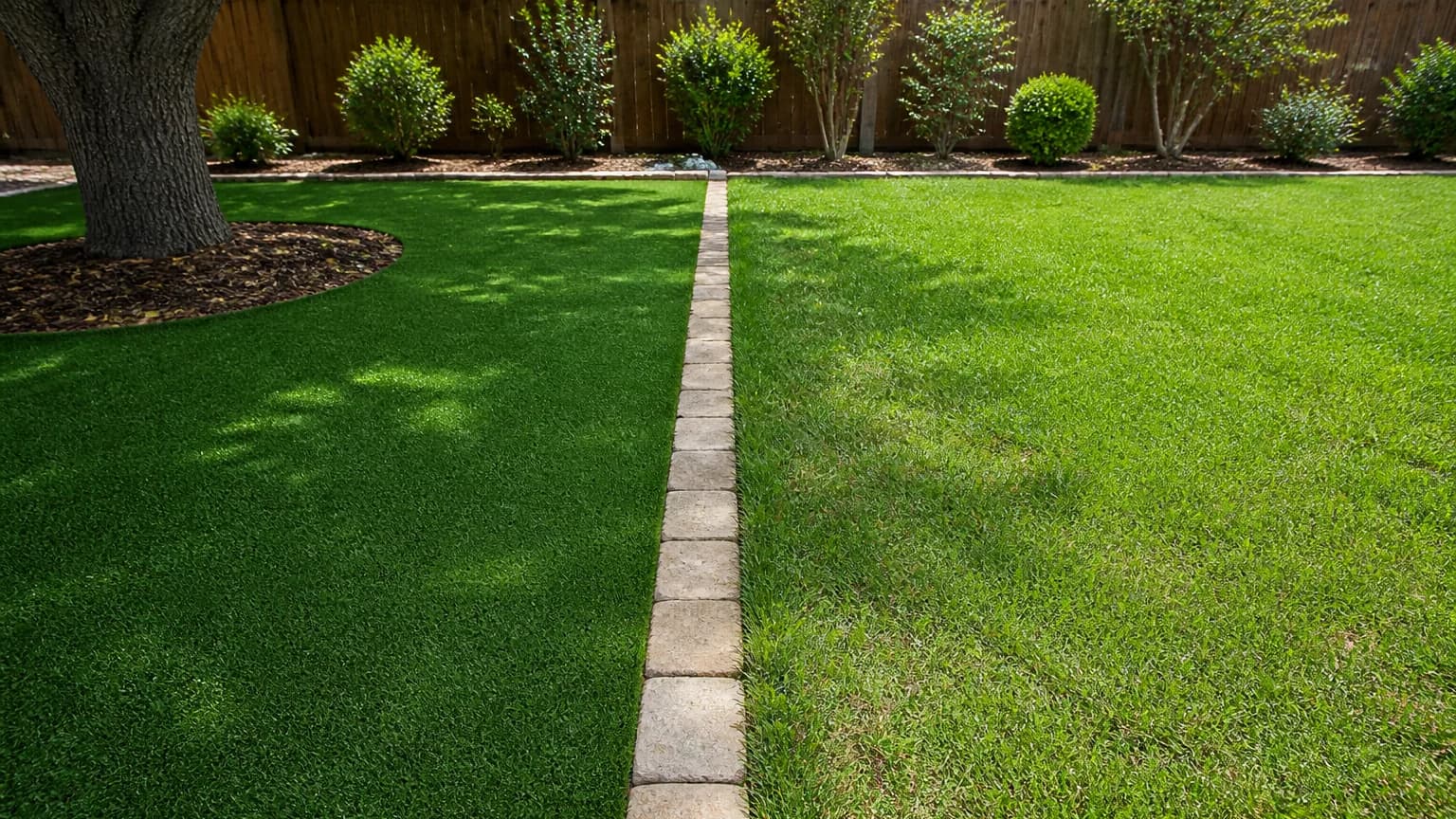
Repair-and-rebuild is a lawn-care company's work: the dead patches get raked out, reseeded, and fed on a schedule, and the whole lawn grows thick enough to take the wear. And if the dogs have simply won — a high-traffic yard where grass never gets a chance — artificial turf is the one surface that doesn't burn and doesn't thin where they run. For dogs we build a draining base with odor-control infill, so it rinses clean instead of holding what soaks in. If turf is the answer for your yard, get a free quote.