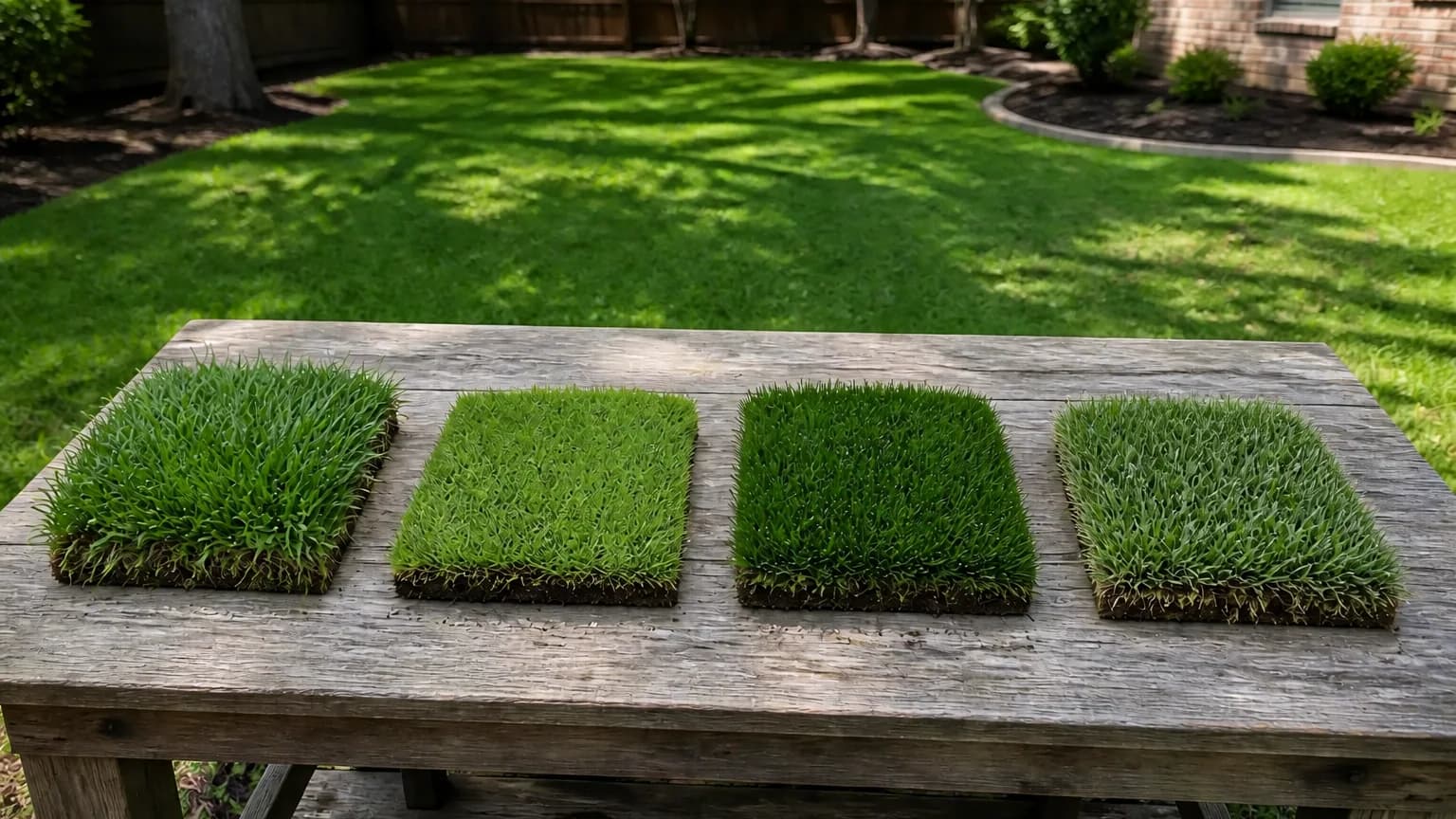

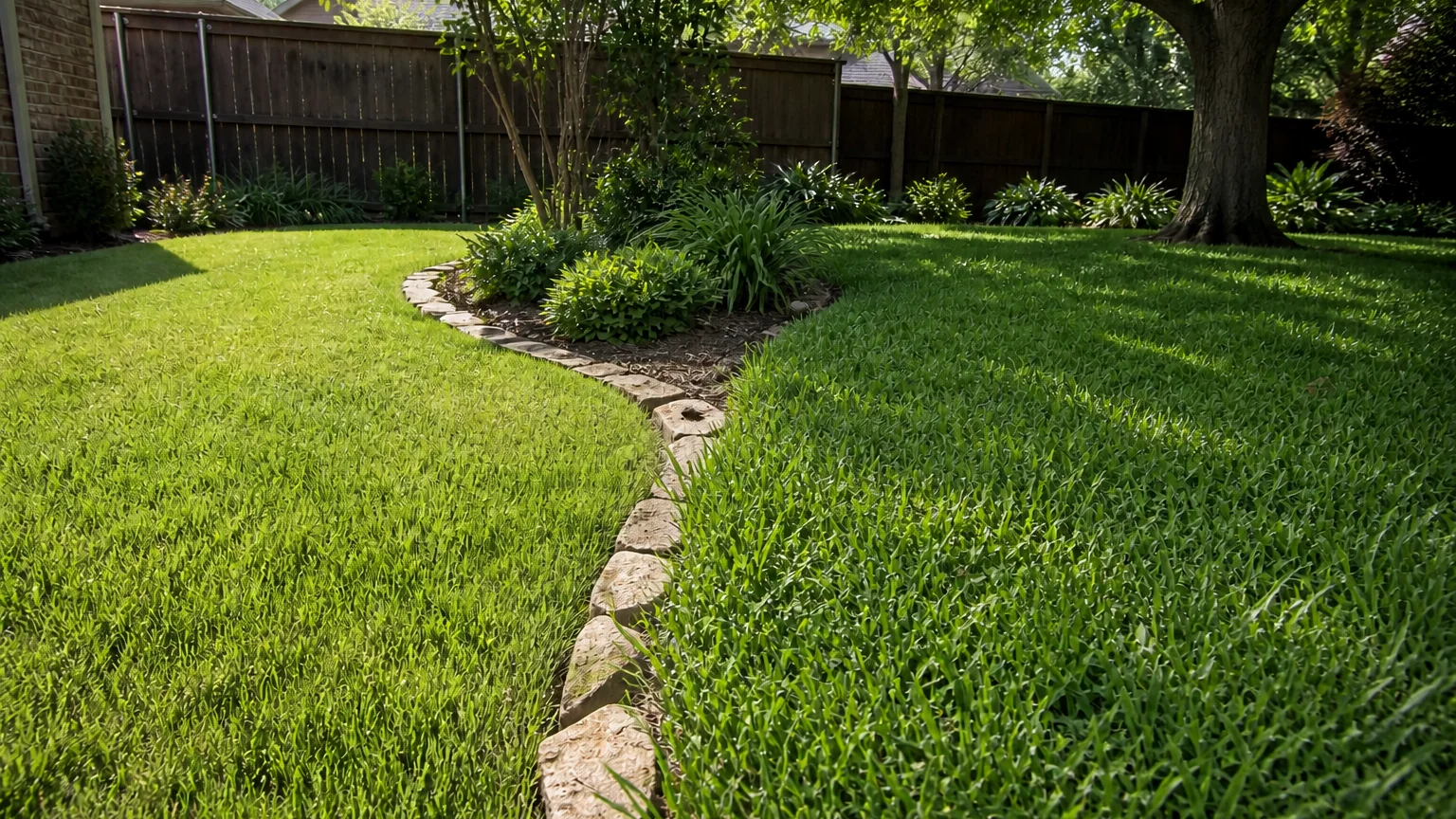
First, does shade make the choice for you?
Before you weigh anything else, look at how much sun the lawn gets. Shade is the one factor that can end this decision early.
Of every warm-season grass grown here, St. Augustine puts up with shade the best. Its Palmetto variety stays thick in filtered light, down to roughly four hours of sun a day. Zoysia won't do that. Give the shadiest Zoysia less sun than it wants and it goes thin within a season or two, while St. Augustine keeps filling in.
So a yard spent mostly under big oaks or pecans points straight to St. Augustine, and you can stop reading right here — the shade already made your call. Get six hours of sun or more and the door swings back open: either grass will grow, and now the real trade-off starts.
Quick gut check on which yard you have: under about four hours of direct sun a day is shade territory, and six or more is full sun. Dappled light filtering through a high canopy counts as part-sun, not full. (For the careful version — counting hours across the day and going by the shadiest patch — our grass-types guide walks you through it.)
Zoysia: pay in patience, then relax
Zoysia is one of the toughest grasses you can put down here. Once it's rooted, it mostly runs itself. The cost is that it takes its time getting there.
What you get:
- It takes a beating. The growth is dense and low, so a busy backyard — kids, dogs, furniture dragged across it — doesn't open up bare tracks the way it does in St. Augustine. What does wear, fills back in.
- It barely needs watering once it's in. Its roots run deep, so it draws on moisture far below the surface. That's why a Zoysia lawn stays green into a dry summer after thinner-rooted grass has already faded.
- It eats less. Zoysia stays thick on less fertilizer, though a steady feeding schedule keeps the color strong.
- Winter is kinder to it. Dormancy and the occasional hard freeze do less damage to Zoysia than they do to St. Augustine.
- Pests skip it. Chinch bugs — the insect most likely to flatten a St. Augustine lawn — rarely bother with Zoysia.
What you give:
- It's slow to fill in. Plan on a full season, sometimes two, before a new Zoysia lawn knits together completely. That same slow growth means less mowing later, but slow repair if a spot gets torn up.
- It needs full sun. Most Zoysia wants six hours or more. In real shade, it struggles.
- It builds thatch. Zoysia lays down a thatch layer each year. Left alone, that layer blocks water and feeding before they reach the soil, so it needs aeration to stay healthy.
- It can feel stiffer. Some Zoysia varieties have a firmer blade than St. Augustine. Barefoot in the backyard, it feels different. Not worse, just different.
St. Augustine: fast and soft, but you keep paying
St. Augustine gives you the lawn you pictured almost right away. It's the trade-off after move-in day that catches people off guard.
What you get:
- The best shade tolerance of any warm-season grass. It's the one that stays thick under a tree canopy.
- It fills in fast. Above-ground runners spread quickly, so bare spots and pet damage close up faster than you'd expect.
- It feels great. A wide, soft blade is easy on bare feet, which is why kids and dogs love it.
What you give:
- It drinks. St. Augustine wants more water than Zoysia, especially in July and August. A well-tuned sprinkler system isn't optional with this grass.
- It's a heavy feeder. It needs steady fertilizer to stay dense and keep weeds out.
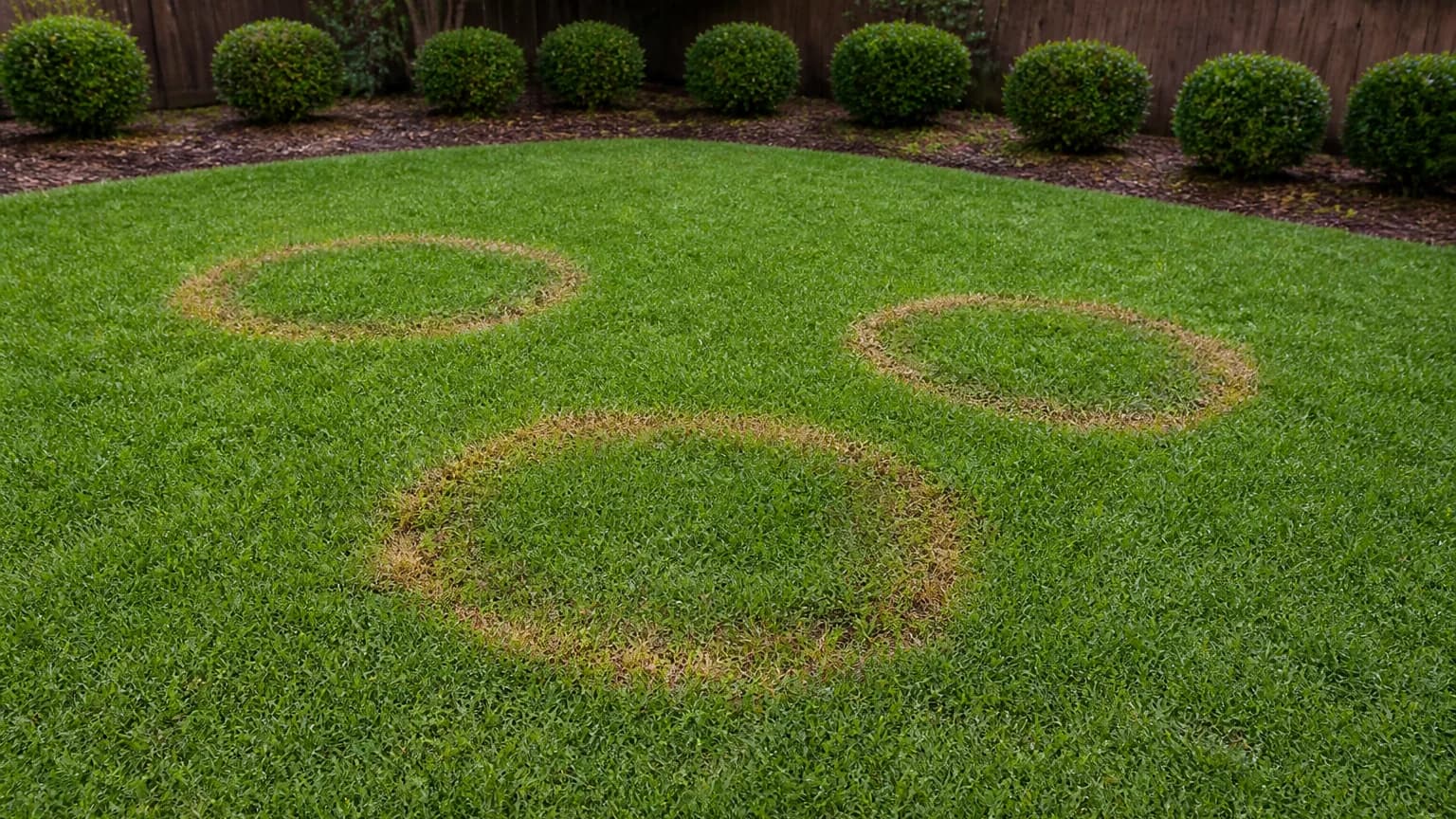
- Chinch bugs love it. This is the big one. They settle into the hot, sunny stretches and leave yellow patches that creep wider. Most people read it as dry grass and water harder, which does nothing. The giveaway: a truly thirsty spot greens up after a deep soak, but a chinch-bug patch keeps browning no matter how much you water. (Our brown-patch guide covers how to tell them apart.)
- Hard freezes hurt it. In a deep freeze like North Texas saw in 2021, St. Augustine can die back. Zoysia takes those winters better.
Zoysia vs. St. Augustine at a glance
| What matters | Zoysia | St. Augustine |
|---|---|---|
| Shade tolerance | Wants full sun (6+ hrs) | Best of any warm-season grass (down to ~4 hrs) |
| Water needs | Lower once established | Higher, especially in summer |
| Feeding | Lighter | Heavier |
| Traffic & wear | Excellent; bounces back | Moderate; shows wear paths |
| Speed to fill in | Slow — a full season or two | Fast — within a season |
| Cold hardiness | Better | Freeze-sensitive |
| Main pest | Rarely bothered | Chinch bugs |
| Feel underfoot | Firmer, fine blade | Soft, wide blade |
| Upfront sod cost | Higher | Lower |
| Long-term upkeep | Low | Steady |
A quick word on varieties
The variety you plant shifts the answer, so it's worth knowing the common ones at DFW sod yards.
For Zoysia: Zeon has the finest blade and takes the most shade, so it's the one to choose if your Zoysia lawn loses a little afternoon light. Palisades is built for wide-open, full-sun yards and leads the group on heat and drought. Empire fills in faster than either and suits a mostly sunny yard with a few part-shade pockets.
For St. Augustine: Palmetto tolerates the most shade and is the standard under established trees. Raleigh rides out cold better, which earns its keep if late freezes are your worry. Floratam spreads fastest but wants full sun and is the least cold-tolerant of the three, so it's the wrong call for shade or for the colder edge of the metro.
One practical note: sod yards don't always stock every variety, and what's on the truck can change week to week. So don't lock your heart on a name. Tell your installer the conditions — how much sun, how much traffic — and ask which variety they're sourcing to match.
What it costs to put in
Both grasses go in as sod here. Zoysia is the pricier of the two up front — it's one of the most expensive common sod grasses, and the gap over St. Augustine is usually a real step up, not a rounding error. So St. Augustine wins the install bill.
The years after are where it flips. Zoysia's lower water use, lighter feeding, and slower mowing add up to less spent keeping it alive, while St. Augustine's bigger water bill, steady feeding, and the odd chinch-bug treatment keep costing you every season. So the cheaper grass to put in isn't always the cheaper grass to own.
So which one wins your yard?
It usually comes down to three quick calls:
- Real shade in the yard? St. Augustine. It's the only one that thrives there.
- Full sun, active family, want it low-fuss later? Zoysia. Pay more now, do less for years.
- Full sun, want it lush this season, fine keeping up with it? St. Augustine. You'll have your lawn fast.
Still torn? That's the right time to have someone walk the yard with you — see the next section.
What North Texas does to this choice
A few local facts push the decision one way or the other.
We're on Blackland clay here. It turns greasy and waterlogged after a storm, then sets up like a brick and splits open in the heat. A new lawn's roots have to fight that, so the prep before sod goes down counts as much as the grass on top of it. The clay also nudges the choice: in the low, wet corners where water lingers, St. Augustine handles the damp better than Zoysia, which wants ground that drains.
Watering rules matter here too. Most North Texas cities cap summer outdoor watering, often to about two days a week. A thirsty grass like St. Augustine is harder to keep happy on a limited schedule, so if you're watching the water bill or your city's restrictions, that's one more nudge toward Zoysia.
Our winters are short but they bite. We sit in USDA Zone 8a, and the hard freezes we've had in recent years are exactly what St. Augustine struggles with. If a frozen-out lawn is your worst case, that's a point for Zoysia or, if you're set on St. Augustine, for the cold-hardier Raleigh.
And those big shade trees cut both ways. The canopy that makes an older street feel settled is the same canopy keeping sun off the grass below it. Park a Zoysia lawn under a dense oak or pecan and it goes patchy. That's exactly where St. Augustine earns its spot.
One thing both share: they brown out and go dormant in winter, then green back up in spring. That winter brown isn't a strike against either grass. It's just what warm-season turf does here. Worth knowing if your neighborhood has an HOA — some hold you to a green, kept lawn, so it's smart to check the rules before you plant, not after a letter shows up.
When it pays to have someone walk the yard
You can make the Zoysia-or-St.-Augustine call on your own with the points above. Where help pays off is the part that's expensive to undo: reading the yard right and getting the sod established.
- Your sun is a judgment call. A yard that's sunny out front and shaded in back doesn't have one answer. Someone can check the light at the spots that matter and tell you where each grass belongs, instead of forcing one to cover all of it.
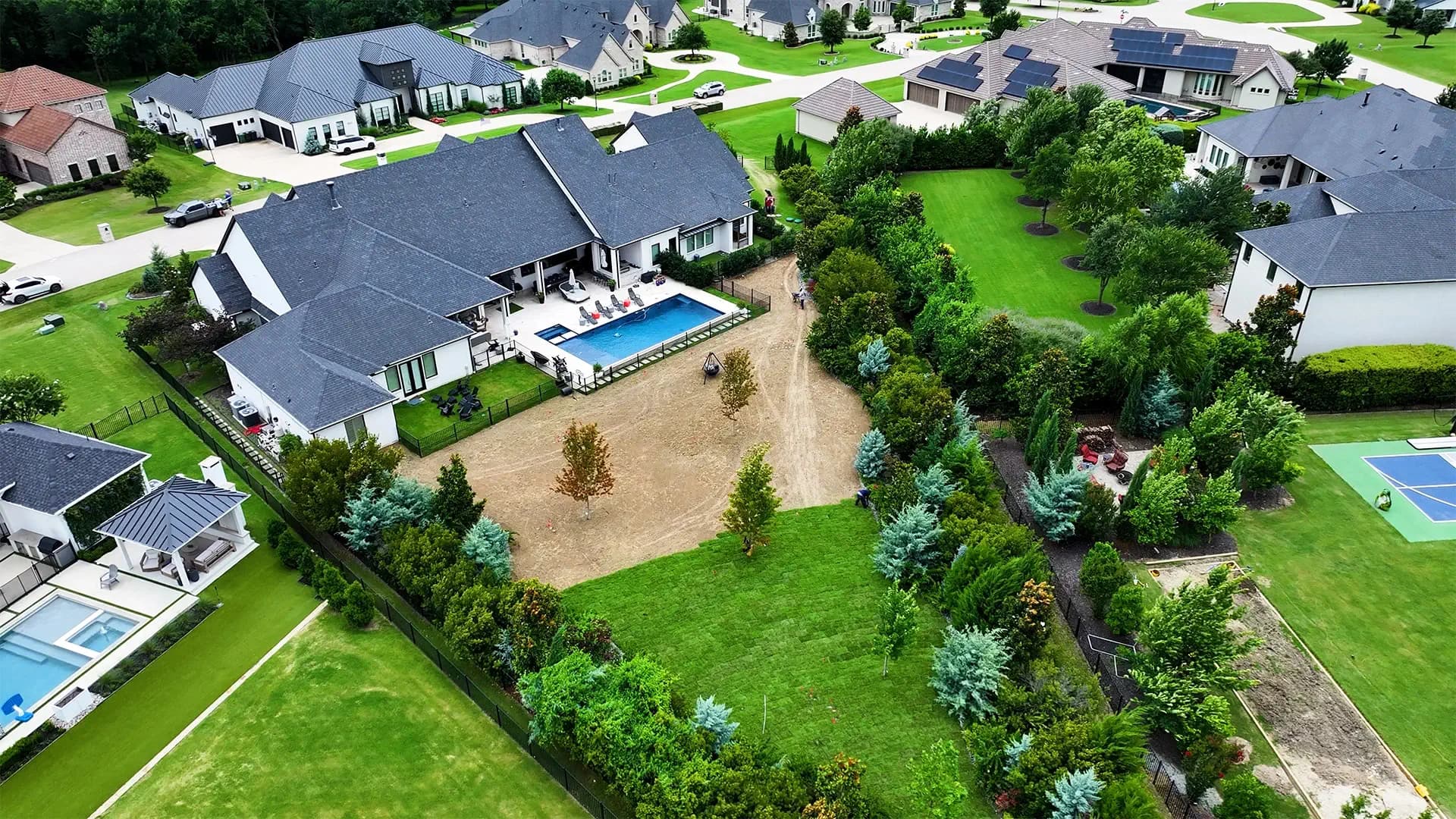
- Both grasses go in as sod. Prep, timing the install for the growing season, and the daily watering a new lawn needs to root are easy to get wrong. (Our sod installation guide walks through it.)
- You'd rather not do it twice. Choosing the right grass and installing it well are two different skills. Get both right and you skip a re-sod down the road.
A sod installer takes that end to end: reading the light and the drainage, naming the grass and the variety that fit, and getting it planted right. We don't do that part. What we would look at first is the watering, because if the sprinklers can't keep a thirsty grass alive through August, no variety will save it. Start with the coverage. Get a free quote.