
How to tell, why it hurts, and how to fix it
Watering feels like the one part of lawn care you can't overdo. More water, healthier grass — it makes sense. It's also wrong, and it's the most common watering mistake we see on North Texas lawns. Here's how to spot it, why it does damage, and how to turn it around.
The signs you're overwatering
No single sign proves it, but a few together usually do. Look for:
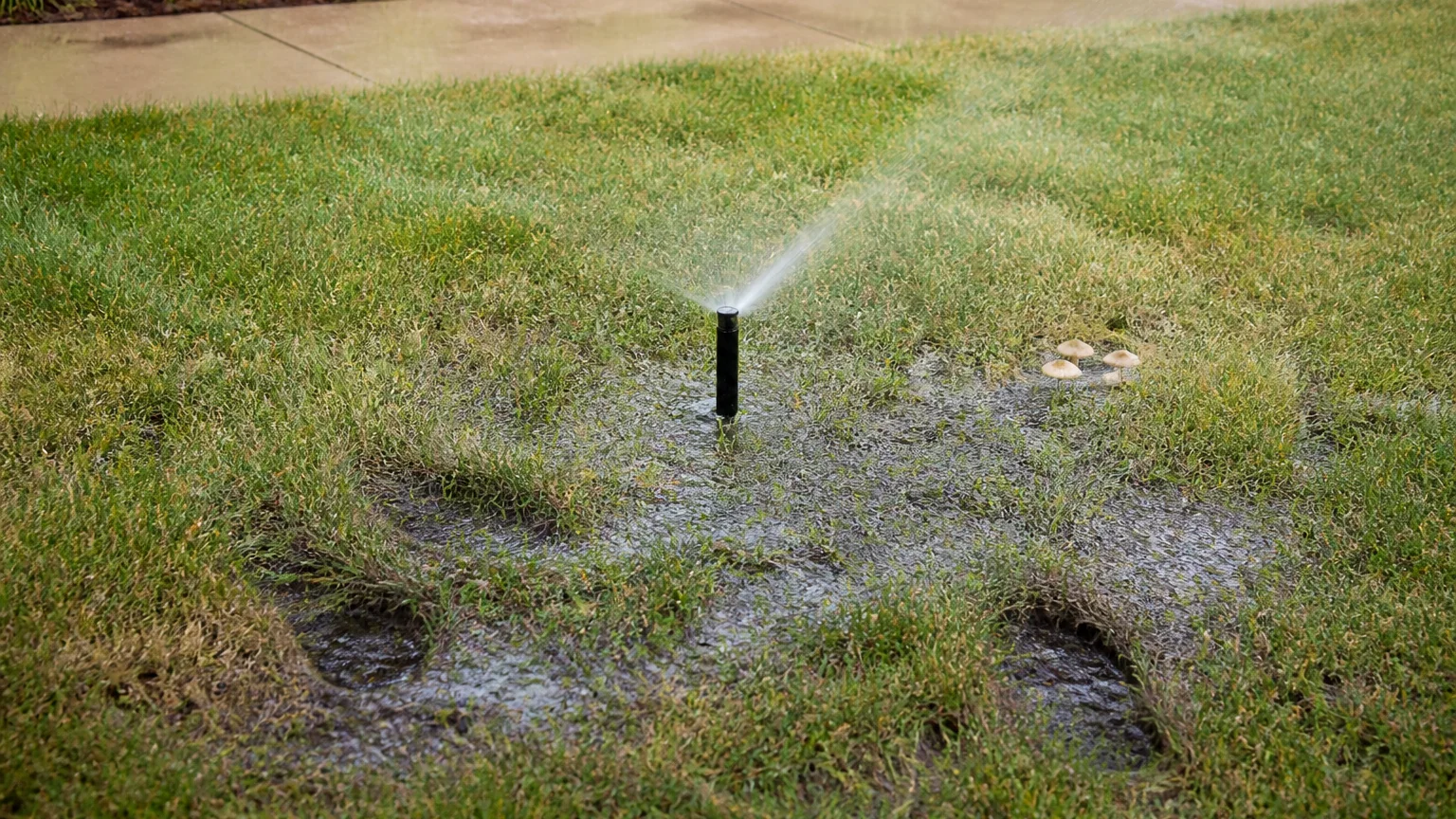
- Ground that stays wet. Step on the lawn a day after watering. If it's soft, spongy, or squishy, the soil never got a chance to dry out.
- Yellowing or fading grass. Drowning grass and thirsty grass both pale out. If you've been watering plenty and it's still losing color, more water is the wrong answer.
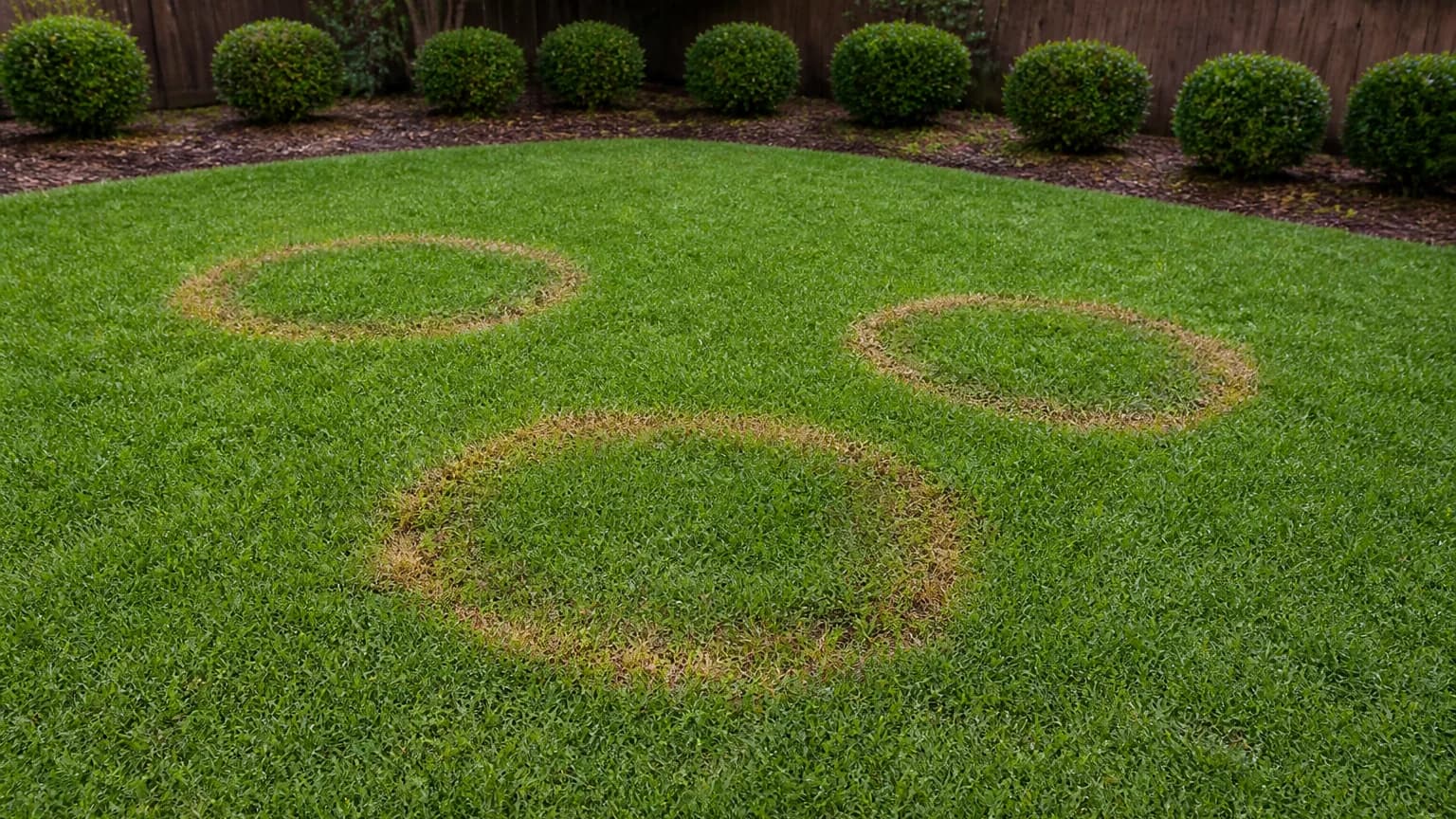
- Fungus and disease. Mushrooms, a stringy gray film in the morning, or spreading circles of brown patch all feed on constant moisture. Wet grass is where lawn disease starts.
- The wrong weeds moving in. Nutsedge — the grass-like weed that shoots up taller and faster than the lawn, often a lighter yellow-green — thrives in soggy soil. A flush of it is often the lawn telling you it's too wet.
- Runoff and puddles. If water runs off into the street or pools in low spots while the sprinklers run, you're putting down more than the soil can take. That's water on your bill the lawn never used.
- Shallow roots. Pull up a small plug of grass. If the roots are a short mat right at the surface instead of reaching down, frequent shallow watering has trained them to stay up top.
Why more water backfires
Grass roots breathe. The spaces between soil particles hold the air they need, and when you keep the soil soaked, water fills those spaces and pushes the air out. Roots sitting in airless, waterlogged soil weaken and start to rot — so the lawn gets worse the more you water it.
There's a second problem, and it's the one that bites in July. When water is always sitting at the surface, roots have no reason to grow down to find it. They stay shallow. Then the first real heat wave dries out that top layer, and a lawn with shallow roots has nothing to fall back on. The yard you babied with daily watering is the one that browns out first in a Texas summer.
And constant moisture is what lawn fungus needs to take hold. Warm North Texas nights plus grass that never dries out is the exact recipe for brown patch and other diseases — especially in St. Augustine. If you're already seeing spreading discoloration, our guide on why there are brown patches in your lawn helps you read the pattern before you treat it.
The fix: water deep, then let it dry
The goal is to flip the habit from a little every day to a good soak now and then. Deep, infrequent watering pushes moisture down into the soil, so the roots follow it down and the lawn gets tougher.
Here's the plan for most Colleyville lawns:
- Aim for about 1 to 1.5 inches of water a week, total — from your sprinklers and any rain combined.
- Split it into two or three soakings, not daily sips. Each one should wet the soil several inches down.
- Water early in the morning, before the sun's up high, so less burns off and the blades dry during the day.
- Let the top of the soil dry out between waterings. That dry stretch is the point — it's what pulls the roots down and keeps fungus from getting comfortable.
A simple way to know it's dry enough to water again: push a long screwdriver into the lawn. If it slides in easily, there's still moisture down there and you can wait. If it's hard to push past the first couple of inches, it's time.
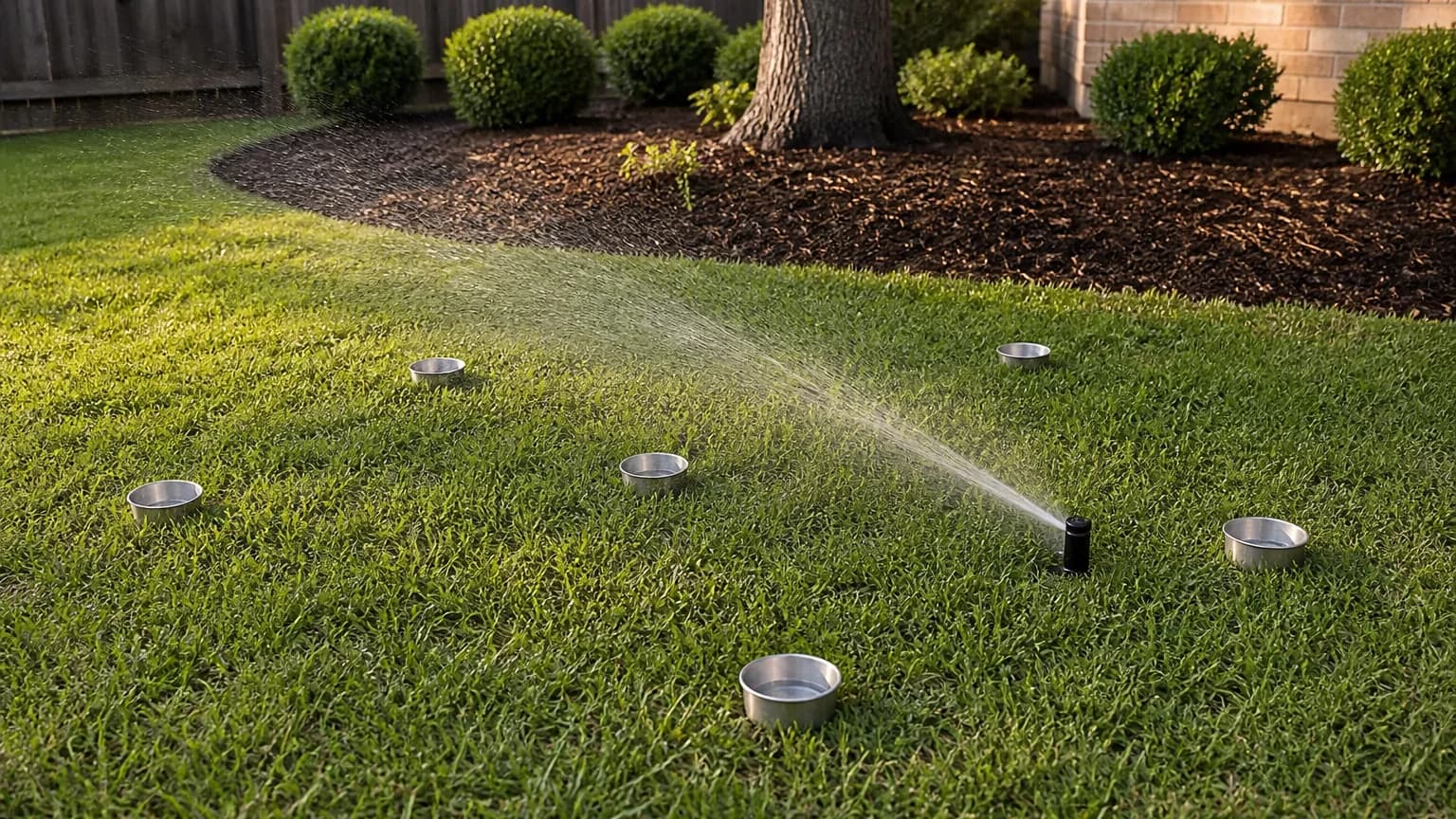
Not sure how much your sprinklers actually put down? Set a few straight-sided containers — old cups or cans — out on the grass and run a zone for a set time. Measure what collects and you'll know your system's rate, so you can set real run times instead of guessing. Dialing in the controller, fixing zones that overwater, and balancing coverage is exactly what our irrigation services team does day in and day out.
Don't let the timer water in the rain
The biggest single source of overwatering is a sprinkler controller left on autopilot. A timer set in spring keeps dumping the same water through every rainstorm and cool spell. Turn it down — or off — after a good rain, and dial it back as the seasons cool. Don't want to babysit it? A rain sensor or a smart controller does it for you, and our irrigation services team can add one.
Why clay makes this worse in Colleyville
The same watering schedule that's perfect in sandy soil will drown a North Texas lawn. Our heavy clay changes the math:
- Clay holds water for days. Sandy soil drains fast; clay doesn't. The twenty minutes that's right for a sandy yard can leave a clay lawn soggy long after. That's why "just water a little every day" causes so much trouble here — the soil never dries out between.
- Dry clay sheds water. When clay dries and cracks, it turns hard and slick on top, so a fast, heavy watering runs off before it soaks in. The fix is cycle and soak: run a zone for a few minutes, let it sink in, then run it again. Short bursts with a pause beat one long blast.
- Compacted clay won't let water in at all. Packed-down soil sheds water instead of absorbing it, so it pools on top and runs off. If your lawn puddles after every watering, aeration opens the soil back up so water and air can actually get to the roots. Opening the soil is step one; watering it right afterward is what keeps it open.
- Watering days work in your favor. If your city limits you to two watering days a week, that's not a problem to fight — it's the deep-and-infrequent schedule, handed to you. Make each allowed day a deeper soak and you'll hit the weekly total without the daily overwatering.
One more North Texas note: if a single spot stays wet and mucky no matter how you set the sprinklers, the water may not be the cause. A low spot that won't drain after a storm is a grading problem, not a watering one — and that's a different fix. More on that next.
When to hand it off
Cutting back on watering is something you can do this week, for free. A few things, though, are worth handing to a crew:
- A system that overwaters no matter what you do. If some zones flood while others stay dry, or you can't get the controller dialed in, the schedule isn't really the problem — the setup is.
- A spot that never dries out. A patch that stays soggy days after everything else has dried usually means a hidden leak or a drainage problem, not your watering habits.
- Fungus that keeps spreading. If disease has set in and keeps coming back, it's worth a real look at watering, mowing, and airflow together.
- A controller you'd rather not babysit. Rain sensors and smart controllers take the guesswork out, but they have to be set up right to help.
For a system that won't behave — bad coverage, a leak, a controller that needs sorting — our irrigation services team handles design, repair, and tuning. If a low area stays wet long after rain, that's drainage, and our drainage services team grades and channels the water away properly. Still weighing whether a sprinkler system is even worth it for your yard? Our guide on whether a sprinkler system is worth it lays out the trade-offs. Get a free quote or call us at (817) 701-8920.